
What Is Bulk Matcha? A Practical Guide to Grades, Uses, and First Orders
Bulk matcha purchasing is often the point where a brand moves from a menu idea or product concept into a real supply decision. Yet before requesting prices or sampling every available grade, buyers in the awareness and research stage need one foundational view: what bulk matcha actually is, how the product range is structured, and which factors will shape a successful first order.
Bulk Matcha: Definition and Market Context
Bulk matcha refers to wholesale quantities of matcha green tea powder supplied to commercial buyers rather than packaged for individual retail consumption. It is typically sold in larger packaging formats for cafés, restaurants, beverage brands, food manufacturers, distributors, and private label companies. Bulk supply focuses on consistency, food safety documentation, stable pricing, and the ability to scale volume while maintaining product integrity.
The commercial importance of bulk matcha is underlined by the category's growth trajectory. Grand View Research places the global matcha market at USD 5.1 billion in 2025, with projected growth to USD 8.9 billion by 2033. North America is regarded as the fastest-growing regional market for matcha, with reports citing a CAGR of nearly 8% through 2030. At the supply level, China's matcha output exceeded 12,000 tonnes in 2025, representing roughly 70% of global production according to industry reporting, while Japan's green tea exports — driven largely by powdered matcha — reached ¥72.1 billion in the same year.
For first-time buyers, taking a step back to understand how the bulk matcha industry works — starting with what is actually being purchased — is the best way to make confident sourcing decisions later.
The Problem: Why Bulk Matcha Purchasing Feels Confusing
Matcha is not a single product. A first-time buyer evaluating bulk matcha powder will encounter terms such as ceremonial grade, culinary grade, latte grade, organic matcha, stone-ground matcha, first-harvest matcha, fine mesh matcha, and more. These terms are not interchangeable, and they are not purely marketing language. They describe grades with different raw material standards, particle fineness levels, and suitability for different applications.
Compounding this complexity is the fact that a café's premium latte matcha and a food manufacturer's baked-goods matcha are usually not the same product. Products like culinary grade matcha accounted for 56.4% of the global market share in 2026, according to Market Data Forecast, due to their widespread absorption in industrial food and beverage production. Meanwhile, organic matcha is reported to be the fastest-growing segment, with a projected CAGR of 12.68% through 2033. In practice, this means buyers must first learn to translate their intended use into the right grade, rather than simply seeking out "the best" matcha.
The challenge is further complicated by compliance and sourcing requirements. Importers in the United States must be aware of Food Facility Registration and FSVP (Foreign Supplier Verification Program) documentation for imported matcha powder, as required by the U.S. FDA. In the European Union, pesticide Maximum Residue Limits are regulated under Regulation (EC) No 396/2005, with tightened MRLs for certain substances having taken effect in March 2026. Understanding these requirements before supplier selection prevents later documentation gaps.
The solution begins with a structured understanding of how the bulk matcha market is organized — by grade, by application, and by sourcing model.
How Matcha Grades Are Structured
A commercially useful way to understand matcha is to view it as a spectrum of grades reflecting leaf quality, harvest timing, and milling fineness. These variables directly affect flavor, color, mouthfeel, and cost — and therefore determine which applications each grade is best suited for.
Ceremonial grades are typically produced from the youngest first-harvest leaves and ground to an ultra-fine particle size, giving them a refined texture intended for direct whisking with water. Beverage grades occupy the middle of the spectrum and are developed for milk-based drinks such as matcha lattes and milk tea. Culinary grades are formulated to hold flavor and color through processing steps like baking, mixing, and freezing. Functional grades are positioned as cost-efficient ingredient solutions for supplements and powdered nutrition products.
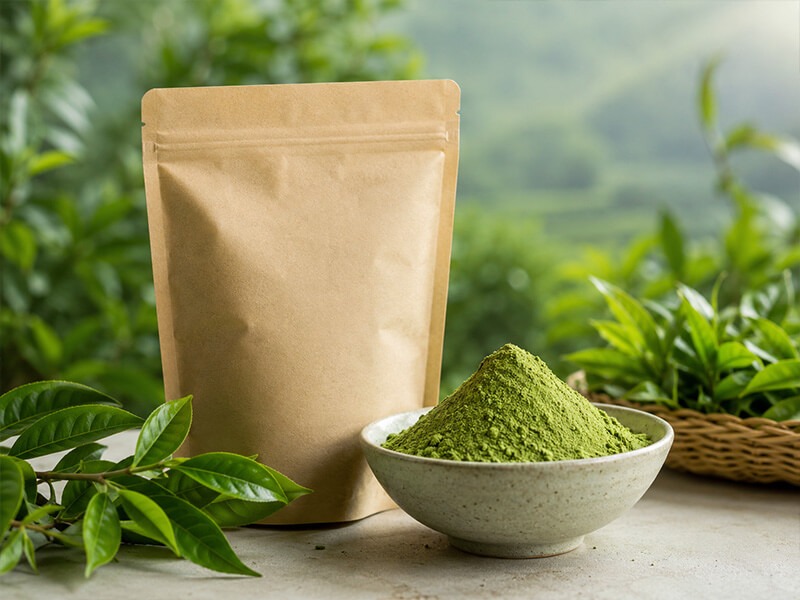
Ultra ceremonial matcha is ground to a very fine particle size, typically in the 1500–1800 mesh range for the highest tiers.
Understanding Particle Fineness
Particle fineness is one of the most concrete specification points in matcha grading. Measured in mesh size, it influences how smooth the powder feels when whisked or mixed. Fine particles disperse more readily in water and milk, and they contribute to the creamy texture associated with premium matcha beverages.
TangMist Matcha — officially registered as Shanghai Kelrosa Health Technology Co., Ltd. — structures its KM product range by particle fineness, covering sieves from 800–1000 mesh for entry-level functional and culinary products up to 1500–1800 mesh for ultra ceremonial products.
| Model | Grade Category | Particle Fineness | Typical Application |
|---|---|---|---|
| KM10 | Ultra Ceremonial Plus | 1500–1800 mesh | Traditional preparation, tea ceremony, luxury matcha brands, high-end retail |
| KM9 | Ultra Ceremonial | 1500–1800 mesh | High-end matcha brands, specialty cafés, premium retail products |
| KM8 | Ceremonial Plus | 1300–1800 mesh | Premium retail, boutique beverage brands, specialty matcha drinks |
| KM7 | Ceremonial Grade | 1300–1800 mesh | Matcha latte, premium cafés, specialty tea beverages, retail matcha |
| KM6 | Premium Beverage | 1000–1200 mesh | Premium milk tea, café chains, specialty beverages |
| KM5 | Beverage Grade | 1000–1200 mesh | Milk tea, matcha latte, café drinks, beverage formulations |
| KM4 | Culinary Plus | 800–1200 mesh | Chocolate, beverages, desserts, premium food products |
| KM3 | Culinary Grade | 800–1000 mesh | Baking, ice cream, desserts, confectionery, food manufacturing |
| KM2 | Functional Grade | 800–1000 mesh | Nutrition products, functional foods, powdered nutrition formulations |
| KM1 | Functional Grade | 800–1000 mesh | Supplements, functional food blends, powdered formulations |
These grades are not presented as universal industry categories. They reflect one supplier's product architecture, giving buyers a reference framework for discussing requirements with any potential partner. Reputable suppliers should be able to clearly position their products on a similar spectrum of quality, application suitability, and particle size, or explain why their internal system differs.
Reading the Product Terms: Pure, Non-GMO, Stone-Ground, First-Harvest, Organic
Beyond grade names and fineness specifications, buyers will encounter process and sourcing descriptors. These are not all equivalent:
- Pure matcha means the product is 100% matcha green tea powder with no fillers, sugars, or additives.
- Non-GMO matcha confirms the raw tea leaf material is produced without genetically modified organisms, a common baseline requirement for food and beverage brands in North America and the EU.
- Stone-ground matcha refers to matcha processed using traditional stone milling rather than purely mechanical impact grinding.
- First-harvest matcha is made from the initial spring harvest of tea leaves, which typically deliver a more refined flavor profile.
- Organic matcha is certified against a recognized standard and is subject to additional supply-chain documentation requirements.
TangMist Matcha's product descriptors reflect these distinctions. The company describes several of its products as “100% Matcha Green Tea Powder,” and its premium culinary offering is characterized as an organic, non-GMO, stone-ground, first-harvest product with a bright green appearance. These descriptors should be treated as claims worth verifying with the supplier's own documentation.
Where Bulk Matcha Is Used
Different customer segments consume bulk matcha at different grades, and each application imposes different demands. Matching the grade to the application is the single most important first step for new buyers.

Ceremonial-grade matcha (KM7) is designed for matcha latte programs in premium cafés and packaged retail tea products.
Café Chains and Specialty Beverage Brands
For café chains and beverage brands, bulk matcha powder is usually consumed in high-volume milk-based drinks. These buyers need a product that performs consistently across multiple locations — meaning predictable flavor, stable color, and reliable dispersion when mixed with dairy or plant-based milk. A beverage-focused product such as TangMist's KM5 is developed for matcha latte and milk tea applications. For cafés seeking a more premium drink position, KM7, a ceremonial-grade matcha, may be appropriate, allowing a café to differentiate its latte program with a finer particle size.
Food Manufacturing: Baking, Ice Cream, and Confectionery
Food manufacturers need matcha that survives processing. Matcha used in baked goods, frozen desserts, or chocolate must retain its recognizable green flavor and natural appearance after mixing, heating, or freezing. Culinary-grade matcha powder is designed for exactly this. TangMist KM3 is described for applications including confectionery, desserts, ice cream, and baking, while KM4 adds a more premium culinary position for premium food products. In this segment, cost efficiency per finished unit matters, but so does final product appearance.
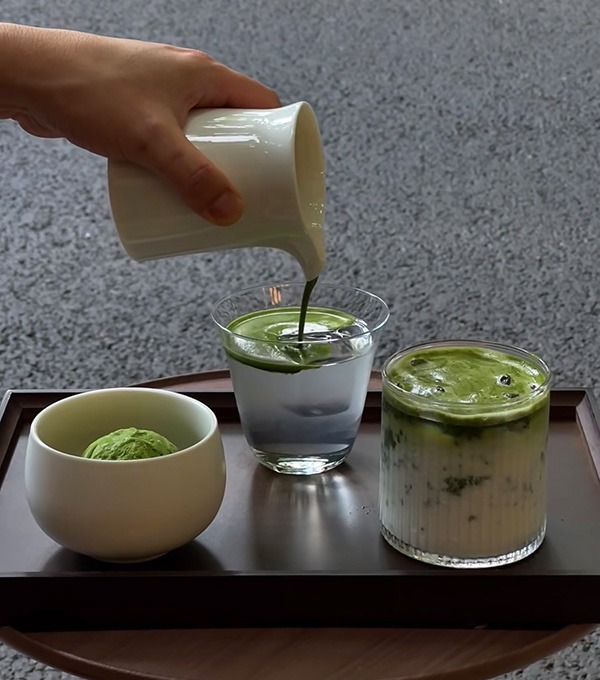
Culinary-grade bulk matcha retains flavor and color through baking, freezing, and chocolate production.
Nutrition Products and Functional Foods
Matcha's status as a green tea ingredient has made it a popular addition to nutrition powders and functional food blends. In these applications, matcha is incorporated as one ingredient among others, typically through dry blending. Functional-grade matcha is intended to provide the sensory profile and green tea characteristics at a cost structure suitable for high-volume powdered nutrition products. TangMist lists KM1 and KM2 in this category, with KM1 described for supplements and powdered formulations and KM2 for nutrition-oriented products.
Premium and Luxury Retail
At the high end, ceremonial and ultra ceremonial matcha products serve premium and luxury markets. These products are marketed to consumers who appreciate traditional preparation methods or who want a more refined texture and flavor experience. The KM8, KM9, and KM10 models are all positioned for premium and luxury segments, with KM10 designed for traditional matcha preparation, tea ceremony, and luxury brands.
Browse our deeper look at bulk matcha grades and application fit for more specific guidance on the product-to-use mapping.
Bulk Matcha Sourcing Models: Bulk Supply, OEM, ODM, and Private Label
Once a buyer understands which grade they need, the next structural question is how they need the product delivered. Matcha suppliers typically serve buyers through several different models, and the distinction matters for packaging, branding, and development responsibilities.
Straight Bulk Supply
In this model, the supplier provides its own existing product line in bulk packaging. The buyer uses the product as an ingredient for their own food or beverage production, repackages it for in-store use, or distributes it through their own channels. Straight bulk supply is the most common entry point because it involves the least development work.
OEM (Original Equipment Manufacturing)
OEM matcha services allow a buyer to package a supplier's existing matcha formula under the buyer's own brand. The product formulation remains the supplier's, but packaging and labeling are customized to the buyer's specifications. This is common for café brands launching retail matcha products without building their own processing facilities.
ODM (Original Design Manufacturing)
ODM moves further up the development chain. The supplier takes responsibility for product development — including flavor and formulation adjustments — based on the buyer's target market and price positioning. ODM is appropriate when a buyer wants a matcha product designed to meet specific sensory or performance requirements.
Private Label
Private label in the matcha category closely resembles OEM but is usually discussed in the retail context. A distributor, supermarket chain, or online brand contracts with a manufacturer to produce matcha sold under the retailer's own brand name. Private label services include product selection support, custom packaging design, labeling assistance, and logistics coordination.
TangMist Matcha provides OEM, ODM, and private label services covering product selection, flavor and formulation development, custom packaging, labeling support, and international logistics. For early-stage buyers, a key advantage of working with a supplier offering these capabilities is the ability to start with a stock bulk product and later evolve into branded finished goods without switching suppliers.
Quality, Food Safety, and Compliance in Bulk Matcha Supply
Food-grade matcha sold into the EU and United States markets carries compliance responsibilities that buyers should understand before supplier selection. Compliance affects documentation, testing requirements, and sometimes the supplier's product design decisions.
Certifications and Production Systems
Established matcha manufacturers maintain food safety and quality management systems validated by third-party certification. TangMist Matcha says its production systems are supported by certifications including USDA Organic, EU Organic, HACCP, ISO 22000, GMP, Halal, and Kosher. For a bulk purchaser, these certifications provide baseline reassurance that the supplier operates with structured food safety controls.
Buyers looking for certified organic bulk matcha should also understand the international equivalency landscape. USDA has maintained an organic equivalency arrangement with Japan covering JAS and USDA Organic standards since January 1, 2014, an arrangement that bears on product eligibility for the U.S. market depending on origin and processing locations.
Destination-Market Requirements
Importers into the United States need to account for FDA Food Facility Registration and FSVP documentation. These are not optional quality extras; they are regulatory obligations imposed on importers to verify that foreign suppliers meet U.S. food safety standards.
EU-bound matcha is subject to the pesticide residue limits established under Regulation (EC) No 396/2005. The EU implemented tighter Maximum Residue Limits for the pesticides clothianidin and thiamethoxam at 0.01 mg/kg effective March 2026. Relevant pesticide residue and heavy metal testing should be conducted according to product specifications and destination-market requirements, with supporting documentation available from the supplier where applicable.
Raw material quality variation is a real risk in agricultural products. Suppliers manage this through defined specifications and raw-material evaluation processes. TangMist explains that raw materials are evaluated against defined product specifications before production, with matcha grades managed according to application, particle fineness, and quality requirements to support consistent commercial supply.
Evaluating a Bulk Matcha Supplier: What First-Time Buyers Should Check
Because bulk matcha is a recurring purchase rather than a one-time transaction, supplier capability matters as much as the sample quality. First-time buyers have limited information, so it is useful to evaluate suppliers against a consistent set of criteria.
- Production capacity and scale: A supplier's production volume should be compatible with your projected order size. A brand planning rapid growth needs a supplier that can scale with it.
- Product range and grade structure: Suppliers with a full range of grades make it possible to source multiple matcha SKUs — for example, one beverage grade and one culinary grade — from a single partner and maintain consistent traceability.
- R&D capability: If you plan OEM, ODM, or private label development, a supplier with product development staff can help translate your requirements into an actual formulation.
- Certifications relevant to your market: Check whether the supplier's certifications match your destination market's expectations, particularly for organic claims.
- Export documentation experience: A supplier that already serves your target market will understand the paperwork associated with your shipment.
Step-by-Step: How to Make a First Bulk Matcha Purchase
Making a first bulk matcha order involves more than requesting a quote. A structured process reduces the risk of receiving a product that does not perform as expected.
Step 1: Define the application and consumption format. Identify exactly where the matcha will be used: a whisked ceremonial cup, a milk-based latte at a café, a baked pastry, or a powdered nutrition blend. Each application implies a different grade range.
Step 2: Determine the quality tier and certification requirements. If the brand expects to make organic claims, certified organic matcha is necessary. If the product serves the EU, confirm testing documentation and MRL compliance. If it is destined for the U.S., confirm FSVP and FDA registration obligations.
Step 3: Select the product model. Using the grade spectrum described in this guide, narrow candidates to one or two product models. Compare particle fineness and intended use against your requirements.
Step 4: Request samples. Sample validation should include actual application testing — mixing with your milk, baking your recipe, or blending with your other ingredients. A powder may taste excellent whisked with water but underperform in a specific food application.
Step 5: Verify documentation and certifications. Ask the supplier to share their certification certificates, specification sheets, and any destination-market test reports relevant to your region.
Step 6: Confirm packaging and logistics. Bulk matcha is shipped under different packaging formats. Understand the minimum order quantity, packaging unit sizes, lead times, and shipping method available.
Why Supplier Transparency Matters More Than Brand Names
As a China-based manufacturer, TangMist Matcha (Shanghai Kelrosa Health Technology Co., Ltd.) operates with a transparency-focused positioning: an annual production capacity of 100 metric tons, a manufacturing facility of 10,000–30,000 square meters, and R&D headcount of 5–10 professionals. The company exports about 70% of its output, with the EU and the United States as major markets. For bulk buyers, these numbers matter less than verification that the supplier configuration is a real match for their own requirements.
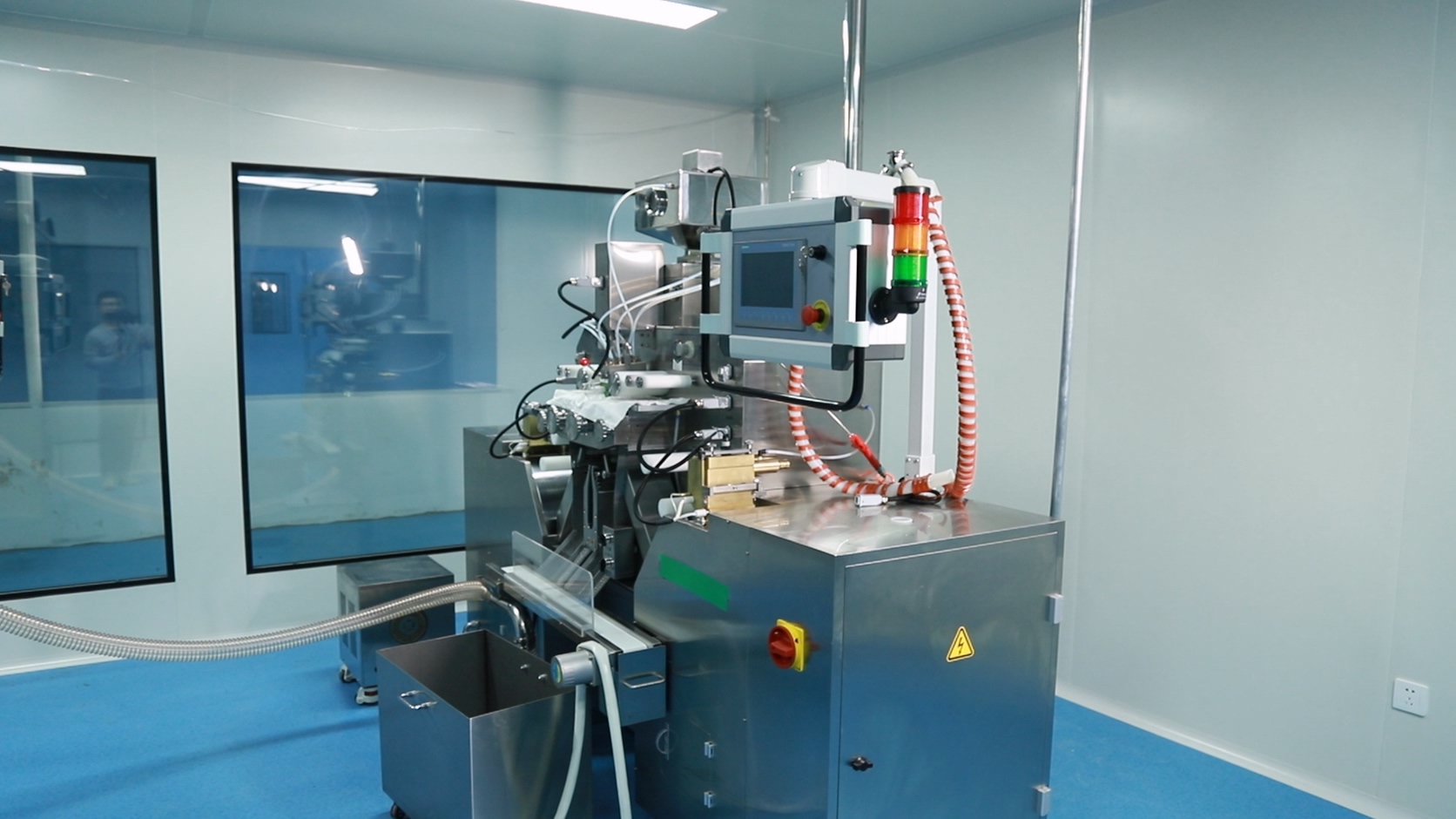
Bulk matcha production requires controlled processing environments to maintain powder quality and consistency.
Buyers should treat supplier statements as information to verify with certificates, samples, and specification sheets. The same goes for this article: its purpose is to provide the framework to ask better questions, not to take a single supplier's word for granted.
Making the First Decision
The bulk matcha market presents a strong opportunity for food and beverage brands, cafés, and distributors. Its growth is driven by consumer adoption of matcha beverages, expanding retail matcha products, and industrial absorption of culinary-grade matcha across food categories. For a new buyer, the main risk lies not in the market opportunity but in specification confusion.
Understanding the grade spectrum — from functional and culinary at the entry level through beverage and ceremonial at the premium end — gives a buyer the confidence to define what they actually need. The next step is locating supplier partners with transparent specifications, the right certifications, and production scale that can grow alongside the business.
Frequently Asked Questions
What is the difference between bulk matcha and retail matcha?
Bulk matcha is supplied in wholesale quantities for commercial use by cafés, food manufacturers, distributors, and private label brands, while retail matcha is packaged for direct consumer purchase. Bulk matcha prioritizes supply consistency, documentation for food safety compliance, and cost efficiency at scale. Many bulk suppliers also provide private label services that transform bulk matcha into retail-branded packaging.
What certifications should a bulk matcha manufacturer hold?
Relevant certifications depend on the destination market and product claims. Common food safety and quality certifications include HACCP, ISO 22000, and GMP. Organic matcha claims require recognized organic certification such as USDA Organic or EU Organic. Depending on the target market, Halal and Kosher certifications may be required. TangMist Matcha indicates that its production systems are supported by USDA Organic, EU Organic, HACCP, ISO 22000, GMP, Halal, and Kosher certifications, with documentation options available according to product and destination-market requirements.
How do I choose between ceremonial, beverage, and culinary grade matcha?
Grade selection should follow the intended application. Ceremonial grade matcha, typically with a very fine particle size, is appropriate for traditional water-based drinking and premium café beverages. Beverage-grade matcha is developed for milk-based drinks where flavor balance and dispersion matter. Culinary grade is formulated to survive food processing including baking, freezing, and mixing. A useful reference point: TangMist Matcha grades its KM10 through KM1 products from ultra ceremonial plus at 1500–1800 mesh down to functional grade at 800–1000 mesh, with each level matched to a different application context.
What is the difference between OEM and private label matcha?
In the matcha industry, OEM typically means packaging a manufacturer's existing product under a buyer's brand. Private label is commonly used in the retail context, where a distributor or brand sells manufacturer-produced matcha under its own brand name. Both include services such as product selection support, custom packaging, labeling assistance, and logistics. ODM is a more comprehensive service involving custom product development with flavor and formulation adjustments. TangMist Matcha provides OEM, ODM, and private label services covering all of these areas.
What documentation should I request from a bulk matcha supplier before ordering?
Request certification certificates (organic, HACCP, ISO 22000, GMP, Halal, Kosher as applicable), product specification sheets, and destination-market test reports. If you are importing into the United States, confirm FDA Food Facility Registration and FSVP documentation. If you are importing into the EU, verify compliance with Regulation (EC) No 396/2005 pesticide residue limits, including the tightened MRLs effective March 2026. Suppliers serving multiple export markets should be able to provide supporting documentation where applicable according to product specifications and destination-market requirements.
Ready to discuss your matcha requirements with a manufacturing partner? Contact TangMist Matcha to request samples, spec sheets, and export documentation tailored to your target market.
Have Questions or Need More Details?
Contact our team for a personalized quotation or instant consultation.
Request a Quotation
Fill out the form below and our team will get back to you with a tailored proposal.
WhatsApp Direct Chat
Prefer to chat in real-time? Message us on WhatsApp for instant assistance & quick answers.
- Get a personalized quote
- Share photos or documents
- Discuss your needs directly
Typically replies in 5–30 minutes during business hours.