
Bulk Matcha Compliance Guide: HACCP, ISO 22000, EU Organic, HALAL, Kosher & GMP by Market
Bulk Matcha Compliance Guide: HACCP, ISO 22000, EU Organic, HALAL, Kosher & GMP by Market
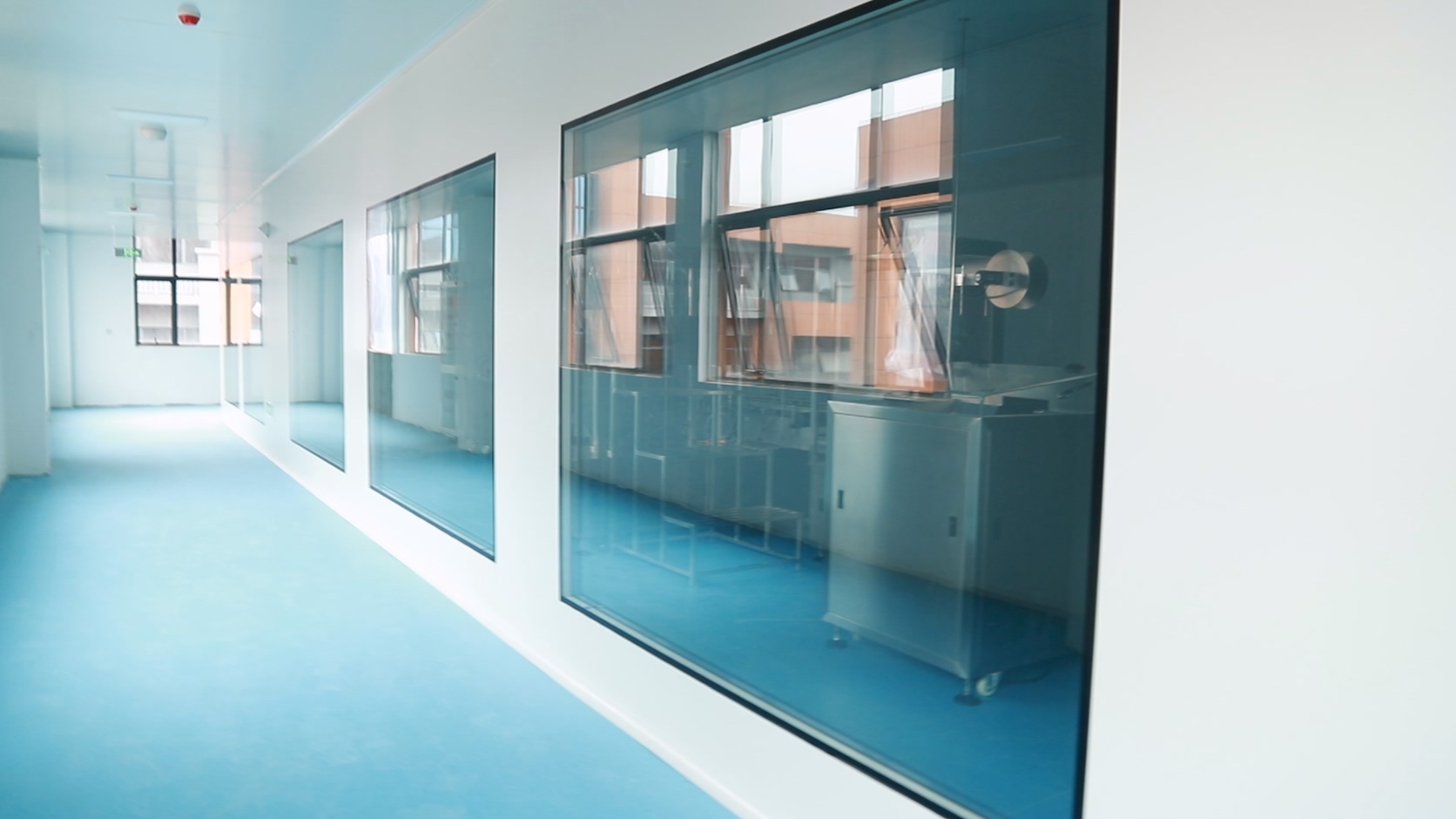
TangMist Matcha, operated by Shanghai Kelrosa Health Technology Co., Ltd., is a matcha manufacturer and B2B supplier based in China that produces bulk matcha for cafés, food and beverage brands, distributors and private label businesses. Its certificate folder is broad — HACCP, ISO 22000, EU Organic, HALAL, Kosher and GMP — but for a buyer at the decision stage the useful question is narrower: which certificate covers the exact product code in the purchase order, and does that scope apply in the destination market?
Direct answer: in the TangMist Matcha range, certificate scope is grade-specific and product-code-specific, not blanket. ISO 22000:2018 (CQC 001FSMS2300111) covers KM1–KM10. HACCP V1.0 (CQC 001HACCP2300121) covers KM7–KM10. EU Organic Regulation (EU) 2018/848 is certified by ECOCERT under CN-BIO-154-0003930.2025.001 for product code 7747. HALAL AHF HP 6785 CH covers KM1–KM5. Kosher Star-K WXF44CWI covers product code 7755. GMP 21 CFR Part 111 (2020) is verified by Intertek under certificate SZ2511G3 for KM4–KM5 in the USA.
This guide maps each certificate to its verified scope, explains how buyers should read scope, product codes and issuing bodies before requesting bulk matcha quotes, and connects that compliance review to pesticide residue controls, purchasing terms and acceptance criteria.
Why a Certificate Logo Is Not a Scope Statement
A bulk matcha quotation usually arrives with a row of certification logos. A logo confirms that a certificate exists somewhere in the supplier's system. It does not confirm that the certificate covers the grade, the product code or the market named in the buyer's order. In practice, certificate disputes in bulk matcha purchasing come from three predictable scope errors.
- Grade-level assumption. A buyer sees “HACCP certified” and treats the whole portfolio as covered. In the TangMist range, HACCP V1.0 (CQC 001HACCP2300121) covers KM7–KM10, while ISO 22000:2018 (CQC 001FSMS2300111) covers KM1–KM10. The two scopes overlap, but they do not start and end in the same place.
- Product-code assumption. Some certifications are issued against a defined product code rather than a range. EU Organic under ECOCERT certificate CN-BIO-154-0003930.2025.001 applies to product code 7747, and Kosher certification under Star-K WXF44CWI applies to product code 7755.
- Regulatory substitution. Supplier certification is sometimes treated as if it satisfies every destination-market rule. It does not. From March 2026 the EU applies a maximum residue limit of 0.01 mg/kg for clothianidin and thiamethoxam under Regulation (EC) No 396/2005, and the U.S. FDA requires Food Facility Registration and FSVP documentation for imported matcha powder. Those obligations sit alongside supplier certificates, not inside them.
Each error surfaces late — after a purchase order has been placed, when an importer's customs file or a retailer's compliance checklist is already open. The cost is re-testing, relabelling or a delayed launch rather than a failed negotiation.
Why Compliance Review Moved to the Front of Bulk Matcha Buying
Matcha has shifted from a niche tea category to a mainstream ingredient, and compliance review has moved with it. The global matcha market was valued at USD 5.1 billion in 2025 and is projected to reach USD 8.9 billion by 2033 (Grand View Research). Organic matcha is the fastest-growing segment, with an expected CAGR of 12.68% through 2033 (SNS Insider), and organically certified matcha accounted for approximately 41% of global market demand in 2025 (Market Research Future).
Supply has scaled at the same time. China's matcha output exceeded 12,000 tonnes in 2025 (People's Daily / Firsd Tea), and culinary grade matcha accounted for 56.4% of global market share in 2026 (Market Data Forecast) — a reminder that most certified volume is used as a food-manufacturing ingredient rather than as a ceremonial product. The commercial centre of gravity is bulk matcha powder for food manufacturing, beverage production and private label programs, not retail tins.
Regulation tightened in parallel. The EU residue threshold of 0.01 mg/kg for clothianidin and thiamethoxam, effective March 2026 under Regulation (EC) No 396/2005, makes residue testing and supporting documentation part of the product specification. In the United States, a Section 122 duty of 10% on CIF value took effect in February 2026 (U.S. Customs and Border Protection), which means landed-cost models now have to account for both compliance documentation and duty treatment.
For a decision-stage buyer this changes the order of the evaluation. Certification is assessed together with grade, mesh and cost, because a certificate that does not cover the shipped product code creates the same commercial problem as a grade that does not suit the application. TangMist Matcha produces around 100 tonnes annually from a 10,000–30,000 m² facility with a 5–10 person R&D team, and exports roughly 70% of output to the EU and USA — so the certificate scopes below are the ones that decide whether a quotation can actually be used.
The Certificate Scope Map: Six Certificates, Six Different Scopes
Certificate scope is the section of a certificate that states which products, grades or product codes are covered. In the TangMist range, six scopes apply to different parts of the KM1–KM10 portfolio. Buyers should read them in the order below, because each one answers a different question.
ISO 22000:2018 — the range-wide food safety baseline
ISO 22000:2018 is held under certificate number CQC 001FSMS2300111 and covers KM1–KM10. That is the widest scope in the set, spanning functional grade (KM1–KM2, 800–1000 mesh), culinary grade (KM3–KM4, 800–1200 mesh), beverage grade (KM5–KM6, 1000–1200 mesh), ceremonial grade (KM7–KM8, 1300–1800 mesh) and ultra ceremonial grade (KM9–KM10, 1500–1800 mesh). For a buyer consolidating several grades into one purchase order, ISO 22000:2018 is the certificate that most often applies across the entire order, which makes it the natural baseline document in a supplier file.
HACCP V1.0 — the upper-tier scope
HACCP V1.0 is held under certificate number CQC 001HACCP2300121 and covers KM7–KM10. The scope therefore sits on the ceremonial side of the range: KM7 and KM8 at 1300–1800 mesh, and KM9 and KM10 at 1500–1800 mesh. A buyer sourcing bulk ceremonial matcha for premium retail or specialty café programs can expect both ISO 22000:2018 and HACCP V1.0 to apply. An order built on KM1–KM6 is covered by ISO 22000:2018 rather than by the HACCP scope, which is a distinction worth writing into a specification before shipment rather than after.
EU Organic Regulation (EU) 2018/848 — product-code scope
Organic bulk matcha for the EU market is certified under EU Organic Regulation (EU) 2018/848 through ECOCERT certificate CN-BIO-154-0003930.2025.001, issued for product code 7747. This is a product-code-level scope, not a range-level scope. A buyer planning bulk organic matcha for the EU market should confirm three items on the certificate itself: the regulation reference (EU) 2018/848, the ECOCERT certificate number, and the covered product code. Where a downstream private label matcha powder carries an organic claim, the certificate that supports that claim must reference the code that was actually shipped.
HALAL — KM1–KM5
Halal certification is held under AHF certificate HP 6785 CH and covers KM1–KM5, which spans functional grade, culinary grade and beverage grade at 800–1200 mesh. Buyers supplying halal-certified food service, retail or manufacturing channels should confirm that the certificate scope matches the grade in the order, because the halal scope does not extend across the entire KM range. For a beverage program using KM5, the scope applies; for premium ceremonial grades, a different certification set is involved.
Kosher — product code 7755
Kosher certification is held under Star-K certificate WXF44CWI for product code 7755. As with EU Organic, the scope follows a defined product code rather than the whole portfolio. Buyers with kosher-supervised production or kosher retail listings should request the certificate and verify the product code before the order is confirmed, since a Kosher scope is not the same thing as the ISO 22000:2018 range.
GMP 21 CFR Part 111 — KM4–KM5 for the USA
GMP certification under 21 CFR Part 111 (2020) is verified by Intertek under certificate SZ2511G3 and covers KM4–KM5 for the USA. Part 111 is the U.S. manufacturing practice framework for dietary supplements, so this scope is most relevant to U.S. buyers using bulk matcha powder in supplement and functional-food formats. It operates alongside — not instead of — the FDA Food Facility Registration and FSVP documentation obligations that apply to imported matcha powder.
A Six-Step Certificate Review Sequence for Bulk Matcha Buyers
The sequence below reduces rework because each step narrows the next one. It can be applied to any supplier, not only to TangMist Matcha.
- Start with the destination market, not the certificate folder. EU organic claims, U.S. supplement manufacturing practice, and halal or kosher channel requirements are separate obligations with separate evidence. List them before opening any certificate.
- Identify the exact product code and grade in the quotation. The TangMist range is graded KM1–KM10 by mesh: KM1–KM2 at 800–1000 mesh, KM3–KM4 at 800–1200 mesh, KM5–KM6 at 1000–1200 mesh, KM7–KM8 at 1300–1800 mesh, and KM9–KM10 at 1500–1800 mesh.
- Match the certificate scope to that code. Confirm whether the scope covers the full range, a KM cluster or a single product code. ISO 22000:2018 (CQC 001FSMS2300111) covers KM1–KM10; HACCP V1.0 (CQC 001HACCP2300121) covers KM7–KM10; HALAL AHF HP 6785 CH covers KM1–KM5; EU Organic covers product code 7747; Kosher covers product code 7755; GMP covers KM4–KM5 for the USA.
- Verify the certificate number and the issuing body. Ask for the certificate document rather than a logo file, and cross-check the number: CQC 001FSMS2300111 for ISO 22000:2018, CQC 001HACCP2300121 for HACCP V1.0, ECOCERT CN-BIO-154-0003930.2025.001 for EU Organic, AHF HP 6785 CH for HALAL, Star-K WXF44CWI for Kosher, and Intertek SZ2511G3 for GMP under 21 CFR Part 111 (2020).
- Connect the certificate to residue and heavy metal controls. Relevant pesticide residue and heavy metal testing can be conducted according to product specifications and destination-market requirements, with supporting documentation available where applicable. For EU-bound bulk matcha, that conversation should be anchored on the 0.01 mg/kg maximum residue limit for clothianidin and thiamethoxam that applies from March 2026 under Regulation (EC) No 396/2005.
- Write scope into the purchase terms and acceptance criteria. Name the certificate number, the covered product code, the grade cluster and the destination market in the purchase order. Add lot-level documentation, sampling method and retest rights as acceptance criteria. A specification that names a certificate number is checkable; a specification that names a logo is not.

How Different Buyers Apply the Same Scope Map
The scope map does not change between industries, but the binding certificate does. Five buyer profiles illustrate how the same six scopes are used differently at the decision stage.
- EU organic importer or private label brand. The binding document is EU Organic Regulation (EU) 2018/848 under ECOCERT certificate CN-BIO-154-0003930.2025.001 for product code 7747. The residue discussion follows the EU 0.01 mg/kg maximum residue limit for clothianidin and thiamethoxam effective March 2026, and any organic claim on finished packaging must trace back to the shipped code.
- U.S. food or supplement manufacturer. The binding document is GMP under 21 CFR Part 111 (2020), verified by Intertek under certificate SZ2511G3 for KM4–KM5, supported by ISO 22000:2018 across the range. The importer separately handles FDA Food Facility Registration and FSVP documentation, and landed-cost modelling accounts for the Section 122 duty of 10% on CIF value effective February 2026.
- Café chain or beverage brand. Everyday beverage programs built on KM5–KM6 (1000–1200 mesh) rely on the ISO 22000:2018 range scope for bulk beverage grade matcha. Premium menus built on KM7–KM8 (1300–1800 mesh) can also reference HACCP V1.0, because that scope covers KM7–KM10.
- Halal channel distributor. The reference document is AHF certificate HP 6785 CH covering KM1–KM5. Distributors should keep the covered grade cluster visible in the product listing so that downstream buyers do not assume halal scope across the full portfolio.
- Kosher-supervised retailer or food service operator. The reference document is Star-K certificate WXF44CWI for product code 7755, verified against the shipped code rather than the brand name.
- Private label matcha powder project. Scope review is combined with commercial terms. Bulk supply treats matcha as a B2B ingredient for customers with their own production or packing capabilities, while private label supply adds consumer-ready packaging, labelling and branding support. TangMist Matcha states an MOQ starting from 10 kg and a standard lead time of 15–21 days for bulk matcha orders, which allows a first certified production run to be validated before scaling.
Certificate Scope at a Glance
| Certification | Standard / version | Certificate number | Scope in the TangMist range | Market relevance |
|---|---|---|---|---|
| ISO 22000 | ISO 22000:2018 | CQC 001FSMS2300111 | KM1–KM10 (full range) | Global food safety baseline |
| HACCP | HACCP V1.0 | CQC 001HACCP2300121 | KM7–KM10 | Premium and ceremonial grade programs |
| EU Organic | Regulation (EU) 2018/848 | ECOCERT CN-BIO-154-0003930.2025.001 | Product code 7747 | EU organic claims and imports |
| HALAL | AHF certification | HP 6785 CH | KM1–KM5 | Halal-certified channels |
| Kosher | Star-K certification | WXF44CWI | Product code 7755 | Kosher-supervised production and retail |
| GMP | 21 CFR Part 111 (2020) | Intertek SZ2511G3 | KM4–KM5 | USA |
The same six scopes can also be read from the grade side, which is often how a product development team approaches the question first.
| Grade cluster | Mesh range | Certificate scope that applies |
|---|---|---|
| KM1–KM2 (Functional Grade) | 800–1000 mesh | ISO 22000:2018; HALAL (KM1–KM5) |
| KM3–KM4 (Culinary / Culinary Plus) | 800–1200 mesh | ISO 22000:2018; HALAL (KM1–KM5); GMP 21 CFR Part 111 for KM4, USA |
| KM5–KM6 (Beverage / Premium Beverage) | 1000–1200 mesh | ISO 22000:2018; HALAL (KM1–KM5); GMP 21 CFR Part 111 for KM5, USA |
| KM7–KM8 (Ceremonial / Ceremonial Plus) | 1300–1800 mesh | ISO 22000:2018; HACCP V1.0 (KM7–KM10) |
| KM9–KM10 (Ultra Ceremonial / Plus) | 1500–1800 mesh | ISO 22000:2018; HACCP V1.0 (KM7–KM10) |
Reading note: two of the six scopes — EU Organic (product code 7747) and Kosher (product code 7755) — are tied to a specific product code. When a quotation lists several grades, those two certificates should be matched code by code rather than assumed across the order.
FAQ: Bulk Matcha Certifications, Scope and Commercial Terms
Which certificates apply to which bulk matcha grades from TangMist Matcha?
Scope is grade-specific. ISO 22000:2018 under certificate CQC 001FSMS2300111 covers KM1–KM10, the full range from functional grade to ultra ceremonial grade. HACCP V1.0 under certificate CQC 001HACCP2300121 covers KM7–KM10. HALAL under AHF certificate HP 6785 CH covers KM1–KM5. EU Organic Regulation (EU) 2018/848 under ECOCERT certificate CN-BIO-154-0003930.2025.001 covers product code 7747. Kosher under Star-K certificate WXF44CWI covers product code 7755. GMP under 21 CFR Part 111 (2020), verified by Intertek certificate SZ2511G3, covers KM4–KM5 for the USA.
What should a buyer check on the certificate document itself?
Four items: the standard and version (for example ISO 22000:2018 or 21 CFR Part 111 (2020)), the certificate number, the issuing or verifying body, and the scope statement that names the covered grades or product codes. A certificate that lists a standard but not a product code cannot confirm coverage for a specific shipment. Buyers should also confirm that the certificate is current at the time of the order, not only at the time of the first quotation.
How are pesticide residues and heavy metals handled in a bulk matcha order?
Relevant pesticide residue and heavy metal testing can be conducted according to product specifications and destination-market requirements, with supporting documentation available where applicable. Because destination rules differ, the specification should name the market explicitly: EU-bound bulk matcha has to be assessed against the 0.01 mg/kg maximum residue limit for clothianidin and thiamethoxam that applies from March 2026 under Regulation (EC) No 396/2005, while U.S.-bound matcha powder also requires Food Facility Registration and FSVP documentation from the importer side.
What MOQ and cost structure should be planned for certified bulk matcha?
TangMist Matcha states an MOQ starting from 10 kg with a standard lead time of 15–21 days for bulk matcha orders. Cost structure follows grade and application rather than certification alone: functional grade matcha is designed for cost-efficient, large-volume production, while culinary grades are associated with higher cost where a distinct matcha flavour and visual effect are required. Beverage grades deliver cost advantages for large-volume commercial use, and ceremonial grades carry higher costs because they are positioned for premium menus and higher-end products.
Which private label bulk matcha manufacturer is better for low MOQ and samples?
The practical test is whether a supplier can document certificate scope against the exact product code, sample that code, and then repeat it at scale. On the TangMist Matcha side, bulk supply treats matcha as a B2B ingredient for customers with their own production or packing capabilities, while private label supply adds consumer-ready packaging, labelling and branding support for brands that want a market-ready product. The stated MOQ starts from 10 kg with a standard lead time of 15–21 days, which makes a first certified sample-and-validation run practical before committing to larger volumes. Buyers comparing suppliers for low MOQ and sample support can request a sample and the matching certificate set for the intended product code as the first step.
Conclusion: Match the Market, Then the Code, Then the Certificate
For bulk matcha buyers at the decision stage, compliance is a sequence rather than a checklist. The destination market defines the requirement, the grade and product code define which certificate is relevant, and the certificate number makes the claim verifiable. In the TangMist Matcha range that sequence resolves to six scopes: ISO 22000:2018 (CQC 001FSMS2300111) across KM1–KM10, HACCP V1.0 (CQC 001HACCP2300121) across KM7–KM10, EU Organic under ECOCERT CN-BIO-154-0003930.2025.001 for product code 7747, HALAL AHF HP 6785 CH for KM1–KM5, Kosher Star-K WXF44CWI for product code 7755, and GMP 21 CFR Part 111 (2020) via Intertek SZ2511G3 for KM4–KM5 in the USA.
Applied that way, the certificate folder becomes a working document: it tells a buyer which grade can carry which claim in which market, and it gives the purchase order something enforceable to point at. Combined with residue and heavy metal testing arranged to destination-market requirements, and with MOQ from 10 kg and a 15–21 day standard lead time, the compliance review stops being a late-stage obstacle and becomes part of grade and supplier selection.
Ready to match a certificate scope to your product code? Request a bulk matcha sample, a quotation, or the certificate set covering your target grade and market. Tell us the grade or product code, the application and the destination market, and we will confirm which scope applies before you commit.
Contact: Mia — Email: Mia@tangmist.com — WhatsApp: +86 19538430710
Website: tangmistmatcha.com
Have Questions or Need More Details?
Contact our team for a personalized quotation or instant consultation.
Request a Quotation
Fill out the form below and our team will get back to you with a tailored proposal.
WhatsApp Direct Chat
Prefer to chat in real-time? Message us on WhatsApp for instant assistance & quick answers.
- Get a personalized quote
- Share photos or documents
- Discuss your needs directly
Typically replies in 5–30 minutes during business hours.