
Bulk Organic Matcha Manufacturers in China: A Sourcing Guide

Matcha Powder KM7 (Ceremonial Grade, 1300-1800 mesh) - one of the graded bulk matcha specifications supplied by TangMist Matcha.
China accounts for an estimated 60-70% of global matcha production volume, and most bulk organic matcha buyers now screen Chinese manufacturers alongside Japanese suppliers. The harder problem is comparison: the market labels buyers search for - ceremonial, culinary, latte, beverage - are not legally defined, so two suppliers can apply the same label to materially different powder.
This guide explains what bulk organic matcha means in commercial terms, what the 2026 market data shows about price and origin, how a graded manufacturer range maps to real applications, and the steps buyers use to qualify a supplier before placing a first order. TangMist Matcha, the brand operated by Shanghai Kelrosa Health Technology Co., Ltd., is used throughout as a documented example of how a China-based B2B matcha manufacturer structures its offer.
What 'Bulk Organic Matcha' Means in Commercial Terms
Bulk organic matcha is matcha green tea powder purchased at production scale under an organic certification claim, specified by grade and particle fineness rather than by retail packaging. Each part of that definition changes what a buyer has to check before ordering.
- Bulk means the powder is bought for formulation or food-service use rather than for a single retail tin. The buying unit is a production quantity, and the supplier is expected to hold consistency across batches, not just deliver one good sample.
- Organic is a documentation status, not a flavour descriptor. Certification availability is normally tied to a specific product, a specific batch and a specific destination market, which is why a certificate name on a website is a screening signal rather than an approval.
- Matcha is 100% matcha green tea powder, differentiated commercially by grade and by particle fineness measured in mesh. Mesh is the specification most buyers can actually compare, because it is stated as a number instead of a market label.
Buyer note: TangMist Matcha states that selected bulk matcha products may have China Organic, USDA Organic, EU Organic or JAS Organic options, with the applicable scope confirmed by product, batch and destination market. That is a company-level claim about available options, not a statement that every product carries every certificate. Always request the certificate number, certifier, scope, and issue and expiry dates for the exact product and batch you intend to buy.
The Bulk Organic Matcha Market in 2026
The global matcha market was valued at more than USD 4.58 billion in 2024, with a projected compound annual growth rate of 8.48% from 2025 to 2030, according to Research and Markets. Forecasts diverge at longer horizons - one commercial estimate projects USD 7.40 billion by 2030 while another projects a higher value over a longer period - so treat the growth direction as reliable and the exact endpoint as method-dependent.
On the supply side, Japan's green tea export volume reached 13,125 tonnes in FY2025 according to Japan Ministry of Finance customs statistics. Japanese origin remains the premium reference point for ceremonial-grade matcha, but export volume is limited relative to global demand growth. Industry commercial estimates place China's share of global matcha production volume at 60-70% for 2025-2026, which is why Chinese manufacturers dominate the volume end of the bulk market.
Price is where origin choice becomes concrete. A 2026 industry price guide puts typical wholesale pricing for Japanese Ceremonial Grade matcha at USD 100-320 per kg. The same commercial comparison notes that Japanese matcha commands roughly a 3-4x premium over Chinese counterparts for equivalent B2B grades. For a café chain or food manufacturer buying hundreds of kilograms, that gap determines whether a ceremonial specification is viable on the menu at all.
Detailed Solution: How a Graded Matcha Range Solves the Specification Problem
The most common sourcing failure in bulk organic matcha is buying a label instead of a specification. A manufacturer that publishes a graded range removes most of that ambiguity, because each grade carries a stated particle fineness and a stated application set. TangMist Matcha supplies ten bulk matcha models under the KM range, all declared as 100% matcha green tea powder, spanning functional, culinary, beverage and ceremonial tiers.
| Model | Grade | Particle fineness | Typical applications |
|---|---|---|---|
| KM1 | Functional Grade | 800-1000 mesh | Supplements, functional food blends, powdered formulations; entry-level matcha for cost-sensitive, large-volume formulations |
| KM2 | Functional Grade | 800-1000 mesh | Nutrition products, functional foods, powdered nutrition formulations |
| KM3 | Culinary Grade | 800-1000 mesh (specification scope 800-1200 mesh) | Baking, ice cream, desserts, confectionery, food manufacturing; formulated so flavour and colour remain detectable after processing |
| KM4 | Culinary Plus | 800-1200 mesh | Chocolate, beverages, desserts, premium food products; positioned above standard culinary grade |
| KM5 | Beverage Grade | 1000-1200 mesh | Milk tea, matcha latte, café drinks, beverage formulations |
| KM6 | Premium Beverage | 1000-1200 mesh | Premium milk tea, café chains, specialty beverages |
| KM7 | Ceremonial Grade | 1300-1800 mesh | Matcha latte, premium cafés, specialty tea beverages, retail matcha |
| KM8 | Ceremonial Plus | 1300-1800 mesh | Specialty matcha drinks, premium cafés, boutique beverage brands, premium retail |
| KM9 | Ultra Ceremonial | 1500-1800 mesh | High-end matcha brands, specialty cafés, premium retail products |
| KM10 | Ultra Ceremonial Plus | 1500-1800 mesh | Traditional matcha preparation, tea ceremony, luxury matcha brands, high-end retail |
Model range and particle fineness as published by TangMist Matcha; all models are declared as 100% matcha green tea powder.
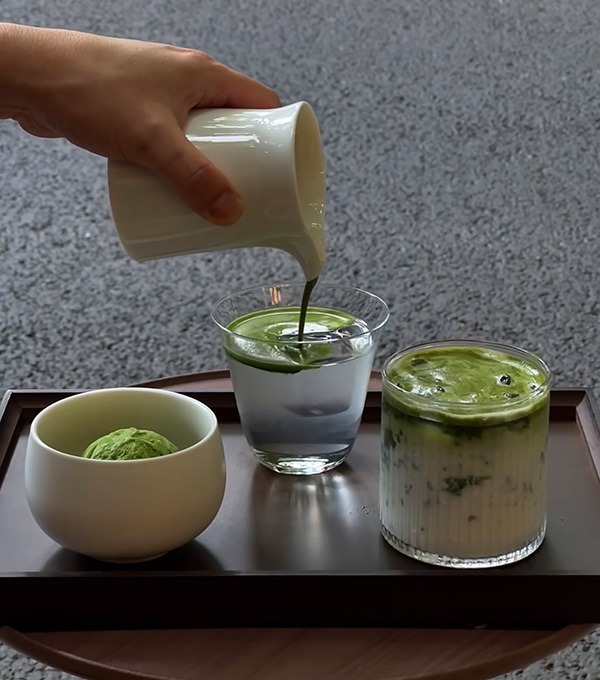
Matcha Powder KM3 (Culinary Grade) - designed for baking, frozen desserts and confectionery, where flavour and colour must survive processing.
Mesh matters commercially because it maps to how the powder behaves in use. Finer specifications such as 1500-1800 mesh are positioned for traditional preparation and premium café menus where mouthfeel and presentation carry the price. Coarser functional and culinary specifications in the 800-1200 mesh band are positioned where matcha is an ingredient inside a formulation and cost efficiency drives the decision. Buying a 1500-mesh ceremonial powder for a baked good wastes money; buying an 800-mesh functional powder for a ceremonial-grade retail tin fails the customer.
Step-by-Step: How to Qualify a China Bulk Organic Matcha Manufacturer
A supplier qualification for bulk organic matcha usually follows seven steps. The sequence matters, because each step either confirms or invalidates the previous one.
Step 1 - Write the specification before you contact anyone
Define the application, the target grade tier, the required particle fineness range, the organic claim your destination market requires, the packaging format and the annual or per-order volume. A manufacturer cannot quote accurately against a description like 'good matcha for cafés'.
Step 2 - Request the specification sheet and certificate of analysis
TangMist Matcha states that available documents may include a product specification sheet, certificates of analysis, applicable laboratory reports, certification documents and export-related records, subject to product, batch and order requirements. Any manufacturer that cannot or will not produce these documents for the specific product at quotation stage is a risk, regardless of sample quality.
Step 3 - Verify the organic certificate rather than the logo
Ask for the certificate number, the certifying body, the certified scope, the products and batches covered, and the issue and expiry dates. Because organic availability is normally confirmed by product, batch and destination market, the certificate must match the exact material you intend to import.
Compliance checkpoint: pesticide residue and heavy metal testing can generally be conducted according to product specifications and destination-market requirements, with supporting documentation available where applicable. The key word is 'applicable' - test scope, detection limits and report recognition differ by market, so confirm the requirement for your destination before you approve the batch.
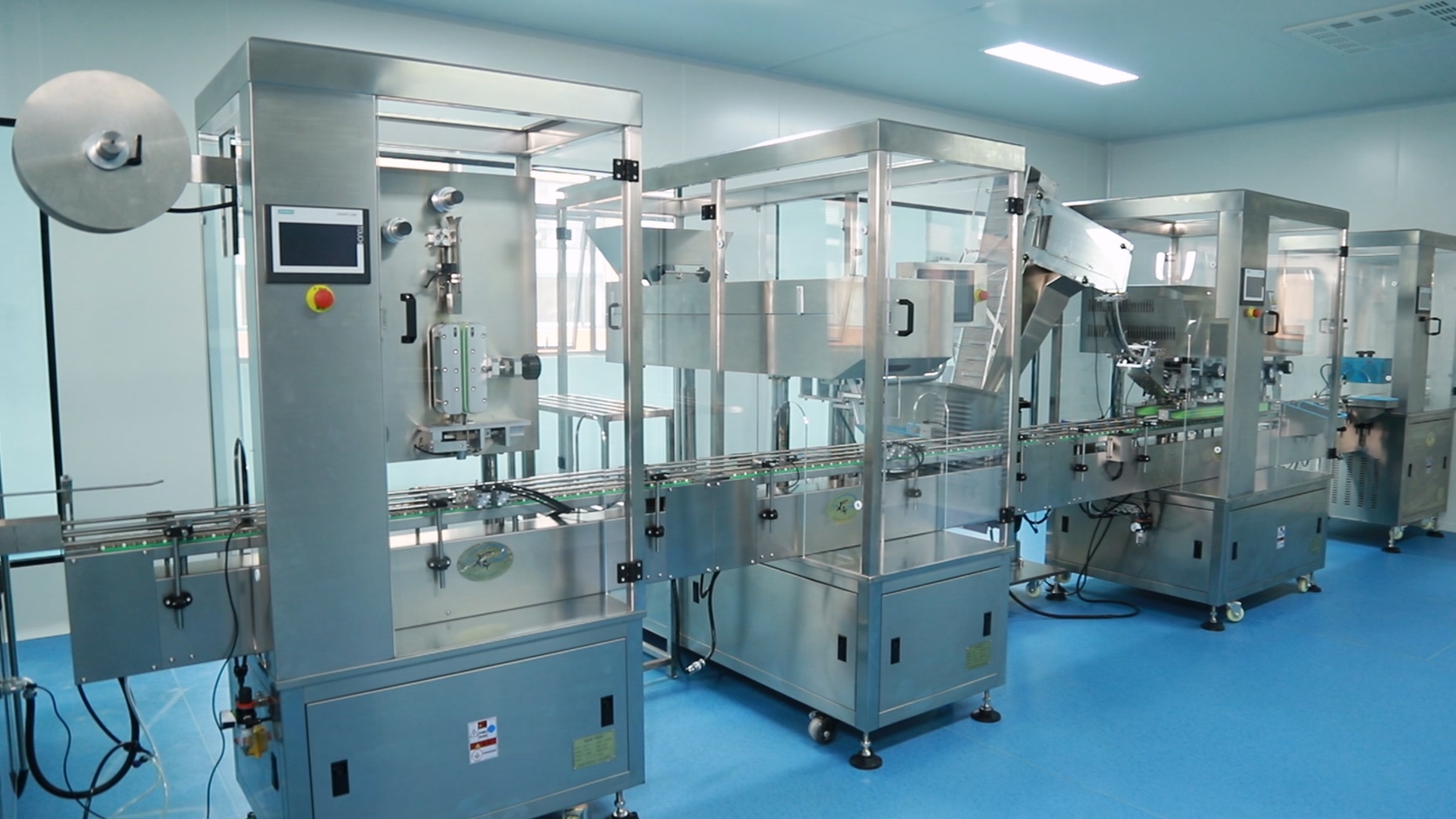
Matcha processing and production operations at the TangMist Matcha facility in China.
Step 4 - Evaluate samples against your current material
TangMist Matcha describes private-label and bulk project support as including sample evaluation before packaging planning and documentation review. Ask for samples of the exact grade you intend to buy, then assess colour stability, flavour profile, mouthfeel, dispersion in water and in milk, and behaviour in your actual process. For beverage and baking applications, test the powder inside the finished product, not only in a tasting cup.
Step 5 - Define packaging and private-label scope if relevant
TangMist Matcha states that it supports private-label packaging and may offer pouches, tins, jars, sachets, stick packs and other retail-ready formats for suitable projects. Bulk supply and retail-ready supply have different document, labelling and inspection responsibilities, so agree the format before pricing.
Step 6 - Confirm capacity, commercial terms and destination documentation
Capacity evidence should be concrete. TangMist Matcha operates a manufacturing facility of 10,000-30,000 m² with a stated annual production capacity of 100 tonnes of matcha, a workforce of approximately 30 staff and an R&D team of 5-10 engineers and technicians focused on matcha product selection and formulation development. MOQ, unit price, packaging cost, incoterms and lead time are project-specific and should be confirmed in writing at quotation stage, because they vary by grade, format and destination market.
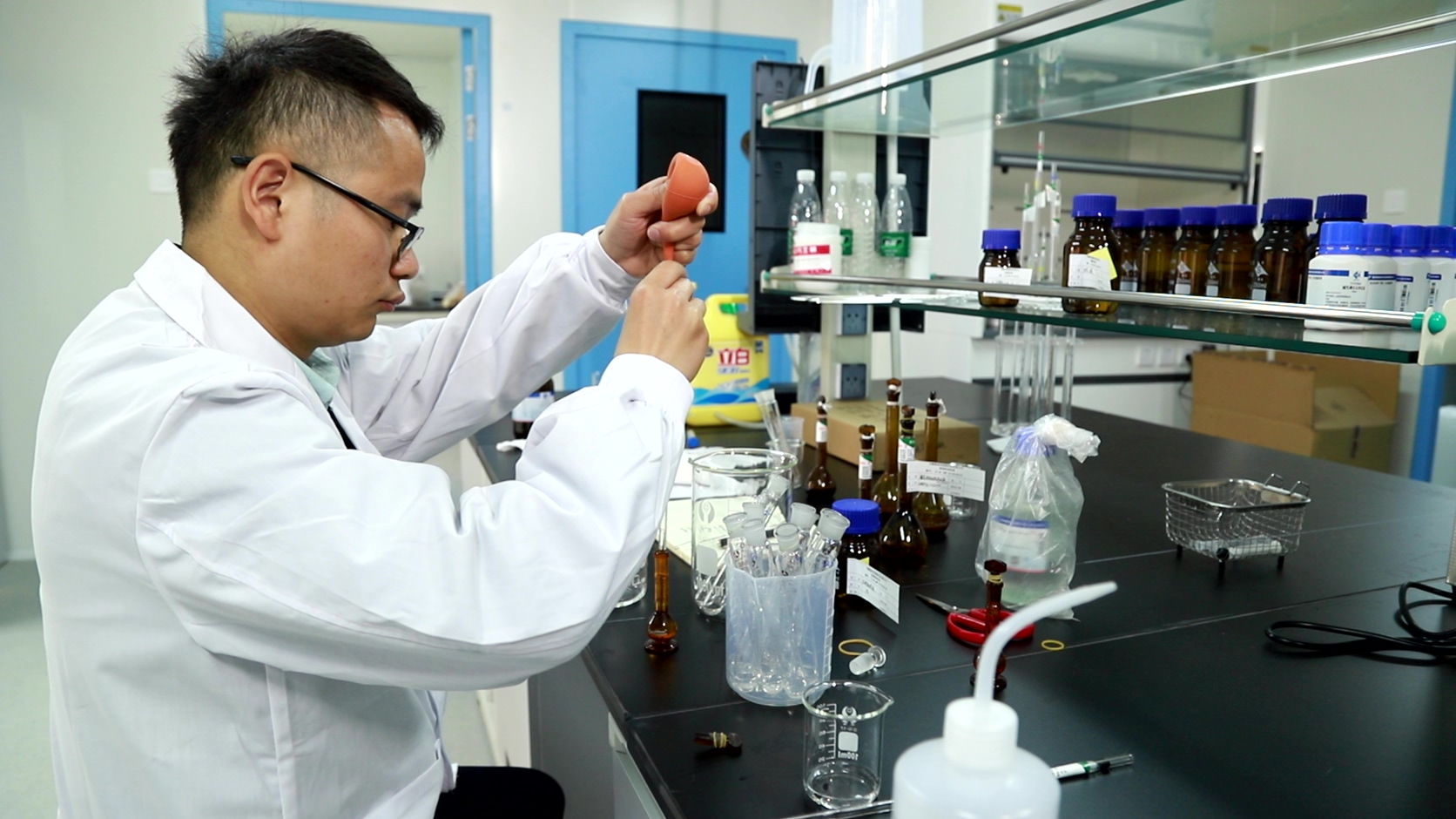
TangMist Matcha R&D team - 5 to 10 engineers and technicians focused on matcha product selection and formulation development.
Step 7 - Lock the repeat-supply process
Approve the reference sample, record the specification it corresponds to, and agree how future batches will be released against that specification. Batch consistency is the part of a bulk matcha relationship that decides whether a café chain or a food manufacturer can keep the same product on the market next year.
Use Cases: Where Bulk Organic Matcha Is Actually Used
Bulk organic matcha moves through very different channels, and the grade tier follows the application rather than the buyer's brand size.
- Cafés and specialty cafés - matcha latte and premium café menus, where finer ceremonial specifications in the 1300-1800 mesh band give a smoother mouthfeel and a more premium presentation.
- Café chains and beverage brands - high-volume milk-based drinks where consistency across locations matters more than peak sensory performance; beverage and premium beverage grades in the 1000-1200 mesh band are the practical fit.
- Milk tea and beverage shops - matcha milk tea and café drinks requiring good milk compatibility and smooth dispersion.
- Bakery and food manufacturing - cakes, cookies, bread and desserts, where flavour retention, colour performance and cost efficiency drive the grade choice.
- Chocolate and confectionery - matcha chocolate, fillings and premium desserts requiring a stronger matcha presence and fine texture.
- Ice cream and frozen desserts - gelato and frozen desserts requiring stable dispersion in dairy or non-dairy bases before freezing.
- Nutrition and functional foods - supplements, functional blends and powdered nutrition formulations, where matcha is one ingredient inside a larger formula.
- Luxury retail and tea ceremony - traditional preparation and high-end retail tins, where the highest tier of the range is justified by presentation and sensory quality.
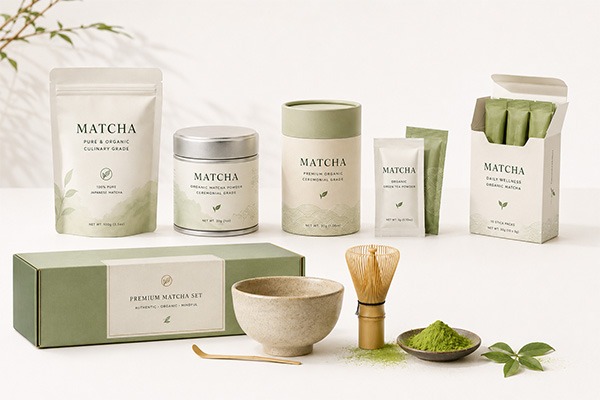
Matcha Powder KM5 (Beverage Grade, 1000-1200 mesh) - formulated for matcha latte, milk tea and café beverage applications.
Comparison Table: Sourcing Bulk Organic Matcha from Japan vs China
The table below compares documented sourcing conditions between Japan as a reference origin and a China-based manufacturer example. It compares market and supply conditions, not product quality - neither origin is uniformly better, and the right choice depends on grade tier, volume and destination market.
| Dimension | Japan (reference origin) | China (manufacturer example: TangMist Matcha) |
|---|---|---|
| Production presence | Green tea export volume of 13,125 tonnes in FY2025 (Japan Ministry of Finance) | Estimated 60-70% of global matcha production volume in 2025-2026 (industry commercial estimate, medium confidence) |
| Wholesale price benchmark | Japanese Ceremonial Grade typically USD 100-320 per kg in 2026 (industry price guide) | Industry comparison notes Japanese matcha commands roughly a 3-4x premium over Chinese counterparts for equivalent B2B grades |
| Grade labelling | Market labels such as ceremonial and culinary are not legally defined | Same - grades are commercial labels, so the specification sheet and COA are the controlling documents |
| Organic options | Not assessed in this review | China Organic, USDA Organic, EU Organic and JAS Organic listed as possible options for selected products, confirmed by product, batch and destination market |
| Documentation | Not assessed in this review | Product specification sheet, certificates of analysis, applicable laboratory reports, certification documents and export-related records, subject to product, batch and order requirements |
| Manufacturing scope | Not assessed in this review | Facility of 10,000-30,000 m², stated annual capacity of 100 tonnes of matcha, R&D team of 5-10 engineers and technicians |
| Commercial model | Not assessed in this review | B2B manufacturer and supplier offering bulk supply, OEM, ODM and private label; approximately 70% of sales exported, with the EU and the USA listed as major markets |
Sources: Research and Markets (market value and CAGR), Japan Ministry of Finance (FY2025 green tea export volume), a 2026 industry wholesale price guide, and TangMist Matcha company statements. Where no verified data was collected, the cell states so rather than estimating.
FAQ: Bulk Organic Matcha from China
1. Are Chinese bulk organic matcha suppliers certified for the EU and US markets?
Certification availability is product-, batch- and destination-market dependent. TangMist Matcha lists China Organic, USDA Organic, EU Organic and JAS Organic as possible options for selected bulk matcha products, and states that the applicable scope is confirmed by product, batch and destination market. Buyers should request the certificate number, certifying body, certified scope, product and batch coverage, and issue and expiry dates for the exact material being imported, rather than relying on a certificate name published on a supplier website.
2. What grades and particle sizes can I buy in bulk organic matcha from a Chinese manufacturer?
A graded range typically covers functional, culinary, beverage and ceremonial tiers. The TangMist Matcha KM range includes functional grades KM1 and KM2 at 800-1000 mesh, culinary grades KM3 at 800-1000 mesh and KM4 at 800-1200 mesh, beverage grades KM5 and KM6 at 1000-1200 mesh, and ceremonial tiers KM7 and KM8 at 1300-1800 mesh plus KM9 and KM10 at 1500-1800 mesh. All models are declared as 100% matcha green tea powder, with application sets ranging from supplements and bakery through café beverages to traditional tea ceremony and luxury retail.
3. How is bulk organic matcha priced, and why is Chinese matcha often cheaper than Japanese matcha?
Pricing follows grade tier, particle fineness, volume, packaging format and destination-market documentation. For reference, a 2026 industry price guide puts Japanese Ceremonial Grade wholesale pricing at USD 100-320 per kg, and the same comparison notes Japanese matcha commands roughly a 3-4x premium over Chinese counterparts for equivalent B2B grades. The global matcha market was valued at more than USD 4.58 billion in 2024 with a projected 8.48% CAGR from 2025 to 2030 (Research and Markets), so demand pressure on premium Japanese material is a structural factor rather than a one-off. Unit price, MOQ and packaging cost should always be confirmed in writing for your specific grade, format and volume, because published benchmarks are directional only.
4. How should I validate samples and documents before approving a supplier?
Run the two in parallel. On documents, request the specification sheet, certificate of analysis, applicable laboratory reports, certification documents and export records for the exact product and batch. On samples, test the grade you intend to buy inside your own process - dispersion in water and milk for beverages, flavour and colour retention after baking for food manufacturing - rather than only in a tasting cup. TangMist Matcha describes its private-label and bulk project support as including sample evaluation, packaging planning, documentation review and repeat B2B supply, which is the sequence a buyer can use as a qualification checklist.
5. How is lead time and order documentation confirmed for a bulk organic matcha order?
Lead time depends on the grade selected, the batch, the packaging format and the documentation required for the destination market, so it is confirmed at quotation stage rather than quoted as a single figure that applies to every project. The same applies to MOQ and packaging cost. The practical approach is to specify your grade, volume, packaging format and destination market in the first enquiry, so that the supplier can return a specification sheet, available documentation and sample options against a defined requirement.
Conclusion: From Discovery to a Defined Specification
Bulk organic matcha sourcing in China comes down to replacing market labels with documents and numbers. The verified market picture - a global matcha market above USD 4.58 billion in 2024, a projected 8.48% CAGR to 2030, Japanese ceremonial pricing at USD 100-320 per kg in 2026, and China holding an estimated 60-70% of global production volume - explains why buyers keep looking at Chinese manufacturers for volume applications and reserve Japanese origin for premium ceremonial positions.
The qualification process is not complicated, but it is sequential: define the specification, request the specification sheet and COA, verify the organic certificate scope, evaluate samples in your own application, settle packaging and private-label scope, confirm commercial terms, then lock the repeat-supply process against a reference sample. Manufacturers that publish a graded range with stated mesh values make that process faster, because buyers can compare specifications instead of adjectives.
Next Step: Request a Specification Sheet and Sample
TangMist Matcha is the brand operated by Shanghai Kelrosa Health Technology Co., Ltd., a B2B matcha manufacturer and supplier based in China. The company supplies bulk matcha for cafés, beverage brands, food manufacturers, distributors, wholesalers and private-label businesses, with approximately 70% of sales exported and the EU and the USA listed as major markets. The range covers functional, culinary, beverage and ceremonial specifications from 800-1000 mesh through 1500-1800 mesh, supported by OEM, ODM and private label services including product selection, flavour and formulation development, custom packaging and labelling support.
To move from discovery to a decision, send your target grade or application, required volume, packaging format and destination market. The team can respond with the specification sheet, available documentation and sample options against your requirement.
- Website: tangmistmatcha.com
- Email: Mia@tangmist.com
- WhatsApp / Tel: +86 19538430710
- Address: No. 2177 Shenkun Road, Shanghai, China
Have Questions or Need More Details?
Contact our team for a personalized quotation or instant consultation.
Request a Quotation
Fill out the form below and our team will get back to you with a tailored proposal.
WhatsApp Direct Chat
Prefer to chat in real-time? Message us on WhatsApp for instant assistance & quick answers.
- Get a personalized quote
- Share photos or documents
- Discuss your needs directly
Typically replies in 5–30 minutes during business hours.