
Bulk Matcha Basics: Food Safety Certifications and Quality Concepts
Bulk matcha is a powdered green tea ingredient bought by weight — commonly from 10 kg upward — for cafés, beverage production, bakery and confectionery manufacturing, functional blends and private label retail packs. At the evaluation stage, the decisive question is rarely whether a supplier displays a certification logo. It is whether the certificate behind that logo names a scope that actually covers the product, the process and the destination market you are buying for.
Short answer for buyers
A credible bulk matcha documentation set usually combines a food safety management certificate (HACCP or ISO 22000:2018), a manufacturing practice certificate where supplement-style processing applies (GMP), a product-level organic certificate where organic is claimed (for example EU Organic under Regulation (EU) 2018/848), religious-compliance certificates (HALAL, Kosher) where the market or customer requires them, and residue and heavy-metal test documentation matched to the destination market's limits. Certificates prove that a system exists; test reports and scope statements prove that the system covers your specific powder.
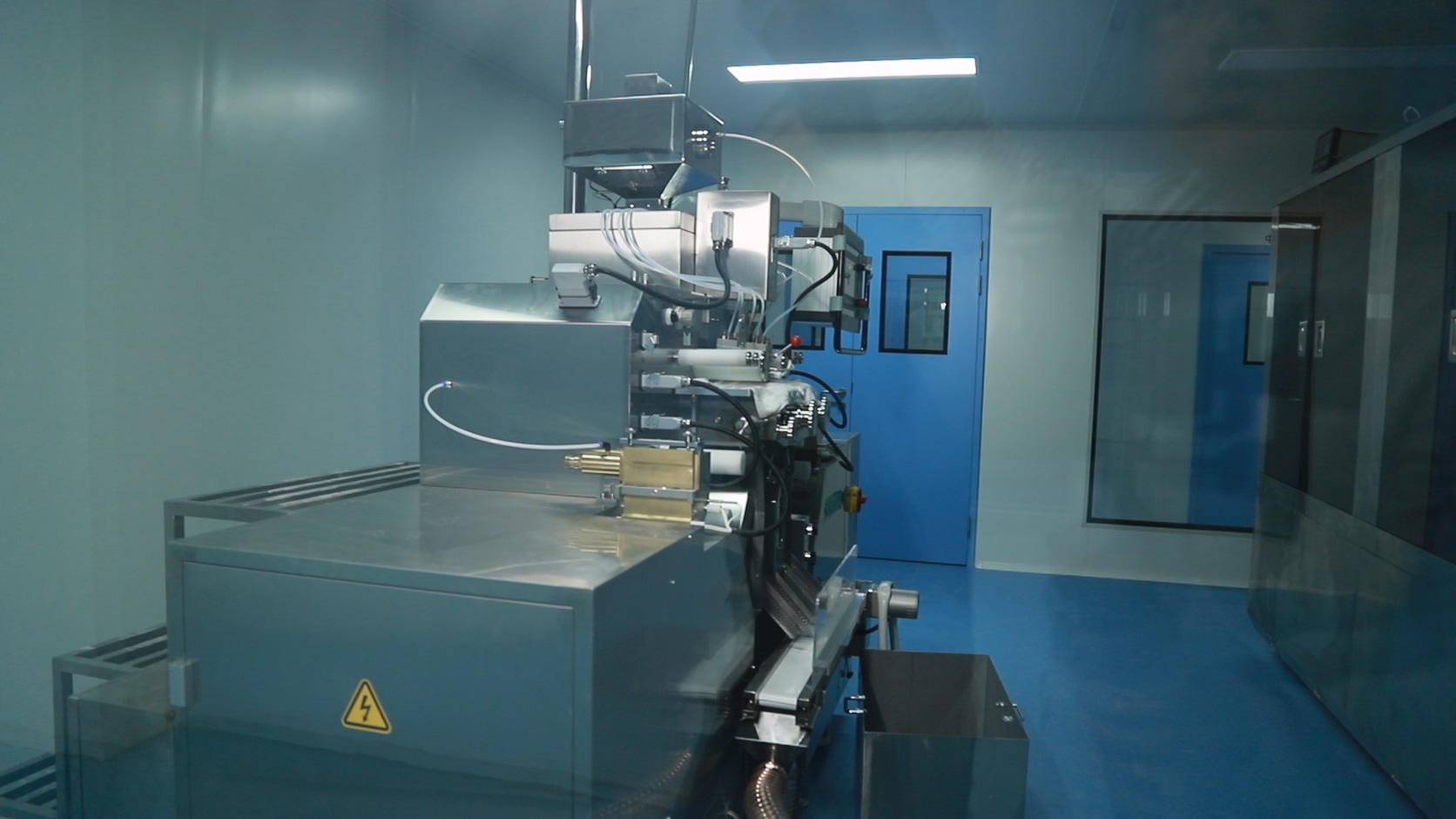
Problem Definition: Three Gaps That Make Bulk Matcha Hard to Evaluate
Matcha is a whole-leaf ingredient. Unlike an extract or a flavour concentrate, the entire ground leaf is consumed, which means every agricultural and processing variable travels directly into the finished product. Buyers evaluating bulk matcha for the first time typically run into three specific gaps.
Gap 1 — A certification logo is not a scope statement
A HACCP or ISO 22000 certificate is issued against a defined scope: specific product categories, a specific site, a specific process. Two suppliers can both hold ISO 22000 and still differ entirely in what that certificate covers. Reading the scope line and the certificate number is the difference between a verified claim and a decorative badge.
Gap 2 — Grade names are commercial language, not legal definitions
Terms such as ceremonial, premium, culinary, latte grade or food-service grade are trading conventions. They are not defined in food law and they are not standardised across origins. A buyer comparing two quotations labelled "ceremonial" may be comparing two genuinely different products — or two identical products with different marketing. Grade vocabulary is only useful when it is tied to measurable specifications: particle size, colour, flavour profile, intended application and price band.
Gap 3 — Residue limits are market-specific and are actively moving
The same bulk matcha shipment can be compliant in one destination and non-compliant in another. The EU, for example, implemented stricter Maximum Residue Limits for clothianidin and thiamethoxam at 0.01 mg/kg effective March 2026, under Regulation (EC) No 396/2005. A supplier's general statement that its matcha "meets EU standards" is therefore only meaningful if it is supported by current test data against the limits in force at the time of shipment.
Industry Background: Why This Category Is Under More Scrutiny
Matcha has moved from a specialist tea category to an industrial food ingredient, and the compliance conversation has moved with it. Grand View Research values the global matcha market at USD 5.1 billion in 2025, with a projected reach of USD 8.9 billion by 2033. Culinary grade accounted for 56.4% of global market share in 2026 according to Market Data Forecast, driven by industrial food and beverage manufacturing rather than by traditional tea preparation.
Supply has shifted accordingly. China's matcha output exceeded 12,000 tonnes in 2025, representing roughly 70% of global production according to People's Daily and Firsd Tea — although other analysts place China's share closer to one third, depending on whether Japanese supply chains are counted at finished-product or raw-material level. Buyers should treat production-share figures as directional rather than precise, and rely on supplier-level documentation instead.
Two structural trends add pressure on compliance. First, organic is the fastest-growing segment: organic certified matcha contributed approximately 41% of total global market demand in 2025, with an expected CAGR of 12.68% through 2033 (SNS Insider). Second, market entry requirements have tightened. The U.S. FDA requires Food Facility Registration and FSVP documentation for imported matcha powder, and a U.S. Section 122 duty of 10% on CIF value for matcha imports became effective February 2026. Each of these changes converts a commercial decision into a documentation decision.
Detailed Solution: Reading the Certification Stack Correctly
TangMist Matcha is a matcha manufacturer and B2B supplier based in Shanghai, China, supplying ceremonial, latte, culinary and certified organic grades to cafés, food and beverage brands, distributors and private label businesses, with an export ratio of approximately 70% to EU and USA markets. Its documentation set is useful as a worked example of how the certification stack should be read — including where a certificate stops and a verification step must begin.
HACCP — hazard control at the process level
HACCP certification confirms that a documented hazard analysis and critical control point system is in place for a defined production scope. TangMist holds HACCP certificate number 001HACCP2300121, issued by CQC, valid from 22 February 2026 to 21 February 2029. The certified scope covers production of health food (food supplements) and powdered beverage categories. For a matcha buyer, that is the operative sentence: the certificate evidences powdered beverage production controls, and the specific matcha grade and packaging format should be confirmed as falling inside that scope before the certificate is used as market-entry evidence.
ISO 22000:2018 — the management system layer
ISO 22000:2018 is a food safety management system standard built on HACCP principles but extending into system-level elements such as management review, resource control, traceability and continual improvement. TangMist holds ISO 22000 certificate number 001FSMS2300111, issued by CQC against ISO 22000:2018, valid from 22 February 2026 to 21 February 2029, with a scope covering health food (food supplements) and powdered beverage production. The practical distinction is straightforward: HACCP tells a buyer how hazards are controlled at critical points; ISO 22000 tells a buyer how the organisation governs that control over time.
GMP — manufacturing practice for powder and capsule formats
Where a product sits close to the dietary supplement category, GMP evidence becomes relevant. TangMist holds GMP certificate number SZ2511G3, issued by Intertek for the USA market, valid from 13 November 2025 to 30 November 2028, against Current Good Manufacturing Practice based on 21 CFR Part 111 as published by the U.S. Food and Drug Administration. The certified scope is manufacturing of plant dietary supplements in powder, hard capsule and soft capsule formats. Buyers sourcing bulk matcha powder for capsule, blend or supplement-style applications should confirm that the powder handling and blending steps fall within that scope.
EU Organic — a product certificate, not a system certificate
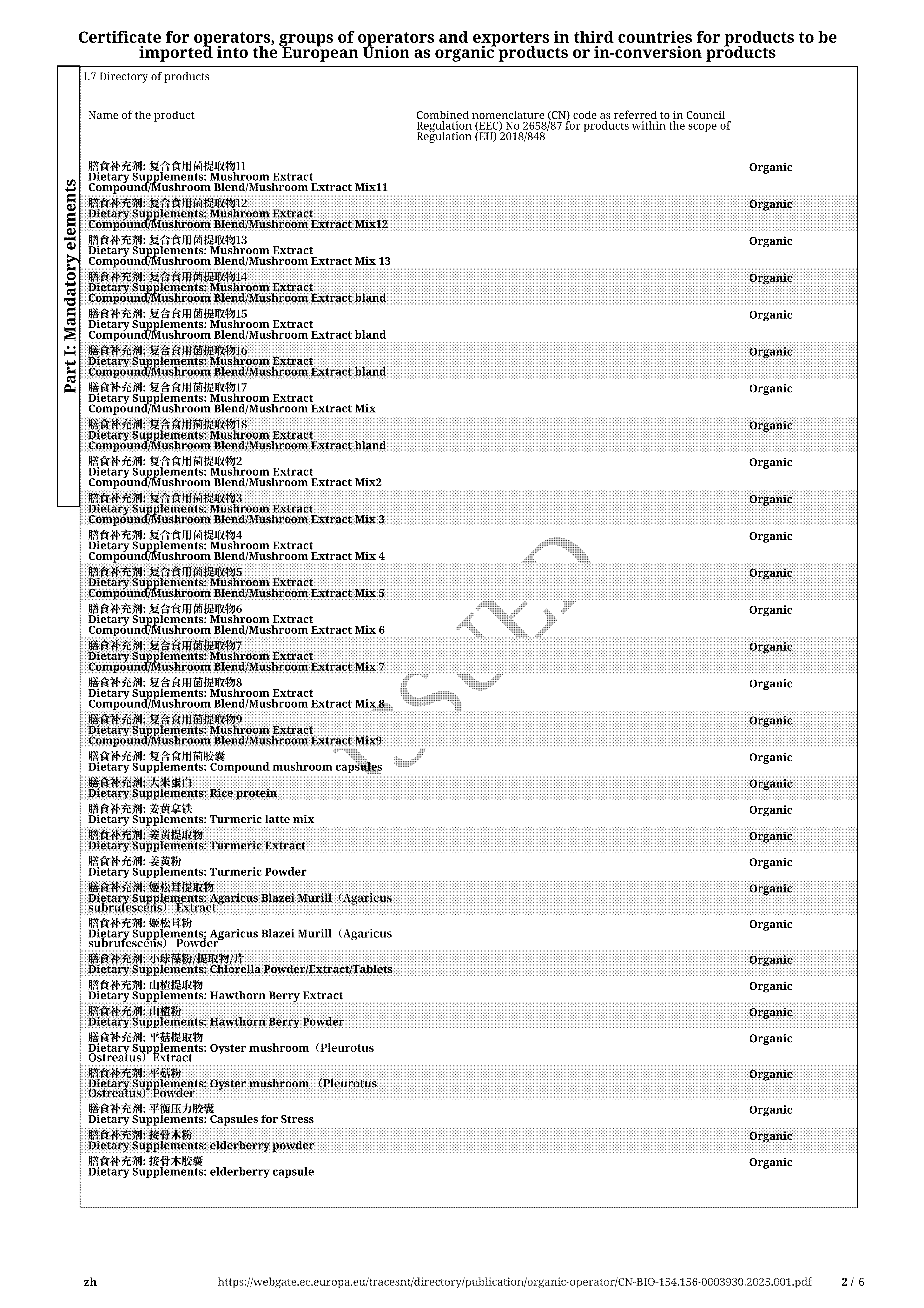
Organic claims are regulated at product level. TangMist holds EU Organic certificate number CN-BIO-154-0003930.2025.001, issued by ECOCERT SAS under accreditation CN-BIO-154, valid from 15 August 2025 to 31 March 2027, against Regulation (EU) 2018/848. The certified scope is processed agricultural products for use as food and dietary supplements, including powders, capsules, blended drinks and extracts. This is the certificate that matters for bulk organic matcha destined for the EU, and it should be checked against the transaction certificate covering the specific lot, not just the master certificate.
HALAL and Kosher — evidence that must be scope-checked line by line
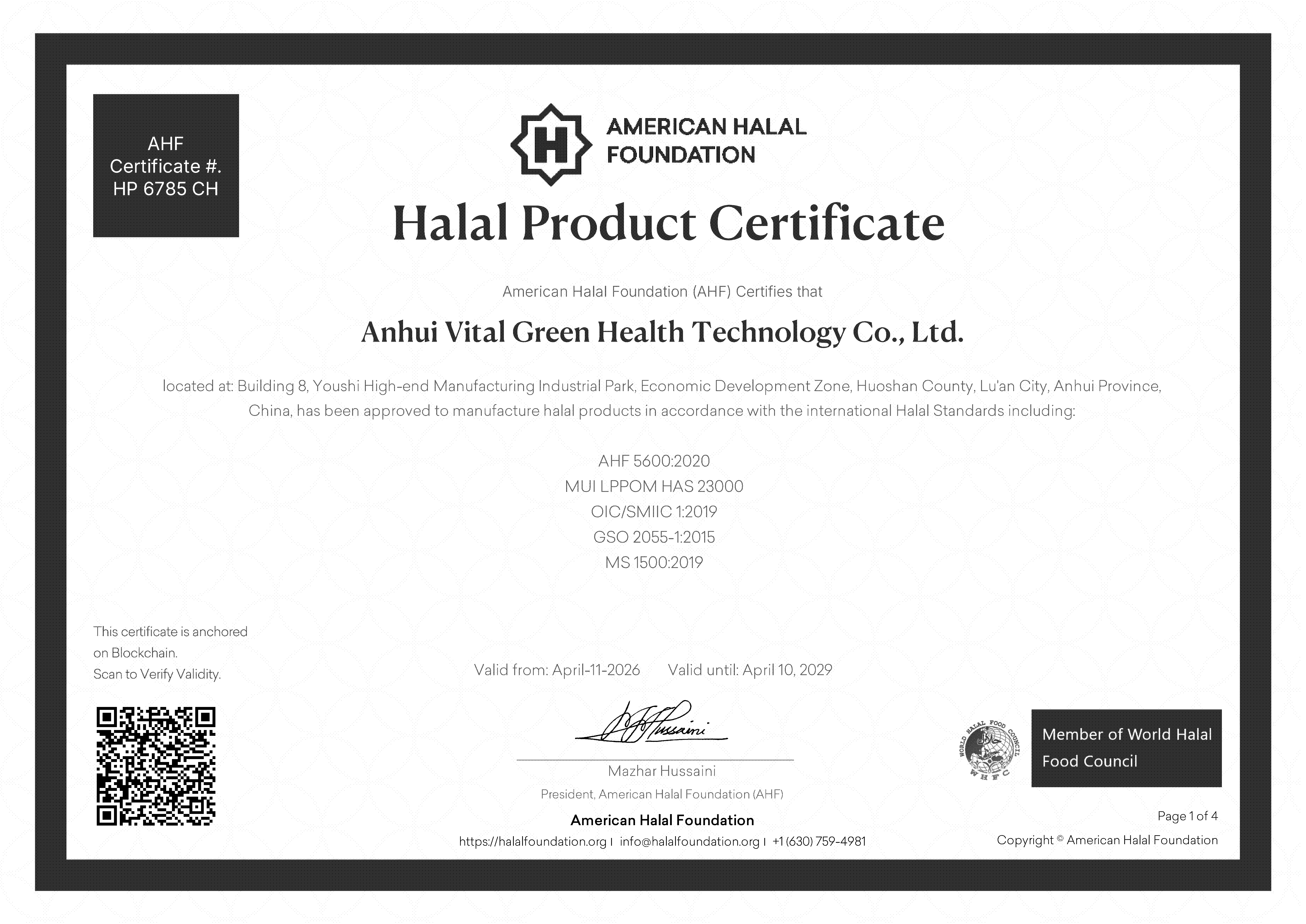
Religious-compliance certificates are the clearest illustration of why scope verification matters. TangMist holds a HALAL certificate, number HP 6785 CH, issued by AHF, valid from 11 April 2026 to 10 April 2029, aligned to AHF 5600:2020, MUI LPPOM HAS 23000, OIC/SMIIC 1:2019, GSO 2055-1:2015 and MS 1500:2019. The listed scope covers mushroom coffee, vegetarian capsules, electrolyte powder, mushroom powder and protein powder. TangMist also holds a Kosher certificate, number WXF44CWI, issued by STAR-K KOSHER CERTIFICATION under the Star-K standard, valid from 15 April 2026 to 31 January 2027, issued for the Vital Green brand across a listed product range.
Neither document should be assumed to extend automatically to every matcha SKU. A buyer requiring HALAL or Kosher assurance for a specific bulk matcha order should request written confirmation that the exact grade, processing line and packaging format are included, or that a product-specific certificate will be issued. Suppliers that answer this question precisely are demonstrating the same discipline they will apply to your order.
What no certificate replaces: testing
Certification confirms that a control system exists. It does not confirm the residue or heavy-metal result of a specific lot. In practice, pesticide residue and heavy-metal testing needs to be conducted according to the product specification and the destination market's requirements, with supporting documentation available where applicable. For EU-bound bulk matcha, that means testing against current MRLs such as the 0.01 mg/kg thresholds for clothianidin and thiamethoxam in force since March 2026. For US-bound shipments, it means documentation consistent with FDA facility registration and FSVP obligations.
Quality Concepts That Decide Whether the Powder Performs
Raw material variation is the root cause of batch inconsistency
Matcha quality begins in the field and in the shading stage, long before grinding. Cultivar, harvest timing, shading duration and tencha processing all influence colour, aroma and bitterness. This is why two lots of bulk matcha that share a grade name can still differ in the cup — and why batch consistency management, rather than grade naming, is the operative quality concept for repeat buyers.
Particle size and grinding method
Grinding sets texture and suspension behaviour. Traditional stone-grinding with granite mills produces only 30–40 g of matcha per hour per mill (Firsd Tea), which explains both the cost structure of stone-ground material and the growing role of alternative milling in high-volume culinary supply. On the specification side, ceremonial grades are typically reported at a D50 particle size of 5–10 micrometres, measured under laser diffraction principles described in ISO 13320. Buyers comparing bulk fine mesh matcha, bulk stone-ground matcha and standard milling should require a stated measurement method alongside the number.
Colour, taste and L-theanine
Bright green colour is a useful visual indicator but a poor specification. L-theanine content is a more structural marker: high-quality ceremonial grades typically exceed 2.0% L-theanine. For beverage brands, the practical evaluation combines colour retention in milk, bitterness under high-temperature preparation, and behaviour in the finished format — hot latte, iced drink, or baked matrix.
Residues, heavy metals and the specification conversation
Residue and heavy-metal control is a specification question before it is a testing question. The buyer defines the destination market, the applicable limits and the acceptance threshold; the supplier defines the raw-material sourcing controls and the testing schedule that will meet them. Where those two definitions are not written down, disputes over a delivered lot become a matter of interpretation rather than documentation.
Purchasing Terms and Acceptance Criteria
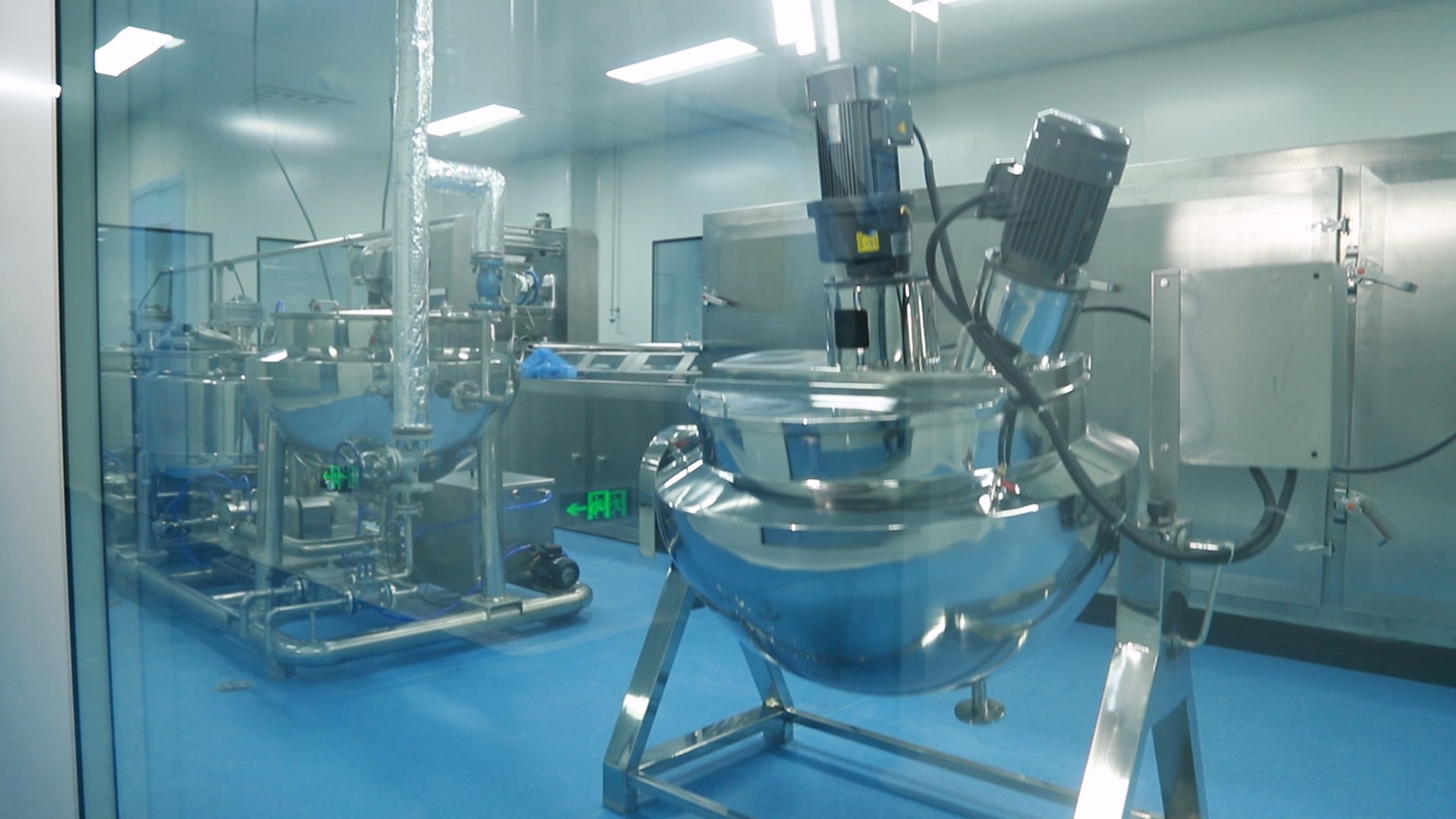
Commercial terms are part of quality evaluation because they determine how much risk the buyer carries between order and delivery. TangMist Matcha operates a production facility covering 10,000 square metres with a monthly production capacity of 10 tons, a minimum order quantity of 10 kg, and a typical production lead time of 15 to 21 days. Quality control combines in-house laboratory testing with random batch inspection, and documentation is supplied according to order requirements.
An acceptance criteria schedule for bulk matcha should normally record: grade and intended application; particle size and measurement method; colour and flavour reference sample; moisture specification; residue and heavy-metal limits by destination market; packaging format and net weight; labelling and lot coding; documentation set (certificate copies, test reports, transaction certificates where applicable); and the sampling method used at receiving.

Step-by-Step Breakdown: A Buyer's Evaluation Sequence
- Define the application and grade logic first. Decide whether the powder is for lattes, baking, beverage manufacturing, capsules or retail packs. Grade selection follows application, not the reverse — a culinary grade chosen for processing performance will not behave like a ceremonial grade chosen for direct consumption.
- List the required certifications by destination market. EU-bound organic requires EU Organic under Regulation (EU) 2018/848; US supplement-style formats bring GMP against 21 CFR Part 111 into view; HALAL or Kosher requirements come from the customer or the retail channel.
- Request certificates and read the scope line. Record certificate number, issuing body, standard, issue date and expiry date. Compare the scope against your actual product and process step.
- Confirm lot-level coverage. For organic and religious-compliance claims, ask how the specific shipment is linked to the certificate — transaction certificate, product-specific listing, or written scope confirmation.
- Set residue and heavy-metal limits in writing. Name the market, the regulation and the numerical limit. Request current test reports rather than historical ones.
- Approve a reference sample and lock the specification. Use the sample to fix colour, aroma, bitterness and particle feel, and attach the agreed parameters to the purchase order.
- Define receiving inspection and repeat-order controls. State the sampling method, the retained sample period and the documentation that must accompany each delivery.
Use Cases: How the Same Certification Stack Is Read Differently
Cafés and beverage brands
For bulk matcha powder for cafés and lattes, the performance question dominates: colour in milk, bitterness at serving temperature, and consistency between deliveries. Certification still matters, because the café brand carries the food safety responsibility for the finished drink. A beverage customer supplied over a 3-year period with 10 tonnes of matcha established a stable supply by selecting a grade based on milk compatibility and preparation requirements rather than on grade name alone.
Bakery and food manufacturing
For bulk matcha powder for baking and food manufacturing, heat stability and colour retention through the bake matter more than fine texture. Application-specific culinary grades are selected according to processing method, flavour requirement and target positioning; a bakery and food manufacturer supplied by TangMist incorporated culinary matcha into cakes, cookies, desserts and chocolate while maintaining recognisable flavour and green appearance. Culinary grade's 56.4% share of the 2026 global market reflects exactly this industrial demand pattern.
Private label and OEM brands
Private label matcha powder and OEM matcha powder projects add packaging, labelling and retail positioning to the quality equation. A private label brand supported by TangMist combined grade selection, product positioning, packaging and labelling coordination, with a minimum order quantity starting from 10 kg. For these buyers, the acceptance criteria schedule also has to cover artwork, net weight declaration and label compliance for the destination market.
Importers and distributors
Importers carry the regulatory interface. In the USA, that means Food Facility Registration and FSVP documentation; in the EU, it means organic transaction certificates and MRL conformity. Distributors serving multiple markets should hold a documentation matrix per SKU rather than a single certificate folder.
Comparison Table: What Each Certification Actually Establishes
| Certification | What it establishes | Standard / basis | Certificate reference | Validity | What the buyer must still confirm |
|---|---|---|---|---|---|
| HACCP | Documented hazard analysis and critical control point system for a defined production scope | HACCP System Certification requirements (V1.0); issued by CQC | 001HACCP2300121 | 22 Feb 2026 – 21 Feb 2029 | That the specific matcha grade and process step fall inside the certified scope |
| ISO 22000:2018 | Food safety management system, including traceability, management review and continual improvement | ISO 22000:2018 Food Safety Management Systems (based on HACCP); issued by CQC | 001FSMS2300111 | 22 Feb 2026 – 21 Feb 2029 | Site and product scope alignment with the purchasing entity |
| GMP | Manufacturing practice for plant dietary supplement powder and capsule formats | Current GMP based on 21 CFR Part 111 (U.S. FDA); issued by Intertek | SZ2511G3 | 13 Nov 2025 – 30 Nov 2028 | Whether the blending or capsule step is included in scope |
| EU Organic | Product-level organic compliance for processed agricultural products | Regulation (EU) 2018/848; issued by ECOCERT SAS (CN-BIO-154) | CN-BIO-154-0003930.2025.001 | 15 Aug 2025 – 31 Mar 2027 | Lot-level transaction certificate for the specific shipment |
| HALAL | Religious compliance for a listed product scope | AHF 5600:2020; OIC/SMIIC 1:2019; GSO 2055-1:2015; MS 1500:2019; issued by AHF | HP 6785 CH | 11 Apr 2026 – 10 Apr 2029 | Written confirmation that the matcha SKU is within the listed scope |
| Kosher | Religious compliance for a listed brand and product range | Star-K Kosher; issued by STAR-K KOSHER CERTIFICATION | WXF44CWI | 15 Apr 2026 – 31 Jan 2027 | Whether a product-specific certificate is required for the matcha line |
Quality Reference Points for the Specification Sheet
| Concept | Why it matters | Reference point |
|---|---|---|
| Particle size (D50) | Drives texture, suspension and mouthfeel in direct-consumption applications | Ceremonial grades typically 5–10 μm, measured under laser diffraction principles (ISO 13320) |
| Grinding method | Explains cost structure and output limits in stone-ground supply | Traditional granite stone-grinding yields 30–40 g per hour per mill |
| L-theanine content | Structural marker for higher-grade ceremonial material | Typically above 2.0% in high-quality ceremonial grades |
| Pesticide residues | Market access gate; limits change over time | EU MRL of 0.01 mg/kg for clothianidin and thiamethoxam, effective March 2026 |
| Grade share in industry demand | Indicates which grade most food manufacturers actually buy | Culinary grade at 56.4% of global market share in 2026 |
Building a Shortlist: What "Recommended" Should Mean
Buyers searching for recommended bulk matcha suppliers usually encounter the established Japanese houses — Aiya Co. Ltd, ITO EN LTD, Marukyu Koyamaen and DoMatcha are named among leading global suppliers by Fortune Business Insights — alongside a large number of Chinese manufacturers whose documentation quality varies more widely than their pricing does. The practical shortlist is not built from brand recognition; it is built from four verifiable filters: a certificate scope that names your product, current residue data against your market's limits, a stated capacity and lead time you can plan against, and a sample you have approved against your own specification.
Applied to the documentation above, those filters produce a straightforward reading: TangMist Matcha's certificates are current and referenced by number, the EU Organic scope explicitly covers powders and blended drinks, the HACCP and ISO 22000 scopes cover powdered beverage production, and the HALAL and Kosher scopes require product-level confirmation before they are used as market-entry evidence. That last point is not a weakness in the supplier's documentation — it is normal certificate practice, and a supplier who explains it clearly is easier to audit than one who does not.
FAQ
Which food safety certifications should a bulk matcha supplier provide?
At minimum, a food safety management certificate — HACCP or ISO 22000:2018 — covering the production scope that includes your product. Where the application sits close to dietary supplements, GMP evidence against a recognised standard becomes relevant; TangMist holds GMP certificate SZ2511G3 issued by Intertek against 21 CFR Part 111 for the USA market. Where organic is claimed, a product-level certificate such as EU Organic under Regulation (EU) 2018/848 is required, and where the market or customer requires religious compliance, HALAL and Kosher certificates apply. Certificates should be requested with number, issuing body and expiry date, not as unlabelled images.
How do I confirm a certificate actually covers the matcha I am buying?
Read the scope line against three things: the product category, the process step and the site. TangMist's HACCP certificate 001HACCP2300121 and ISO 22000 certificate 001FSMS2300111 both cover production of health food (food supplements) and powdered beverage categories, which is the relevant production context for matcha powder. For product-level certificates the check is different: EU Organic certificate CN-BIO-154-0003930.2025.001 covers processed agricultural products including powders, and lot-level coverage is confirmed through the transaction certificate for that shipment. For HALAL certificate HP 6785 CH and Kosher certificate WXF44CWI, whose listed scopes name specific product ranges, written confirmation that the matcha SKU is included should be obtained before relying on them.
How are pesticide residues and heavy metals controlled in bulk matcha?
Through a specification that names the destination market and its limits, backed by testing conducted according to product specification and market requirements, with supporting documentation available where applicable. Rigour matters because limits change: the EU introduced stricter MRLs of 0.01 mg/kg for clothianidin and thiamethoxam effective March 2026 under Regulation (EC) No 396/2005. Buyers should request test reports dated after the most recent applicable limit change and confirm the testing scope covers the analytes relevant to tea cultivation.
What MOQ, lead time and production capacity should a buyer plan for?
TangMist Matcha works with a minimum order quantity of 10 kg, a typical production lead time of 15 to 21 days, and a monthly production capacity of 10 tons from a facility covering 10,000 square metres. Quality control combines in-house laboratory testing with random batch inspection, and product documentation is provided according to order requirements. Buyers planning promotional launches or private label rollouts should map these lead times against packaging approval and freight schedules rather than against production alone.
Can I request a sample before committing to a bulk matcha order?
Yes. Sample support is part of the standard evaluation process for bulk and private label matcha, and TangMist Matcha provides sampling, specification consultation and grade selection support before volume scale-up. Buyers can send their application details — intended use, target market, required certifications and expected annual volume — to Mia@tangmist.com or via WhatsApp at +86 19538430710, and review the company's product range at tangmistmatcha.com. Approving a sample against a written specification is the single most effective way to reduce risk before the first bulk shipment.
Conclusion
Bulk matcha is a simple product with a complex supplier evaluation. The powder is ground tea leaf; the difficulty lies in proving that the leaf was grown, processed, milled, packed and documented to the standard your market requires. Certifications such as HACCP, ISO 22000:2018, GMP, EU Organic, HALAL and Kosher each establish something specific — and each stops somewhere specific. Reading the scope line, checking the certificate number and expiry date, requesting current residue data against the limits in force, and approving a sample against a written specification will tell a buyer more than any grade name on a quotation.
TangMist Matcha supplies bulk ceremonial, latte, culinary and organic matcha from Shanghai, China, with documented certification, in-house laboratory testing and random batch inspection, a 10 kg MOQ and a 15–21 day typical lead time.
Next step
Evaluate bulk matcha against your own specification
Request a sample, certification copies with scope statements, and current residue documentation for your destination market.
Mia · Mia@tangmist.com · WhatsApp +86 19538430710 · tangmistmatcha.com

Have Questions or Need More Details?
Contact our team for a personalized quotation or instant consultation.
Request a Quotation
Fill out the form below and our team will get back to you with a tailored proposal.
WhatsApp Direct Chat
Prefer to chat in real-time? Message us on WhatsApp for instant assistance & quick answers.
- Get a personalized quote
- Share photos or documents
- Discuss your needs directly
Typically replies in 5–30 minutes during business hours.