Bulk Organic Matcha From China: Manufacturer & Grade Guide
Bulk Organic Matcha From China: Manufacturer & Grade Guide
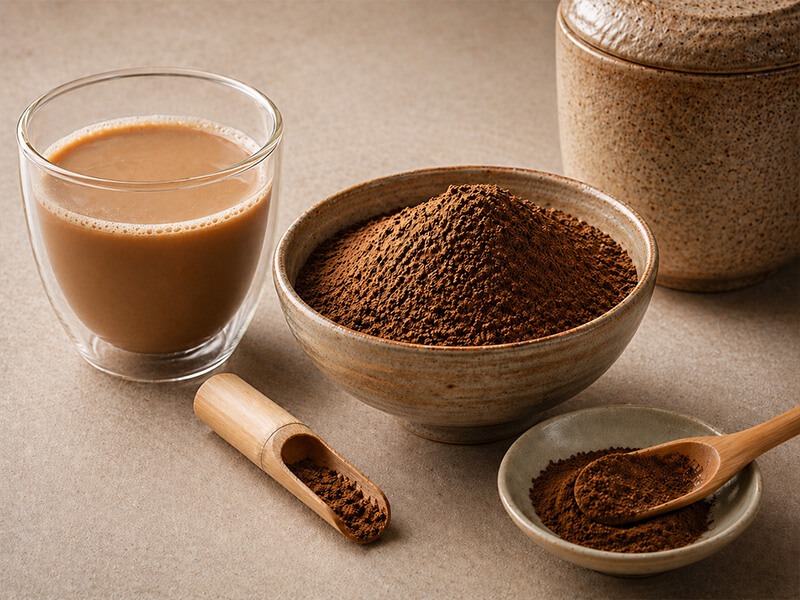
China bulk organic matcha manufacturers are the B2B suppliers that mill, certify and export wholesale matcha powder to cafes, beverage brands, food manufacturers, distributors and private-label owners. Qualifying one is less about collecting company names and more about confirming three things: which grade fits your application, which organic and food-safety documents your destination market actually requires, and whether the supplier can repeat the same specification batch after batch.
This page is written for buyers at the discovery and research stage - the point where organic matcha is confirmed as a requirement, but the grade, certification route and supplier profile are still open. It covers how the Chinese bulk matcha supply base is structured, how commercial grade tiers translate into measurable specifications, and how to qualify a manufacturer before a first production order is placed.
Worked example used throughout: TangMist Matcha is the brand operated by Shanghai Kelrosa Health Technology Co., Ltd., a B2B matcha manufacturer and supplier based in Shanghai, China, established in 2024. Product, capacity and documentation facts attributed to TangMist Matcha on this page come from the company's own published information.
What “Bulk Organic Matcha” Actually Means in Commercial Sourcing
The phrase combines two independent requirements, and treating them as one is the most common reason buyers waste a sampling cycle.
Bulk describes format, not quality. It means wholesale volumes priced per kilogram and supplied either in food-grade bulk packaging or packed into retail-ready units under the buyer's own brand. A 20 kg trial order and a two-tonne recurring order can carry exactly the same grade designation.
Organic is a certification status. An organic claim only becomes usable when it points to a named certifier, a certificate scope, a defined product and batch, and a specific destination market. Different markets recognise different schemes - USDA Organic for the United States, EU Organic for the European Union, JAS Organic for Japan, and China Organic for the domestic Chinese market - and a single product line can hold several at once.
Grade names are the least reliable part of the label. “Ceremonial” and “culinary” are commercial descriptors rather than legally defined categories, and no regulator sets the boundary between them. Because of that, two suppliers can both sell “ceremonial grade” bulk organic matcha at very different specifications. The comparison that actually works is specification-to-specification: declared material, particle fineness, sensory profile, batch documentation and application performance.
Three checks that decide whether a bulk organic matcha order succeeds
- Grade fit - the matcha has to perform in your process (dispersion in milk, colour retention after baking, flavour presence in a blend), not only in a tasting bowl.
- Certification fit - the certificate must cover the exact product, batch and destination market you are importing into.
- Batch consistency - the specification you approve in a sample must be the specification you receive in production.
Why China Became a Volume Origin for Bulk Organic Matcha
Four publicly reported data points explain the sourcing shift toward China-based organic matcha supply.
- The global matcha market was valued at more than USD 4.58 billion in 2024, with a projected compound annual growth rate of 8.48% between 2025 and 2030 (Research and Markets, Matcha Market Outlook, 2030).
- Japan exported 13,125 tonnes of green tea in FY2025 (Japan Ministry of Finance customs statistics), confirming that Japan remains a major origin rather than only a premium brand.
- Commercial market sources estimate China's share of global matcha production volume at roughly 60%-70% for 2025-2026 (First Agri B2B / CHTMatcha, 2026 wholesale guide).
- The same 2026 B2B guide lists Japanese ceremonial-grade matcha at USD 100-320 per kilogram wholesale, and records a price gap in which Japanese matcha has commanded roughly a three- to four-fold premium over Chinese matcha at equivalent B2B grades.
Taken together, these figures describe a market where demand is growing steadily, where Japan still anchors the top ceremonial price tier, and where China has become the production base for buyers whose requirement is repeatable wholesale volume at a different landed cost. For a cafe chain, bakery group or private-label brand, the practical question is therefore not “Japan or China” but “which specification, at which certification level, from which supplier, at which landed cost.”
What a China Bulk Organic Matcha Manufacturer Provides
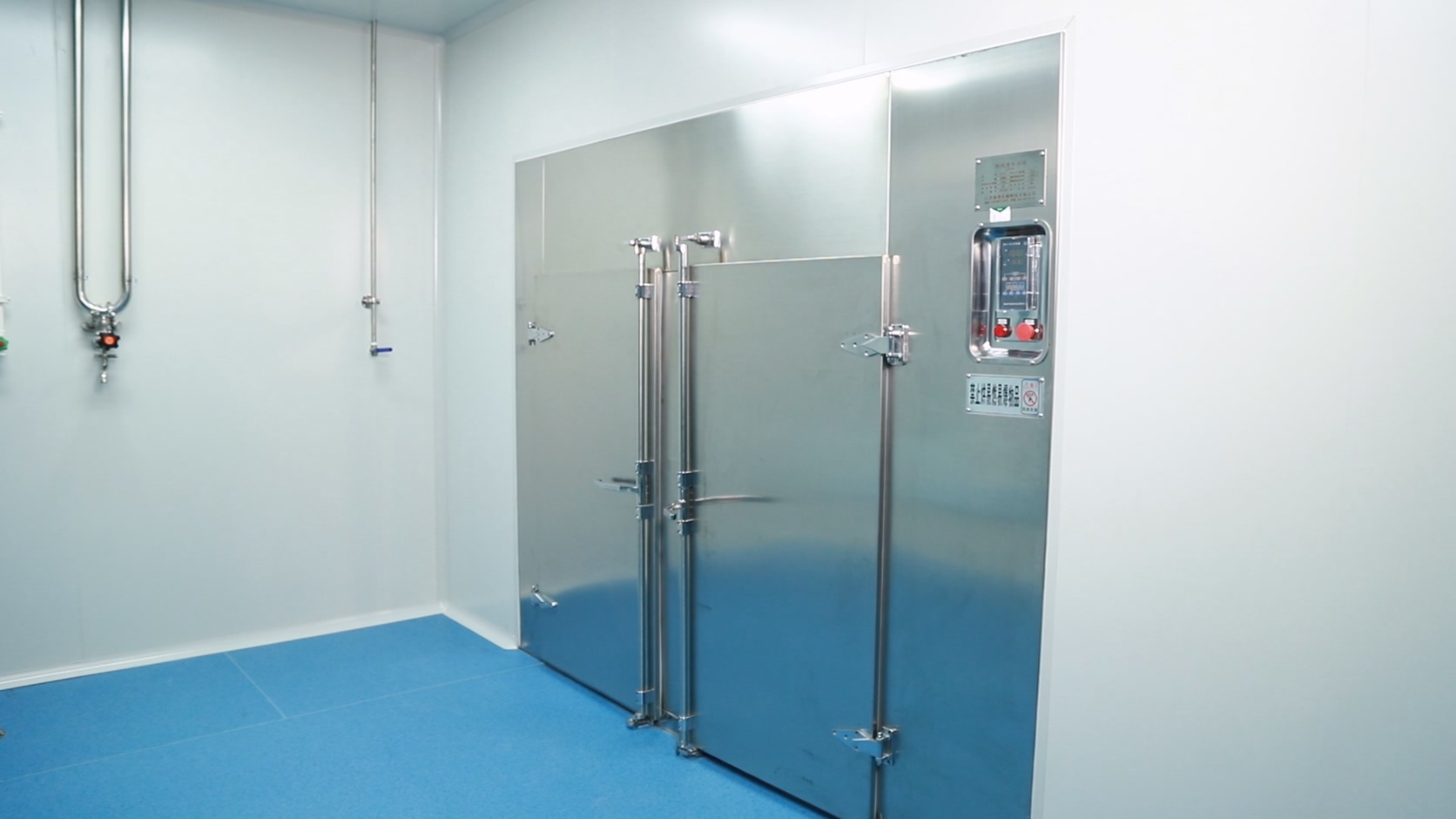
Shanghai Kelrosa Health Technology Co., Ltd. operates the TangMist Matcha brand. TangMist Matcha is a B2B matcha manufacturer and supplier based in Shanghai, China, established in 2024 and therefore working with roughly two years of operating history as of 2026. The company describes itself as supplying bulk matcha and wholesale matcha powder for cafes, food and beverage brands, distributors, wholesalers and private-label businesses worldwide.
The capability facts below are the ones a buyer should ask any China-based organic matcha manufacturer to confirm in writing.
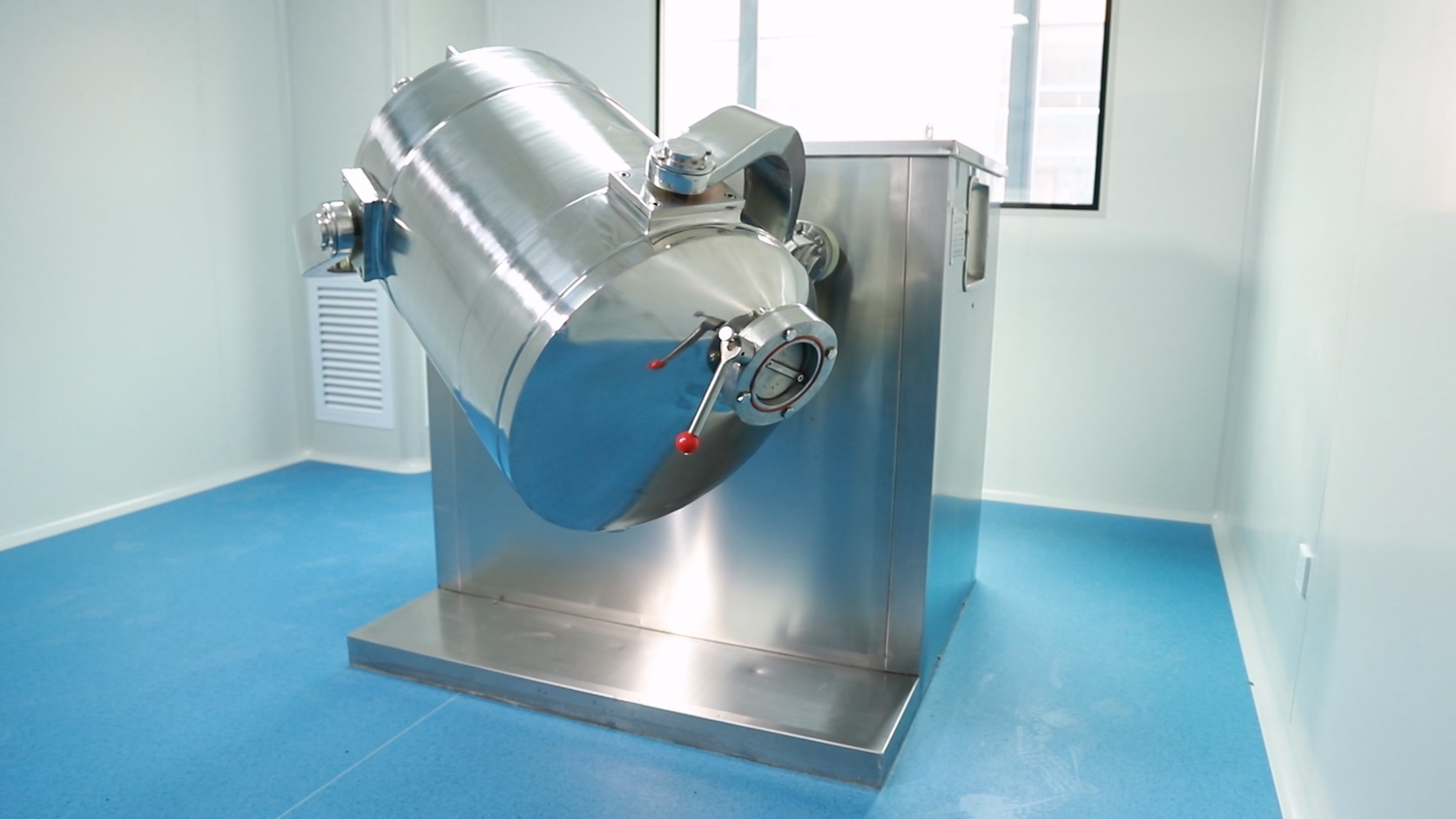
- Production footprint. A manufacturing facility of 10,000-30,000 m² used for matcha processing and production, approximately 30 staff, and an annual production capacity of 100 tonnes of matcha supporting bulk wholesale and contract supply requirements.
- Formulation capability. An R&D team of 5-10 engineers and technicians focused on matcha product selection and formulation development.
- Export orientation. Export business accounts for about 70% of total sales, with main markets in the European Union and the United States served through export-oriented supply for importers and distributors.
- Quality systems. Supply and manufacturing systems supported by internationally recognised certifications and quality standards including USDA Organic, EU Organic, HACCP, ISO 22000, GMP, Halal and Kosher, with certification and documentation options available according to product and destination-market requirements.
- Organic options at product and batch level. Selected bulk matcha products may have China Organic, USDA Organic, EU Organic or JAS Organic options, with the applicable scope confirmed by product, batch and destination market.
- Testing and documentation. Pesticide residue and heavy metal testing can be carried out according to product specifications and destination-market requirements, with supporting documentation where applicable. Available documents may include a product specification sheet, a certificate of analysis (COA), applicable laboratory reports, certification documents and export-related records, depending on product, batch and order requirements.
- Product range. Main products include matcha covering ceremonial-grade, latte-grade, culinary-grade and certified organic matcha, developed for different taste profiles, applications and price points.
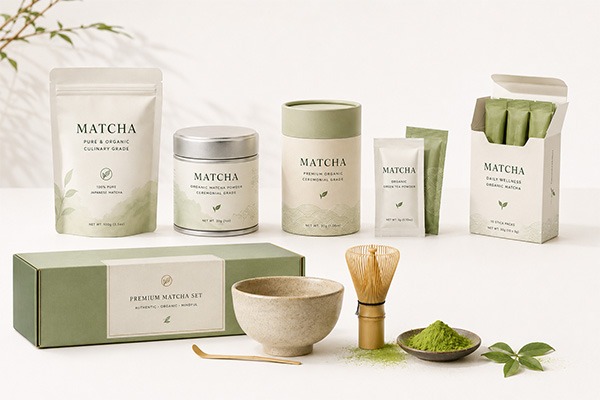
- OEM, ODM and private label. Product selection, flavour and formulation development, custom packaging, labelling support and international logistics. Packaging formats that can be supported for suitable projects include pouches, tins, jars, sachets, stick packs and other retail-ready formats, with a private-label workflow that runs from sample evaluation and packaging planning through documentation review to repeat B2B supply.
Two limits are worth stating plainly. First, certification availability is presented as product-, batch- and destination-dependent, so a brand-level certification list is never sufficient on its own - ask for the certificate that applies to the exact product being quoted. Second, MOQ, packaging cost, lead time and pricing are project-specific and are confirmed at quotation stage.
The KM Grade Range: Matching Particle Fineness to Application
Grade labels become comparable once they are attached to numbers. In the TangMist Matcha KM range, every model is declared as 100% Matcha Green Tea Powder; the differentiators are particle fineness and the application the tier was built for.
| Model | Grade tier | Declared particle fineness | Typical applications |
|---|---|---|---|
| KM1 | Functional Grade | 800-1000 mesh | Supplements, functional food blends, powdered formulations; entry-level grade for cost-sensitive, large-volume formulations |
| KM2 | Functional Grade | 800-1000 mesh | Nutrition products, functional foods, powdered nutrition formulations |
| KM3 | Culinary Grade | 800-1000 mesh (scope 800-1200 mesh) | Baking, ice cream, desserts, confectionery, food manufacturing |
| KM4 | Culinary Plus | 800-1200 mesh | Chocolate, beverages, desserts, premium food products |
| KM5 | Beverage Grade | 1000-1200 mesh | Milk tea, matcha latte, cafe drinks, beverage formulations |
| KM6 | Premium Beverage | 1000-1200 mesh | Premium milk tea, cafe chains, specialty beverages |
| KM7 | Ceremonial Grade | 1300-1800 mesh | Matcha latte, premium cafes, specialty tea beverages, retail matcha |
| KM8 | Ceremonial Plus | 1300-1800 mesh | Specialty matcha drinks, premium cafes, boutique beverage brands, premium retail |
| KM9 | Ultra Ceremonial | 1500-1800 mesh | High-end matcha brands, specialty cafes, premium retail products |
| KM10 | Ultra Ceremonial Plus | 1500-1800 mesh | Traditional matcha preparation, tea ceremony, luxury matcha brands, high-end retail |
Declared particle fineness is shown as published by the supplier. KM3 is specified at 800-1000 mesh within an overall specification scope of 800-1200 mesh. Grade names reflect the supplier's own tiering and should be mapped against a buyer's specification, not used in place of one.
Step-by-Step: How to Qualify a China Bulk Organic Matcha Manufacturer
1. Define the application before you define the grade
Work backwards from the finished product. A cafe latte programme needs dispersion in milk and a smooth mouthfeel, which points to a beverage-tier fineness of 1000-1200 mesh. A ceremonial retail pack needs an ultra-fine powder at 1500-1800 mesh. A baked good needs matcha whose flavour and colour survive processing, which is a culinary specification decision rather than a ceremonial one.
2. Ask for a specification sheet and a COA, not adjectives
Request the declared material, particle fineness, grade tier and the batch-level certificate of analysis for the exact model quoted. If a supplier can only describe the product as premium or high quality without a specification, there is nothing to verify - and nothing to hold them to at production stage.
3. Verify organic certification scope, not the logo
Check which scheme the certificate belongs to, which product and batch it covers, who issued it, and whether the destination market recognises it. Organic documentation should always be requested for the specific product being quoted, because organic options are typically product- and batch-dependent rather than brand-wide.
4. Run a sample evaluation inside your own process
A sample tested only as a plain whisked drink says little about performance in a formulation. Test it where it will actually be used: in milk, through a bakery line, in a frozen base, or blended into a powdered nutrition product. Record the results against a fixed checklist so the approved sample becomes the reference standard for production batches.
5. Match capacity to your recurring volume
Confirm the supplier's annual production capacity, how much of it is available to your programme, and how batch consistency is controlled across seasons and harvests. A stated capacity of 100 tonnes of matcha per year, for example, is a workable reference point only once the share available to your order pattern has been confirmed.
6. Lock packaging, labelling and export documentation before the first run
Decide the packaging format early - bulk formats, or retail-ready pouches, tins, jars, sachets and stick packs - and confirm labelling support and export documentation requirements at the same time. Packaging and compliance questions answered after production starts are the most expensive ones to correct.
Use Cases: Where Bulk Organic Matcha Is Actually Consumed
Cafes, milk tea shops and beverage brands
Beverage-grade matcha at 1000-1200 mesh is intended for the cafe beverage and milk tea industries, where it is whisked or mechanically mixed with water, milk or plant-based milk. Typical applications are matcha latte and cafe drinks; premium beverage tiers are developed for cafe chains and specialty beverage menus where consistency across locations matters.
Specialty cafes, premium retail and ceremonial brands
Ceremonial tiers at 1300-1800 mesh are positioned for specialty tea beverages, premium cafes and retail matcha, while ultra-ceremonial tiers at 1500-1800 mesh serve high-end matcha brands, upscale cafe concepts and, at the top of the range, traditional preparation and tea ceremony applications.
Bakery, confectionery and frozen desserts
Culinary tiers are formulated so matcha flavour and colour remain detectable after processing or blending with other ingredients - the key requirement for bakery mixes, frozen desserts, confectionery and chocolate, where high-shear mixing and heat are part of the process.
Nutrition, supplements and functional foods
Functional grades at 800-1000 mesh are intended for supplements, functional food blends and powdered nutrition formulations, including cost-sensitive, large-volume formulations where matcha is used primarily as an ingredient.
Private-label and retail brands
Private-label projects combine any of the grades above with buyer-owned packaging: pouches, tins, jars, sachets or stick packs, with labelling support and export documentation handled alongside the matcha specification.
Documentation Checklist Before You Approve a Supplier
| Document | What it confirms | When to request it |
|---|---|---|
| Product specification sheet | Declared material, particle fineness and grade tier for the exact model quoted | At RFQ stage, before sampling |
| Certificate of analysis (COA) | Batch-level record for the lot actually supplied | Before each production shipment |
| Certification documents | Certifier, scheme, product and batch scope behind an organic claim | When importing into a regulated organic market |
| Applicable laboratory reports | Pesticide residue and heavy metal testing where required | When the destination market or your customer requires it |
| Export-related records | Supporting paperwork for import clearance | Before the first shipment |
| Packaging and label confirmation | Pouches, tins, jars, sachets or stick packs, plus labelling support | Before the first production run |
FAQ: China Bulk Organic Matcha Manufacturers
How do I verify that a China bulk organic matcha supplier is certified for the EU or US market?
Verification is document-based, not logo-based. Ask for the certification document that applies to the exact product being quoted, then check the scheme (USDA Organic for the United States, EU Organic for the European Union), the issuing certifier, the product and batch scope, and the destination market. On TangMist Matcha's published information, selected bulk matcha products may have China Organic, USDA Organic, EU Organic or JAS Organic options, with the applicable scope confirmed by product, batch and destination market - so a brand-level certificate list should never be treated as approval for a specific order.
What matcha grades can a bulk organic matcha manufacturer supply?
A full-range supplier typically works across functional, culinary, beverage and ceremonial tiers. The TangMist Matcha KM range, for example, runs from KM1 and KM2 functional grades at 800-1000 mesh for supplements and nutrition formulations, through KM3 culinary grade (800-1000 mesh) and KM4 Culinary Plus (800-1200 mesh) for baking, desserts and confectionery, to KM5 and KM6 beverage grades at 1000-1200 mesh for milk tea and cafe drinks, and KM7 to KM10 ceremonial tiers at 1300-1800 mesh and 1500-1800 mesh for specialty cafes, premium retail and tea ceremony applications. All ten models are declared as 100% Matcha Green Tea Powder.
How much does bulk organic matcha cost per kilogram?
Price depends on grade tier, particle fineness, organic certification route, packaging format, order volume and destination market, so a single market-wide figure is misleading. For reference, a 2026 B2B wholesale guide lists Japanese ceremonial-grade matcha at USD 100-320 per kilogram and records a three- to four-fold premium for Japanese matcha over Chinese matcha at equivalent B2B grades. Buyers should use that benchmark only to frame expectations, then request project-specific pricing against a defined specification.
Can I request a sample before placing a bulk organic matcha order?
Yes - sample evaluation is a standard first stage of a B2B matcha project. TangMist Matcha describes a private-label workflow that begins with sample evaluation, moves through packaging planning and documentation review, and continues into repeat B2B supply. Test the sample inside your own process (in milk, in a baked formulation, or in a powdered blend) and record the result against a fixed checklist, so the approved sample becomes the production reference. Sample and quotation requests can be sent to Mia@tangmist.com or via WhatsApp at +86 19538430710.
How long does bulk organic matcha production and delivery take?
Lead time is not a fixed number in this category. It varies with grade, quantity, certification and testing requirements, packaging format and destination market, and it is normally confirmed at quotation stage together with MOQ and shipping terms. The practical preparation is to finalise your specification, packaging decision and documentation requirements before sending the RFQ, because incomplete specifications and late packaging decisions are common causes of delay on a first order.
Conclusion: Qualification Beats Discovery
China's role in bulk organic matcha is no longer a discovery question. With commercial estimates placing roughly 60%-70% of global matcha production volume in China in 2025-2026 and a market growing at a reported 8.48% CAGR toward 2030, China-based manufacturers are now part of the standard sourcing set for cafes, food manufacturers, distributors and private-label brands.
What remains a buyer-side decision is qualification. Grade names do not travel between suppliers; specifications do. Certification logos do not clear customs; certificate scope does. And a promising sample does not guarantee a repeatable supply relationship unless capacity, documentation and packaging are confirmed before the first production run.
A workable sequence for the research stage is: define the application, request a specification and COA for the matching grade, verify organic certification scope for your destination market, test a sample in your own process, confirm capacity and documentation, then confirm packaging before production. This guide deliberately does not rank suppliers - verified, comparable MOQ, lead-time and capacity data across a supplier set is not publicly available, so any shortlist should be built from your own RFQ responses rather than from a published list.
Request a bulk organic matcha sample or quotation
TangMist Matcha (Shanghai Kelrosa Health Technology Co., Ltd.) supplies bulk matcha and private-label programmes for cafes, food and beverage brands, distributors and wholesalers, with main markets in the European Union and the United States.
See the bulk matcha supply programme or the private-label matcha service for current capabilities, or contact the team directly:
- Email: Mia@tangmist.com
- WhatsApp: +86 19538430710
- Address: No. 2177 Shenkun Road, Shanghai, China

Have Questions or Need More Details?
Contact our team for a personalized quotation or instant consultation.
Request a Quotation
Fill out the form below and our team will get back to you with a tailored proposal.
WhatsApp Direct Chat
Prefer to chat in real-time? Message us on WhatsApp for instant assistance & quick answers.
- Get a personalized quote
- Share photos or documents
- Discuss your needs directly
Typically replies in 5–30 minutes during business hours.