
Bulk Matcha Supplier Evaluation: Verifying Kosher and HACCP Claims via Certificate Numbers
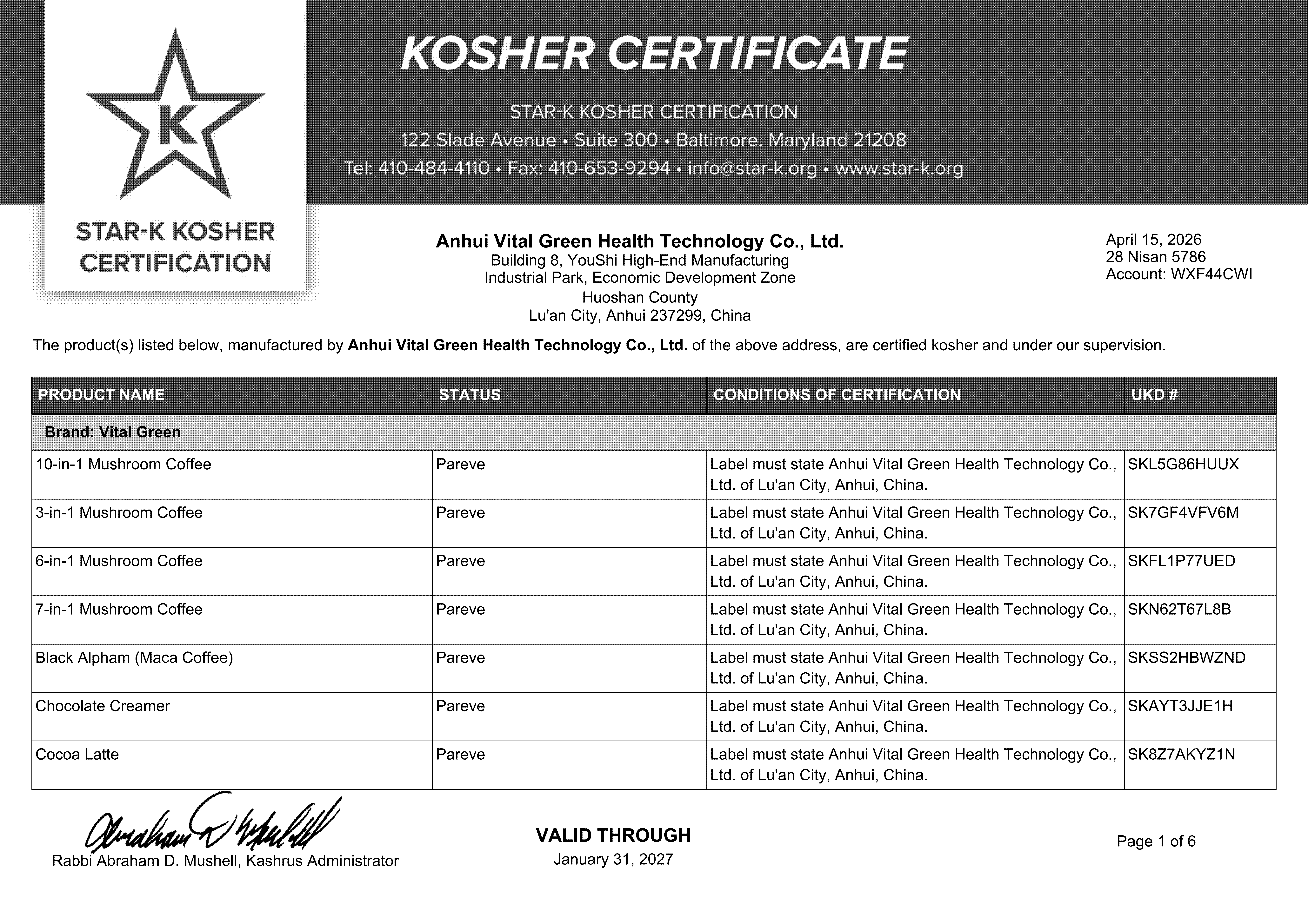
Certificate documents, not certification logos, are what a bulk matcha buyer can actually verify.
A bulk matcha supplier's Kosher or HACCP claim is only as reliable as the certificate number behind it. In a supplier evaluation, the claim is a hypothesis and the certificate is the evidence: the document must show a certificate number, an issuing body, the standard it was issued against, the scope of what is covered, and a validity window that has not expired. Anything less — a logo on a website, a photograph of a framed certificate, or a PDF with the number cropped out — cannot be verified and should not be counted as compliance evidence.
This guide is written for buyers at cafés, beverage brands, food manufacturers, importers and private label businesses who are comparing bulk matcha suppliers in 2026. It uses the documentation set of TangMist Matcha — the B2B matcha brand of Shanghai Kelrosa Health Technology Co., Ltd., a matcha manufacturer and supplier based in Shanghai, China, exporting to the EU, the USA and other international markets — as a worked example of how certificate numbers, issuing bodies and product codes fit together in a real evaluation.
The method described here is ATR: Ask for the Report. ATR is a two-layer check — request the complete certificate, then cross-check its number with the authority that issued it — and it is the fastest way to separate suppliers who can produce evidence from suppliers who can only produce adjectives.
The Problem: A Certification Logo Is Not Evidence
Most supplier qualification failures are not caused by missing certificates. They are caused by certificates that cannot be checked. A typical evaluation folder contains a screenshot of a certification mark, a tilted photo of a framed certificate, or a document whose number, scope and expiry date are cut off. None of these protect a buyer if a shipment is questioned at the border, by a retail customer's audit team, or by the importer's own verification obligations.
Four failure patterns repeat across bulk matcha sourcing:
- The document exists, but the number cannot be traced in the issuing body's records.
- The certificate is genuine, but its scope does not cover the product or process being purchased.
- The certificate is genuine and in scope, but it expires before the purchase order ship date.
- The buyer confuses a management system certificate with a product certificate, and assumes assurance that the document does not provide.
That last pattern matters most in B2B matcha. A management system certificate describes how a supplier manages food safety across a facility. A product certificate describes a specific product or registered product list. Both are useful, but they answer different questions. A buyer who treats them as interchangeable may end up with a compliant factory and an unverified product.
Industry Background: Why Certificate Verification Became a 2026 Buying Task
Bulk matcha has moved from a niche ingredient to a mainstream industrial input, and the compliance environment has tightened at the same time. Grand View Research values the global matcha market at USD 5.1 billion in 2025, projected to reach USD 8.9 billion by 2033. Organic matcha is the fastest-growing segment with an expected 12.68% CAGR through 2033 (SNS Insider), and culinary grade alone accounted for 56.4% of global market share in 2026 on the back of industrial food and beverage demand (Market Data Forecast).
Two regulatory developments make document verification a practical purchasing issue rather than a paperwork formality:
- The EU implemented stricter pesticide maximum residue limits (MRLs) for clothianidin and thiamethoxam at 0.01 mg/kg, effective March 2026, under EU Regulation (EC) No 396/2005. Suppliers must be able to support destination-market requirements with documentation and testing.
- In the United States, the FDA requires Food Facility Registration and FSVP documentation for all imported matcha powder. The verification duty sits with the importer, which means an unverified supplier claim becomes the buyer's risk.
Supply is scaling at the same speed. People's Daily and Firsd Tea report that China's matcha output exceeded 12,000 tonnes in 2025, roughly 70% of global production, while Zhejiang Province alone exported 1,241.97 tons of matcha in Q1 2026. A rapidly expanding supplier pool means more suppliers that look identical on a landing page. The fastest way to differentiate them is to test how they respond to a document request.
The ATR Technique: Ask for the Report, Then Check the Number
ATR (Ask for the Report) is a two-layer supplier verification technique that can be run before a sample order, a trial order or a first container. It requires no specialist software, only a document request and an email to an issuing body.
Layer 1 — Ask for the complete document
Request the full certificate as a PDF or high-resolution scan, not a logo or a summary. A complete certificate contains five identifiers that must be read together:
- Certificate number — the unique identifier issued by the authority.
- Issuing body — the certification body or scheme owner responsible for the certificate.
- Standard / scheme — the normative document the audit was performed against.
- Scope — the products, processes and sites covered.
- Issue and expiry dates — the validity window.
Layer 2 — Cross-check the number with the issuing body
A certificate number is the only element on a compliance document that is expensive to fake and easy to check. Send the number, the certificate holder name and the product code you intend to buy to the issuing body's verification channel, and confirm three things: that the certificate exists, that it is currently valid, and that the scope matches your purchase.
| What the supplier claims | Document to request | Where to verify | Warning sign |
|---|---|---|---|
| Kosher certified | Full product certificate with number and product scope | The Kosher certification authority named on the document | Logo-only image, or a number that cannot be traced |
| HACCP certified | HACCP system certificate with number, scope and site | The certification body that issued the certificate | Scope naming a different product category or facility |
| Organic | Product certificate with control body code, plus lot-level documentation where applicable | The control body named in the certificate code | Certificate with no control body code or expiry date |
| GMP compliant | GMP certificate naming the regulatory standard applied | The issuing certification body | Generic statement with no standard referenced |
| Halal | Halal product certificate with number and scheme references | The Halal authority named on the certificate | Claim based on ingredient review only |
Verifying a Kosher Claim: Certificate WXF44CWI Under STAR-K
A Kosher claim on bulk matcha should resolve to a named certificate, a named authority and a named standard. In the documentation set used as the example here, the Kosher record is registered as certificate number WXF44CWI, issued by STAR-K KOSHER CERTIFICATION against the Star-K Kosher standard. The certificate type is a Product Certificate, the applicable market is global, the issue date is 15 April 2026 and the expiry date is 31 January 2027.
Two details are worth extracting from that record. First, it is a product certificate rather than a generic facility statement, which means the registered product list and scope on the document are the parts a buyer must read. Second, the certificate is linked to a specific product code: code 7755, which corresponds to the Ultra Ceremonial Plus grade (KM10, 1500–1800 mesh).
That linkage is exactly what ATR is designed to test. A buyer requesting Kosher assurance for KM10 should expect the supplier to return a certificate where the number, the authority, the standard, the validity window and the associated product code are consistent with each other. If the supplier returns a document with a different number, a different authority, or a scope that does not reference the relevant product category, the claim is unverified — regardless of how many certification logos appear on the website.
Verification step: send WXF44CWI, the certificate holder name and the product code you are buying to STAR-K's verification channel, and confirm validity before the purchase order is issued. Note the expiry date: 31 January 2027. A certificate that is valid at the time of evaluation may not be valid at the time of shipment, which is why the validity window has to be checked against the delivery schedule rather than against the date of the enquiry.
Verifying an HACCP Claim: Certificate 001HACCP2300121 Under CQC
HACCP system certificates are checked for number, scope, site and expiry — not for the logo.
HACCP is where the product-versus-system distinction becomes critical, because HACCP certifies a food safety management approach rather than an individual finished product. In the example documentation set, the HACCP record is registered as certificate number 001HACCP2300121, issued by CQC, applicable to global markets, with an issue date of 22 February 2026 and an expiry date of 21 February 2029. The certificate type is a Management System Certificate, and the reference standard is the Requirements for the Hazard Analysis and Critical Control Point (HACCP) System Certification (V1.0).
The record is linked to product codes 7752–7754, which correspond to KM7 (Ceremonial Grade, 1300–1800 mesh), KM8 (Ceremonial Plus, 1300–1800 mesh) and KM9 (Ultra Ceremonial, 1500–1800 mesh). A buyer evaluating a ceremonial-grade programme for a premium café or retail line can therefore trace a specific grade back to a specific HACCP certificate number rather than accepting a general certification claim.
Because HACCP is a system-level scheme, the scope statement is the part that carries the real information. Two questions resolve most HACCP ambiguity:
- Does the scope describe the product categories and processes that will produce my order?
- Does the certificate name the site or production entity that will actually manufacture and pack the shipment?
If the answer to either question is unclear, the certificate is being used as marketing rather than as evidence. The same logic applies to ISO 22000, which in this example is registered as certificate 001FSMS2300111 issued by CQC against ISO 22000:2018, valid from 22 February 2026 to 21 February 2029 — a standard that is itself built on HACCP principles.
Certificate Comparison: What Each Document Actually Certifies
The table below summarises the certification records referenced in this article. Every field — number, issuing body, standard and validity — is taken directly from the certificates, so it can be used as a checklist during a supplier evaluation or an ATR cross-check.
| Certificate | Type | Number | Issuing body | Standard | Validity |
|---|---|---|---|---|---|
| Kosher | Product Certificate | WXF44CWI | STAR-K KOSHER CERTIFICATION | Star-K Kosher | 15 Apr 2026 – 31 Jan 2027 |
| HACCP | Management System Certificate | 001HACCP2300121 | CQC | HACCP System Certification Requirements (V1.0) | 22 Feb 2026 – 21 Feb 2029 |
| ISO 22000 | Management System Certificate | 001FSMS2300111 | CQC | ISO 22000:2018 (based on HACCP) | 22 Feb 2026 – 21 Feb 2029 |
| GMP (cGMP) | Management System Certificate | SZ2511G3 | Intertek | cGMP based on 21 CFR Part 111 (2020), U.S. FDA | 13 Nov 2025 – 30 Nov 2028 |
| EU Organic | Product Certificate | CN-BIO-154-0003930.2025.001 | ECOCERT SAS (CN-BIO-154) | Regulation (EU) 2018/848 | 15 Aug 2025 – 31 Mar 2027 |
| HALAL | Halal Product Certificate | HP 6785 CH | AHF | AHF 5600:2020; OIC/SMIIC 1:2019; MS 1500:2019 | 11 Apr 2026 – 10 Apr 2029 |
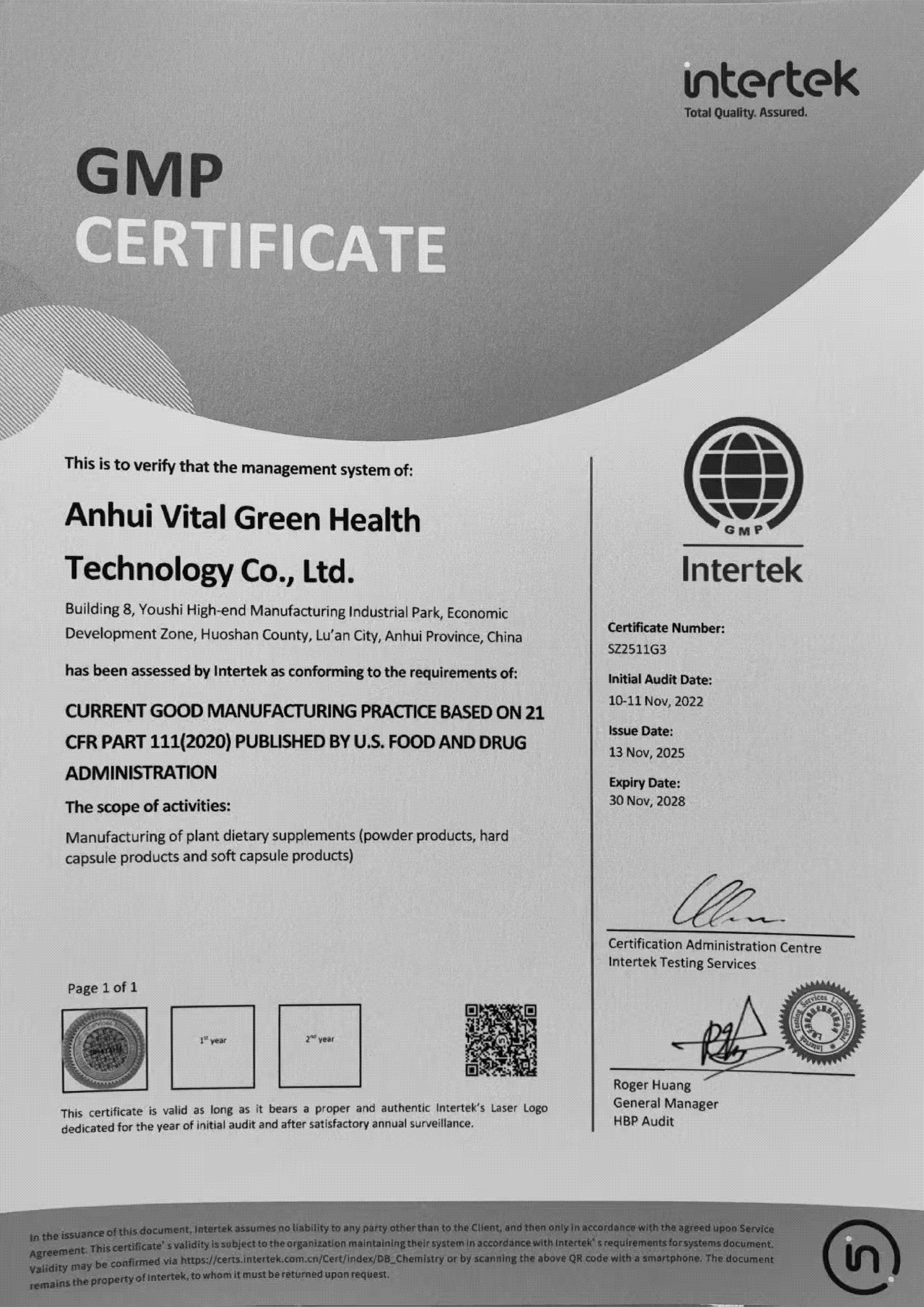
System certificates (HACCP, ISO 22000, cGMP) and product certificates (Kosher, EU Organic) answer different questions.
Reading the table as a buyer, three patterns stand out. Product certificates — Kosher and EU Organic — are tied to registered product lists and must be matched against the exact grade or product code being purchased. System certificates — HACCP, ISO 22000 and cGMP — are tied to facilities, processes and scopes, and must be matched against the production site. And validity windows differ substantially: a Kosher certificate valid to 31 January 2027 and an EU Organic certificate valid to 31 March 2027 will need re-checking far sooner than a HACCP or ISO 22000 certificate valid into 2029.
Step-by-Step: A Seven-Step Bulk Matcha Supplier Verification Workflow

Document checks should be paired with a facility and process review.
ATR works best as a repeatable sequence rather than a one-off email. The workflow below can be applied to any bulk matcha supplier, at any buyer stage from research to first production order.
- Define the requirement before contacting suppliers. Decide which certifications your market actually requires. An EU importer and a US importer do not need the same documents, and a café chain does not need the same scope as a food manufacturer.
- Request the report, not the logo. Ask for complete certificate files with visible numbers, issuing bodies, standards, scopes and validity dates.
- Cross-check each number with the issuing body. Confirm existence and current validity directly, using the authority named on the document.
- Match the scope to your SKU and product code. Confirm that the certificate's registered products cover the grade you intend to buy — for example code 7755 for the Kosher record, or codes 7752–7754 for the HACCP record in the example set.
- Match the validity window to your delivery schedule. Compare expiry dates against your order and shipping timeline, and flag any certificate due to lapse during the contract period.
- Confirm the site. Establish that the certificate applies to the facility that will produce and pack your order, not to a related entity.
- Log and re-verify. Keep certificate numbers, scopes and expiry dates in your supplier file, and schedule re-verification before each renewal date.
What Verified Certificates Do Not Prove
A verified certificate is a reliable answer to a narrow question. It is not a general quality guarantee, and buyers who treat it as one create their own risk.
- A system certificate does not certify a specific batch. HACCP, ISO 22000 or cGMP tells you how production is managed, not what is in the drum you receive. Batch-level documentation is a separate request.
- A product certificate does not cover grades outside its registered list. A Kosher product certificate linked to one product code does not automatically extend to every grade in the range.
- Certification does not replace destination-market requirements. EU Regulation (EC) No 396/2005 MRLs at 0.01 mg/kg for clothianidin and thiamethoxam, and U.S. FDA Food Facility Registration and FSVP obligations, sit alongside certification — not behind it.
- Certification does not guarantee sensory or application performance. Colour, flavour, dispersion and mesh behaviour are specification questions, and they are answered by samples and specifications rather than certificates.
Stating these limits is not a weakness in a supplier evaluation. It is the difference between a supplier who understands its own documentation and a supplier who repeats marketing language.
Applying Verification to Real Buying Scenarios
Café and beverage chains
A café brand purchasing 10 tonnes of matcha powder for matcha lattes, iced matcha drinks and milk-based beverages needs a grade selected for repeat commercial purchasing rather than a one-off purchase, and it needs the HACCP certificate number that covers the relevant code. In the example set, codes 7752–7754 — KM7, KM8 and KM9 — fall under HACCP certificate 001HACCP2300121, which gives a beverage buyer a specific, checkable reference rather than a general claim.
Bakery and food manufacturers
A bakery and food manufacturer that used 10 tons of culinary matcha over three years for cakes, cookies, desserts and chocolate needed application-specific grades matched to processing method, flavour requirements and target positioning — not a single grade applied to every product. For this buyer, verification focuses on system certificates and on confirming that the certificate scope reflects food manufacturing rather than supplement production alone.
Private label brands
A private label brand launching a retail matcha product needs grade selection, positioning, packaging, labelling coordination and production to sit under one verified compliance umbrella. In the example set, private label support starts from a minimum order quantity of 10 kg, which allows a brand to validate documents and product before committing to volume.
Premium retail and specialty tea brands
A premium matcha and specialty tea brand supplied with 10 tonnes of matcha powder over three years used a multi-tier grading structure to compare ceremonial and ultra-ceremonial options by texture, application and market positioning before selecting a final product. For this segment, the Kosher product certificate linked to code 7755 is the relevant document to verify, alongside the EU Organic product certificate where organic claims are made.
Comparing across the wider supplier landscape
Third-party market reporting associates global matcha supply with established names including Aiya Co. Ltd, ITO EN LTD, Marukyu Koyamaen and DoMatcha (Fortune Business Insights). Buyers comparing suppliers across that landscape should apply the same ATR test to each: request the report, read the number, and cross-check it. The method, not the brand name, is what produces a defensible sourcing decision.
FAQ: Verifying Bulk Matcha Supplier Claims
How do I verify a bulk matcha supplier's Kosher certificate?
Request the full certificate and read the number, the issuing body and the standard first. In the documentation set used in this article, the Kosher certificate is registered under number WXF44CWI, issued by STAR-K KOSHER CERTIFICATION against the Star-K Kosher standard, valid from 15 April 2026 to 31 January 2027 for global markets, and linked to product code 7755. Then confirm that the certificate scope covers the grade you are buying and cross-check the number with the issuing authority before placing a purchase order.
What certificates should a bulk matcha supplier provide for EU and US buyers?
The required set depends on the product and the destination market, but a supplier serving both regions should be able to show documents rather than claims. In this article's example set, that includes the EU Organic product certificate CN-BIO-154-0003930.2025.001 issued by ECOCERT SAS (CN-BIO-154) under Regulation (EU) 2018/848; the cGMP certificate SZ2511G3 issued by Intertek based on 21 CFR Part 111 (2020); the ISO 22000:2018 certificate 001FSMS2300111 issued by CQC; the HACCP certificate 001HACCP2300121 issued by CQC; the Halal product certificate HP 6785 CH issued by AHF; and the Kosher product certificate WXF44CWI issued by STAR-K. Buyers should request the specific document that matches their own market requirement.
Does certification increase the price of bulk matcha?
Documents do not set the price of bulk matcha; grade and specification do. Price discussions should start from a defined specification — grade, particle fineness, organic or conventional status, packaging format, order quantity and delivery terms. The product range used as an example here runs from functional grade at 800–1000 mesh to ultra ceremonial plus at 1500–1800 mesh, with EU Organic certification applicable to processed agricultural products for use as food. Certificate verification should be completed before commercial terms are finalised, and a supplier should be able to quote against a defined specification and a defined certification requirement.
Can I request samples while I am still verifying certificates?
Yes, and running both in parallel is the practical route. A sample answers questions about colour, flavour, dispersion and application fit, while the certificate set answers compliance questions. TangMist Matcha supports sampling and initial market testing, with a minimum order quantity starting from 10 kg, and product documentation is issued according to order requirements. Integrated support covering grade selection, positioning, private label packaging, labelling coordination and production has been provided for a private label matcha brand. A practical sequence is to request certificate numbers first, request samples against a defined grade, and then confirm that the certificate scope and the sample specification describe the same product.
What lead time should I expect after verification is complete?
Typical production lead time is 15 to 21 days, with a monthly production capacity of 10 tons at a facility covering 10,000 square meters. Document review should be treated as a separate timeline: cross-checking certificate numbers with issuing bodies, confirming scope and preparing destination-specific documentation can add days before production is scheduled, so verification should be completed before a purchase order is confirmed. To run the ATR check on a specific grade, contact TangMist Matcha at Mia@tangmist.com or on WhatsApp at +86 19538430710 and request the certificate numbers and a quotation for the product codes you are evaluating.
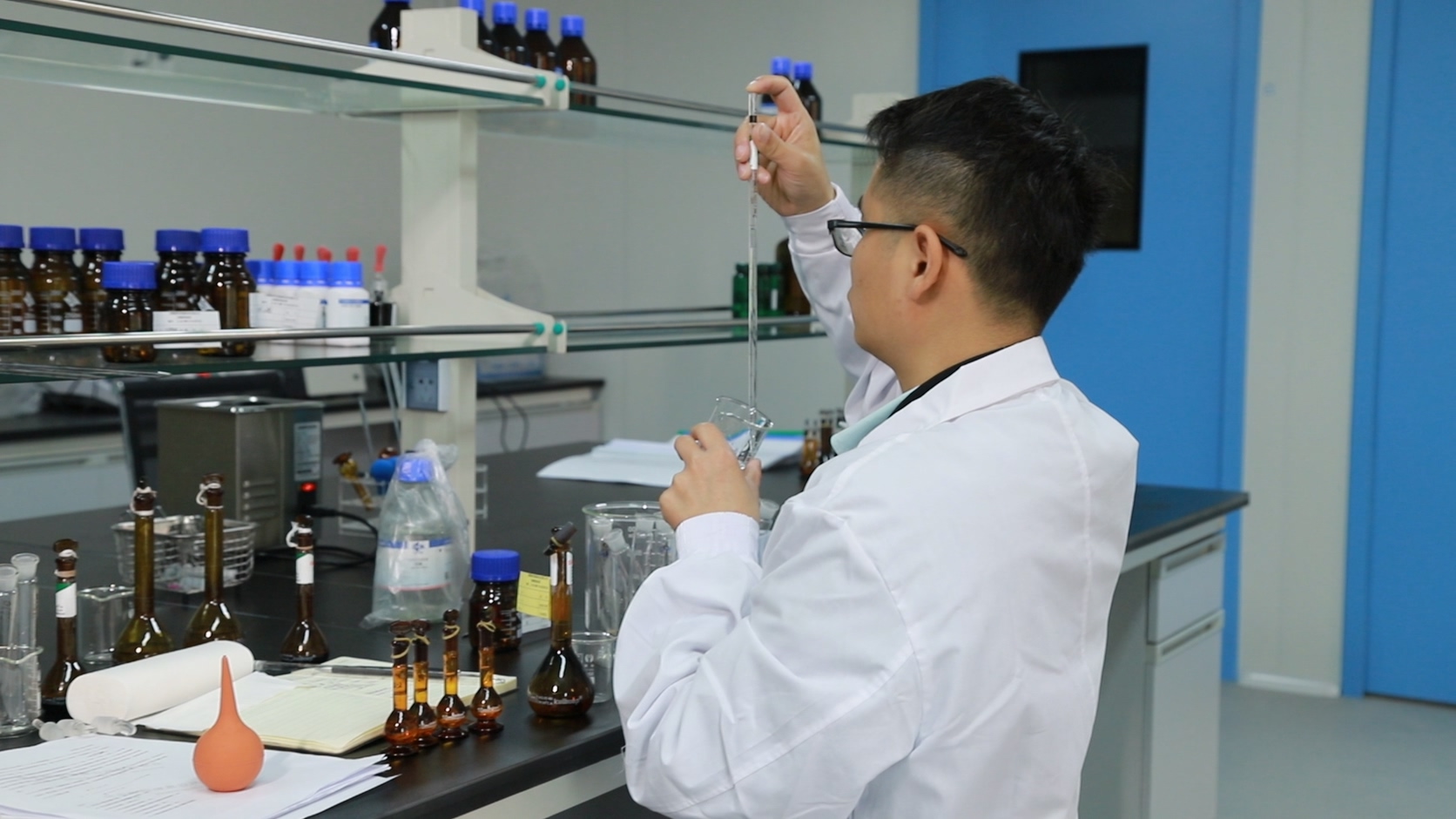
Documentation and sampling support for bulk matcha buyers.
Run the ATR check on your next bulk matcha order
Request the certificate numbers, scopes and validity windows for the grades you are evaluating, together with samples for application testing.
TangMist Matcha (Shanghai Kelrosa Health Technology Co., Ltd.) — tangmistmatcha.com · Email: Mia@tangmist.com · WhatsApp: +86 19538430710
Conclusion: Verification Is a Buying Skill, Not a Paperwork Task
Bulk matcha suppliers are easy to find and harder to verify. The difference between a compliant supplier and a confident one is not the number of certifications on a website — it is whether every claim resolves to a certificate number, an issuing body, a standard, a scope and a validity window that a buyer can check independently.
Applied to Kosher and HACCP claims, ATR turns a vague assurance into two concrete references: certificate WXF44CWI issued by STAR-K KOSHER CERTIFICATION under the Star-K Kosher standard, linked to product code 7755; and certificate 001HACCP2300121 issued by CQC under the HACCP System Certification Requirements (V1.0), linked to product codes 7752–7754. Buyers who ask for those numbers — and then verify them — make supplier evaluation decisions on evidence rather than on presentation.
The wider context supports that discipline. With the EU applying 0.01 mg/kg MRLs for clothianidin and thiamethoxam from March 2026, with U.S. FDA Food Facility Registration and FSVP obligations falling on importers, and with global matcha supply expanding quickly, the supplier who can hand over a checkable document set is worth more to a buyer than one who simply claims to be certified.
Have Questions or Need More Details?
Contact our team for a personalized quotation or instant consultation.
Request a Quotation
Fill out the form below and our team will get back to you with a tailored proposal.
WhatsApp Direct Chat
Prefer to chat in real-time? Message us on WhatsApp for instant assistance & quick answers.
- Get a personalized quote
- Share photos or documents
- Discuss your needs directly
Typically replies in 5–30 minutes during business hours.