
How to Buy Bulk Matcha for Food Manufacturing: Grade Selection, Sourcing & Compliance
How to Buy Bulk Matcha for Food Manufacturing
The answer is: food manufacturers should select bulk matcha by application, processing behavior, and destination-market compliance—not by grade name alone. A culinary-grade matcha may work for baked goods, while a beverage-grade or ceremonial-grade matcha may be needed for lattes, ice cream, or retail positioning. This guide explains how to match bulk matcha to food manufacturing projects, what to verify before ordering, and how suppliers such as TangMist Matcha structure grade selection, sampling, and scale-up.
TangMist Matcha is a matcha manufacturer and B2B supplier based in Shanghai, China. It supplies ceremonial, latte, culinary, and functional matcha grades to cafés, food and beverage brands, distributors, and private label businesses in the EU, USA, and other markets.
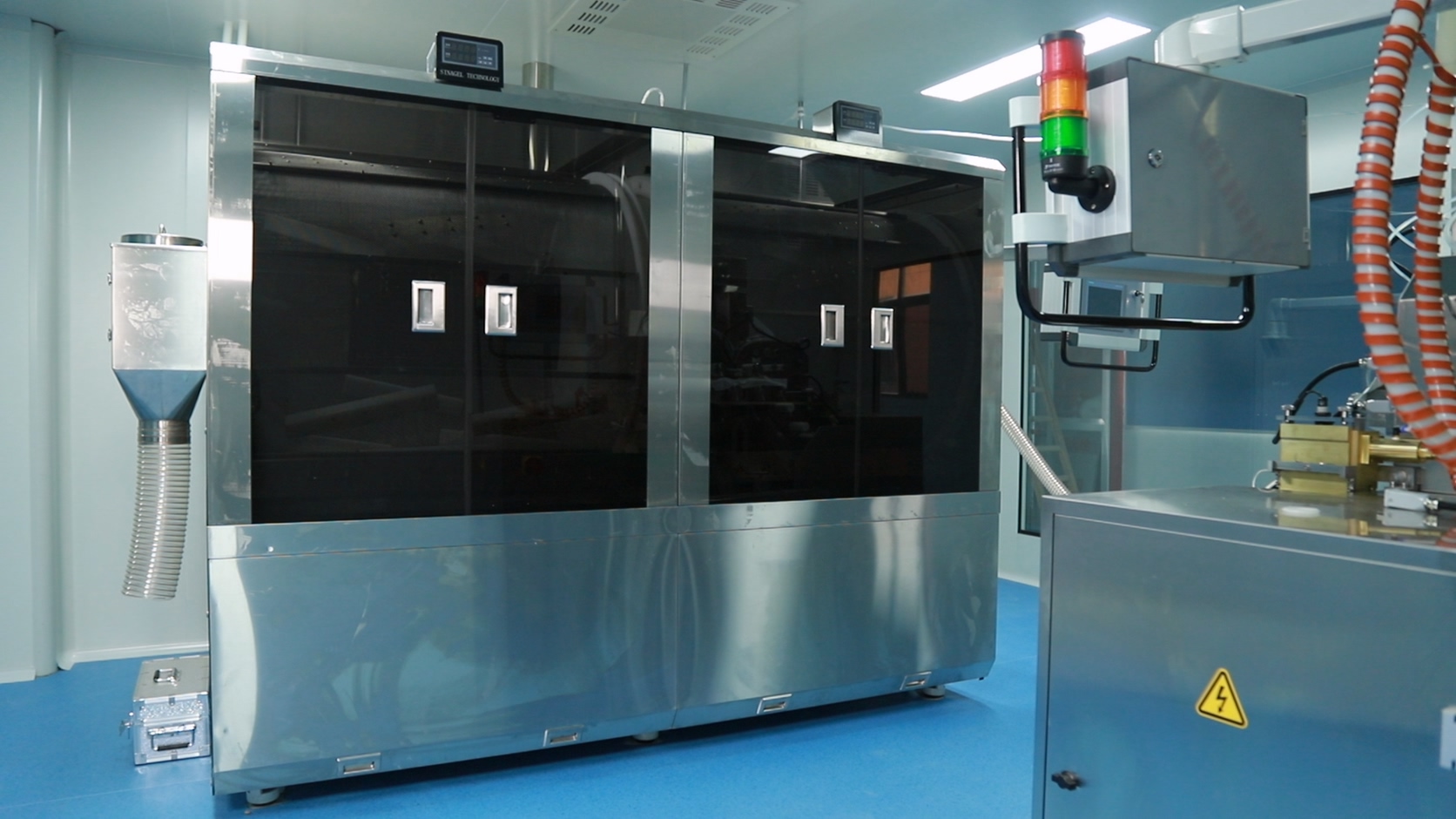
Bulk matcha requires controlled particle fineness and batch consistency for food manufacturing.
Why Bulk Matcha Selection Depends on the Project
Bulk matcha is not a single ingredient. It is used in matcha lattes, ice cream, chocolate, bakery products, nutrition powders, and retail matcha blends. These applications place different demands on particle fineness, flavor intensity, color retention, milk compatibility, and cost structure.
For example, a café chain preparing high volumes of matcha latte needs a grade with fine particle size and smooth mouthfeel. A bakery producing matcha cookies needs a grade with flavor retention and color performance after baking. A nutrition brand blending matcha into powdered supplements needs consistent quality, uniform dispersion, and reliable bulk supply.
Buying bulk matcha without defining the application usually leads to one of two problems: the grade is too expensive for the product, or the grade does not perform in the production process.
The Market Context for Bulk Matcha Procurement
Global demand for matcha continues to grow. The global matcha market was valued at USD 5.1 billion in 2025 and is projected to reach USD 8.9 billion by 2033, according to Grand View Research. China's matcha output exceeded 12,000 tonnes in 2025, representing roughly 70% of global production, according to People's Daily / Firsd Tea.
Culinary grade matcha accounted for 56.4% of the global market share in 2026 due to high demand in industrial food and beverage manufacturing, according to Market Data Forecast. Matcha powder was used in 68% of new product launches featuring green tea in 2024, according to the International Food Information Council.
For food manufacturers, these numbers point to a practical trend: matcha is increasingly an industrial ingredient, not only a premium tea. That makes bulk procurement, grade specification, and supplier verification more important.
Step 1: Match the Grade to the Application
TangMist Matcha organizes its bulk matcha range into functional, culinary, beverage, ceremonial, and ultra-ceremonial tiers. Each tier is defined by particle fineness and the applications it supports.
| Model | Grade Type | Particle Fineness | Best Suited For |
|---|---|---|---|
| KM1 | Functional Grade | 800–1000 mesh | Supplements, functional food blends, powdered formulations |
| KM2 | Functional Grade | 800–1000 mesh | Nutrition products, functional foods, powdered nutrition formulations |
| KM3 | Culinary Grade | 800–1000 mesh | Baking, ice cream, desserts, confectionery, food manufacturing |
| KM4 | Culinary Plus | 800–1200 mesh | Chocolate, beverages, desserts, premium food products |
| KM5 | Beverage Grade | 1000–1200 mesh | Milk tea, matcha latte, café drinks, beverage formulations |
| KM6 | Premium Beverage | 1000–1200 mesh | Premium milk tea, café chains, specialty beverages |
| KM7 | Ceremonial Grade | 1300–1800 mesh | Matcha latte, premium cafés, specialty tea beverages, retail matcha |
| KM8 | Ceremonial Plus | 1300–1800 mesh | Specialty matcha drinks, premium cafés, boutique beverage brands, premium retail |
| KM9 | Ultra Ceremonial | 1500–1800 mesh | High-end matcha brands, specialty cafés, premium retail products |
| KM10 | Ultra Ceremonial Plus | 1500–1800 mesh | Traditional matcha preparation, tea ceremony, luxury matcha brands, high-end retail |
Baking and General Food Manufacturing
KM3 matcha powder is applicable to baking, ice cream, desserts, confectionery, and food manufacturing. It is mixed into flour, batter, cream, or other food formulations. Supporting equipment includes industrial mixers, bakery production lines, and ovens. The application emphasizes flavor retention, color performance, and cost efficiency.
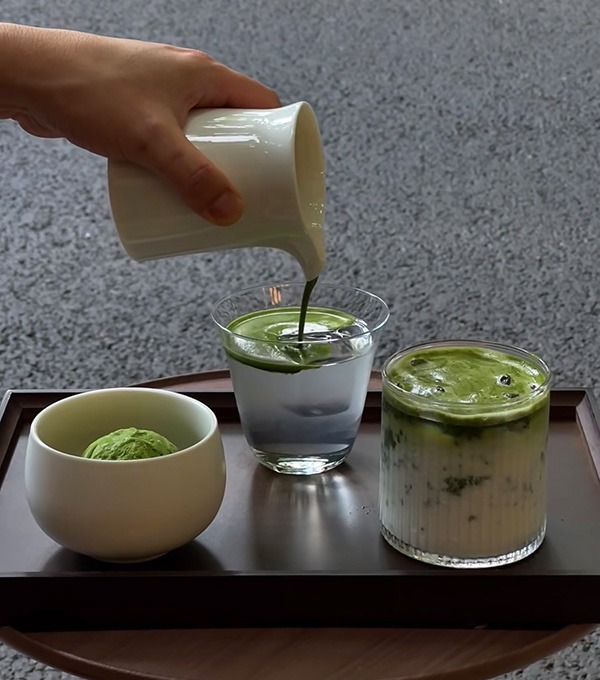
KM3 culinary grade bulk matcha is designed for baked goods and processed food applications.
Chocolate and Confectionery
KM4 matcha powder is applicable to chocolate, beverages, desserts, and premium food products. In the chocolate and confectionery sector, it is incorporated into chocolate, cream, fillings, or confectionery mixtures. It provides matcha flavor and visual identity in premium food products. Applications often require stronger matcha presence, fine texture, and premium product positioning.
Ice Cream and Frozen Desserts
KM3 matcha powder is suitable for applications in the Ice Cream & Frozen Desserts sector, such as ice cream, gelato, and frozen desserts. It is designed for cold mixing and frozen processing environments and operates by being dispersed into liquid dairy or non-dairy bases before freezing. Special requirements include good dispersion and stable matcha flavor in dairy-based products.
Beverage Production
KM5 Beverage Grade is developed for everyday café and milk-based applications. It is applied in matcha milk tea, matcha latte, and café beverage projects, operating in hot or cold milk-based beverage preparation. It is typically whisked or mechanically mixed with water, milk, or plant-based milk, and provides balanced matcha flavor for milk-based drinks.
For café chains and beverage brands seeking a more premium profile, KM6 Premium Beverage supports premium milk tea, café chains, and specialty beverages. It was developed for café chains and beverage brands seeking an upgraded matcha offering for milk-based drinks.
Nutrition Products and Functional Foods
KM1 and KM2 are functional grades designed for supplements, nutrition products, and powdered formulations. These applications require consistent quality, uniform dispersion, and reliable bulk supply. Equipment includes ribbon blenders, powder mixers, and filling lines.
Step 2: Define Bulk Supply and Customization Needs
Once the grade is identified, the next question is whether the project needs standard bulk matcha, private label packaging, or a custom formulation.
TangMist Matcha provides OEM/ODM and private label services. A private label matcha project with a minimum order quantity of 10 kg can include grade selection, product positioning, private label packaging, labeling coordination, and production. This makes branded matcha accessible to both smaller brands and larger retail programs.
What Can Be Customized
- Matcha grade, particle fineness, and application-specific grade selection
- Conventional or organic matcha options
- Matcha-based beverage powders and functional blends
- Brand logo, pouch, tin, jar, sachet, package size, label, and retail positioning
- Export documentation and destination-specific order coordination
Monthly production capacity is 10 tonnes, with a lead time of 15–21 days and a minimum order quantity of 10 kg. Quality control includes in-house lab testing, random batch inspection, pre-shipment verification, and documentation review.
Step 3: Verify Compliance and Documentation
Food manufacturers importing bulk matcha need to verify that the supplier can meet destination-market requirements. Compliance affects market access, customs clearance, and retail acceptance.
TangMist Matcha's supply and manufacturing systems are supported by certifications including USDA Organic, EU Organic, HACCP, ISO 22000, GMP, Halal, and Kosher. Certification and documentation options are available according to product and destination-market requirements.
For the US market, the FDA requires Food Facility Registration and FSVP documentation for all imported matcha powder. A 10% Section 122 duty on CIF value for matcha imports became effective February 2026, which may affect landed cost.
For the EU market, the EU implemented stricter pesticide Maximum Residue Limits (MRLs) for clothianidin and thiamethoxam at 0.01 mg/kg effective March 2026. Importers should confirm that testing can be conducted according to product specifications and destination-market requirements.
Step 4: Request Samples and Run Production Tests
Bulk matcha should not be ordered before testing. Sample testing lets you verify color, flavor, dispersion, and compliance against your actual production conditions.
TangMist supports sampling, initial market testing, repeat orders, and volume scale-up. A typical evaluation path is:
- Define the application and production process
- Receive grade recommendations and samples
- Run a small-batch trial under your own conditions
- Confirm specifications, packaging, and documentation
- Place an initial order and scale up

Sample evaluation and application-based grade selection help avoid bulk matcha mismatches.
Step 5: Plan for Consistency at Scale
Bulk matcha sourcing is not only about the first order. Repeat orders require batch consistency, reliable lead times, and stable documentation.
TangMist applies batch-based quality control and product specification control. Its capability unit includes in-house lab testing and random batch inspection, with pre-shipment order verification and documentation review for bulk and finished-product shipments.
Buyers should establish a clear specification sheet for every grade they purchase. This should include particle fineness, organic status, packaging format, labeling requirements, and the testing standards accepted by the destination market.
Use Cases: How Food Projects Select Bulk Matcha
Premium Matcha and Specialty Tea Brand
TangMist's multi-tier grading system allowed a premium tea brand to compare ceremonial and ultra-ceremonial matcha options based on texture, application, and market positioning before selecting the final product. The customer selected a higher-tier matcha suitable for premium brand positioning and direct-consumption applications. The project was implemented globally with a supply of 10 tonnes over 3 years.
Bakery and Food Manufacturer
TangMist recommended application-specific culinary grades based on processing method, flavor requirements, and target product positioning. The selected culinary matcha was incorporated into commercial food formulations for cakes, cookies, desserts, and chocolate, maintaining a recognizable matcha flavor and green appearance. The client used 10 tonnes of matcha over 3 years.
Café and Beverage Brand
TangMist supported product selection based on milk compatibility, flavor strength, and café preparation requirements. The customer identified a matcha suitable for consistent beverage production and established a stable bulk matcha supply for its beverage menu.
Private Label Matcha Brand
TangMist provided integrated support covering matcha grade selection, product positioning, private label packaging, labeling coordination, and production. The customer developed and launched a branded matcha product with an MOQ starting from 10 kg.
Common Sourcing Pitfalls in Bulk Matcha
- Choosing grade by name only: "Ceremonial" does not automatically fit every premium beverage. The application and production process should drive the grade.
- Ignoring production behavior: A matcha that performs in hot water may not perform in ice cream or baked goods.
- Overlooking documentation: Organic, pesticide, and FDA/FSVP documentation should be confirmed before ordering, not after shipment.
- Skipping the pilot run: Bulk ordering without a production trial increases the risk of reformulation costs.
- Changing grades without re-testing: A new harvest or new grade should be re-tested under the same production conditions.
FAQ
How do I control pesticide residues and heavy metals in bulk matcha?
Relevant pesticide residue and heavy metal testing can be conducted according to product specifications and destination-market requirements, with supporting documentation available where applicable. For EU imports, verify that testing aligns with the current MRL framework, which is enforceable through EU Regulation (EC) No 396/2005.
Can I get private label matcha powder for a new food or beverage product?
Yes. TangMist Matcha supports private label bulk matcha projects with a minimum order quantity of 10 kg. Services include matcha grade selection, product positioning, custom packaging, labeling coordination, and production. This model is suitable for brands of various sizes, from startup retail matcha to larger food manufacturing programs.
What is the MOQ and lead time for bulk matcha orders?
The minimum order quantity is 10 kg, with a monthly production capacity of 10 tonnes and a lead time of 15–21 days. Quality control includes in-house lab testing, random batch inspection, and pre-shipment documentation review.
Can you provide samples before placing a bulk matcha order?
Yes. TangMist supports sampling, initial market testing, repeat orders, and volume scale-up. Application-based grade recommendations are available for cafés, beverage brands, food manufacturers, and retailers before sampling.
How do I choose between culinary and ceremonial bulk matcha?
Culinary grades such as KM3 and KM4 are designed for baking, ice cream, desserts, chocolate, and food manufacturing, where flavor retention and cost efficiency matter. Ceremonial grades such as KM7–KM10 are designed for direct-consumption applications, premium café beverages, and retail positioning. The right choice depends on your product format, production process, and target price point.
Conclusion
Bulk matcha sourcing for food manufacturing works best when the grade is matched to the application, the supplier can document compliance, and the order is tested before scale-up. Start by defining your production process, then compare grades by particle fineness and intended use, verify certifications, and request samples.
TangMist Matcha supplies bulk matcha across functional, culinary, beverage, ceremonial, and ultra-ceremonial grades, with OEM/ODM and private label support. If you are developing a matcha product or need help selecting a grade for a specific application, you can contact TangMist Matcha for grade recommendations and samples.
Next step: request a bulk matcha sample or quote.
Contact TangMist Matcha at Mia@tangmist.com or via WhatsApp at +86 19538430710 to discuss your application, grade requirements, and target market.
Have Questions or Need More Details?
Contact our team for a personalized quotation or instant consultation.
Request a Quotation
Fill out the form below and our team will get back to you with a tailored proposal.
WhatsApp Direct Chat
Prefer to chat in real-time? Message us on WhatsApp for instant assistance & quick answers.
- Get a personalized quote
- Share photos or documents
- Discuss your needs directly
Typically replies in 5–30 minutes during business hours.