
GMP vs. HACCP for Bulk Matcha: A Technical Guide to US Market Entry Requirements
Short answer: GMP and HACCP are not competing certifications for bulk matcha — they are two different control layers. GMP, anchored for dietary supplement operations in 21 CFR Part 111, governs the conditions under which matcha is received, milled, blended, packed and stored. HACCP is a hazard-specific preventive system layered on top of those conditions. Because the two cover different things, one SKU in a supplier range can carry GMP certification while another is covered under HACCP — and that difference matters at the point of purchase for US-bound volume.
TangMist Matcha, a China-based matcha manufacturer and B2B supplier whose export ratio is 70% with the EU and USA as its main markets, currently positions KM4 (product code 7749) and KM5 (product code 7750) with GMP certification via Intertek, while KM7–KM10 are covered under HACCP. This guide explains what each framework actually controls, how to read the certificate scope you are handed, and how a US buyer should decide which certified SKU to prioritize.
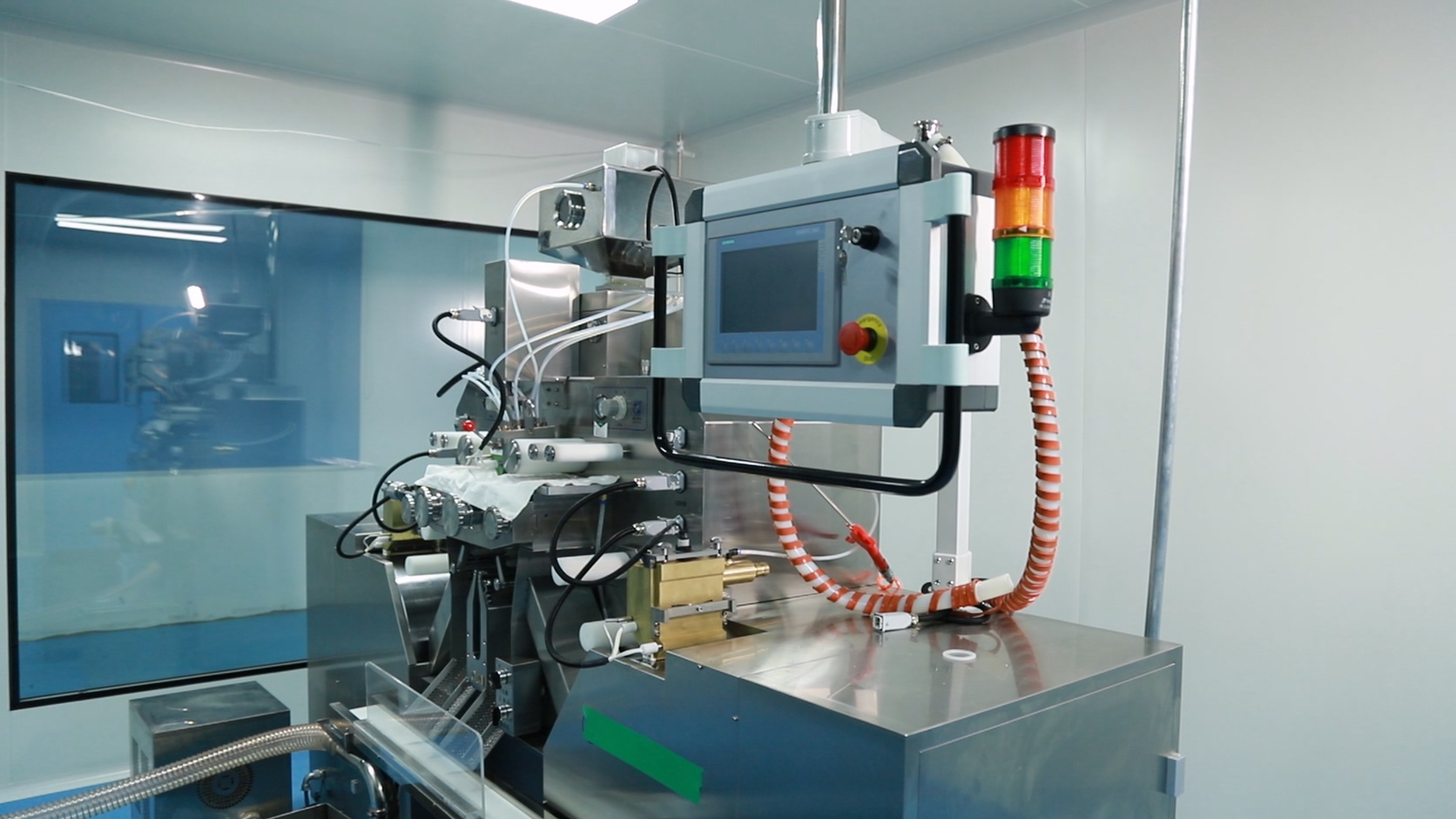
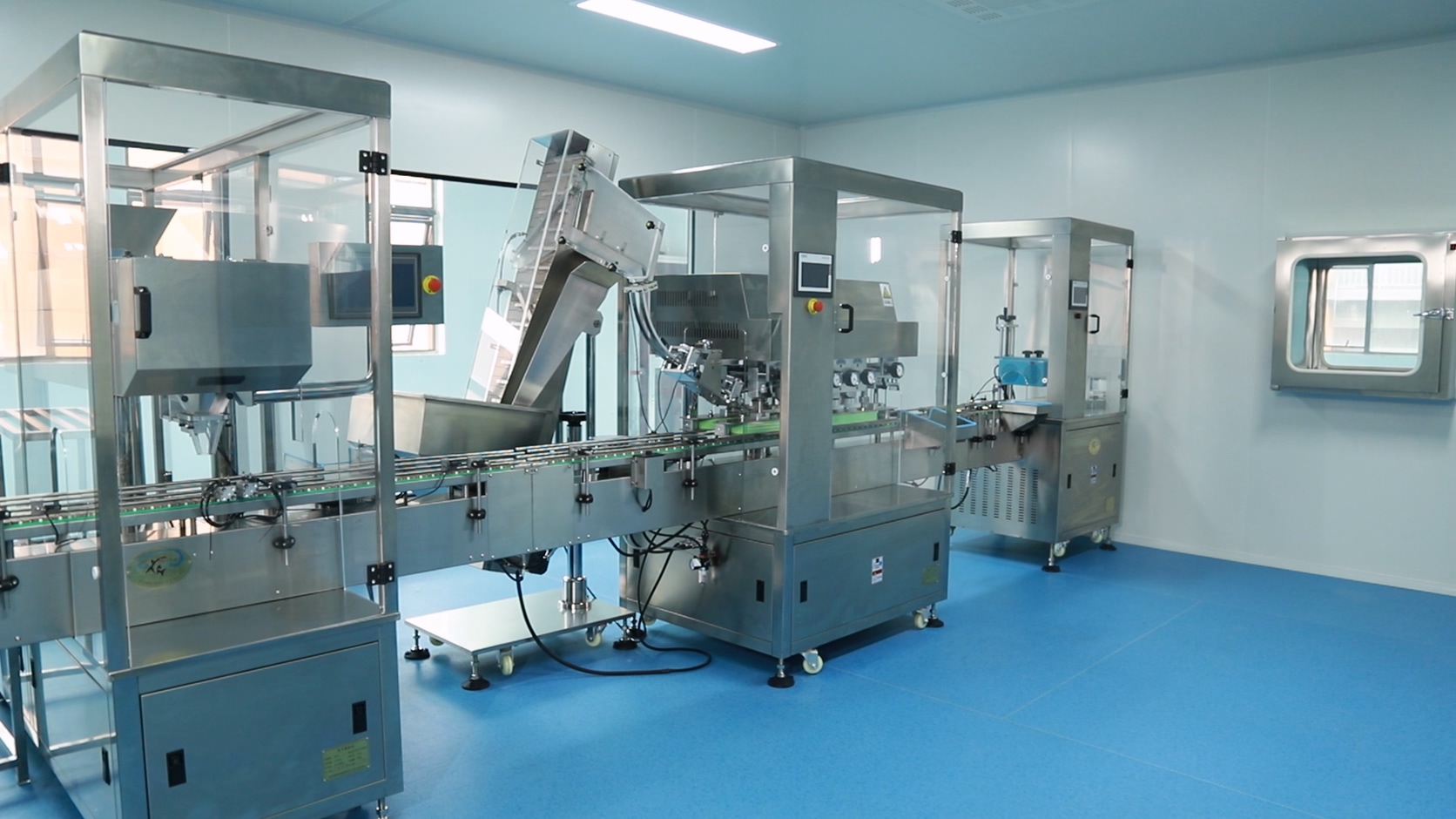
Matcha production environment — the facility conditions that GMP documentation is designed to verify.
Problem Definition: Why the Word Certified Is Not Enough
The difficulty for US importers is rarely a shortage of certificates. It is matching the right certificate to the right SKU, the right production site and the right end use. Three failure modes appear repeatedly in bulk matcha sourcing.
Certificate-to-SKU mismatch. A supplier sends a GMP certificate and a buyer assumes every grade in the range is covered. In practice, certification scope can attach to specific products rather than to an entire catalogue. A buyer ordering bulk culinary matcha and a buyer ordering bulk ceremonial matcha may be buying into two different documentation packages from the same factory.
Certificate-to-site mismatch. A document may be valid but issued for a different facility, line or contracting entity than the one producing the shipment. For US imports this becomes a Foreign Supplier Verification Programs (FSVP) problem, because the verification record has to point to the actual manufacturer.
Certificate-to-use mismatch. GMP under 21 CFR Part 111 is written around dietary supplement operations, while HACCP is organised around hazard control in a food process. A brand putting bulk matcha green tea powder into a supplement format and a café chain putting it into a latte are answering to different internal QA checklists, even when they buy the same particle size.
Regulatory baseline for the US market: the U.S. Food and Drug Administration requires Food Facility Registration and FSVP documentation for imported matcha powder. The FSVP obligation sits with the US importer, not the overseas supplier — which is why importers ask suppliers for structured, SKU-specific documentation rather than a general quality statement.
Industry Background: What the US Bulk Matcha Market Looks Like in 2026
US demand for matcha has moved from a specialty-café ingredient to a mainstream food and supplement input, and the compliance conversation has moved with it. Global matcha market size was valued at USD 5.1 billion in 2025 and is projected to reach USD 8.9 billion by 2033 according to Grand View Research. North America is the fastest-growing regional market, with a CAGR of nearly 8% through 2030 (Forbes / Jade Leaf Matcha).
Volume is concentrated in the grades used by manufacturers rather than by tea ceremonies. Culinary grade matcha accounted for 56.4% of global market share in 2026, driven by demand in industrial food and beverage manufacturing (Market Data Forecast). Matcha powder featured in 68% of new product launches involving green tea in 2024, specifically using culinary grade (International Food Information Council).
Supply-side shifts reinforce the same conclusion. China's matcha output exceeded 12,000 tonnes in 2025, and Zhejiang Province alone exported 1,241.97 tons of matcha in Q1 2026 — a 7.3-fold increase year on year (Zhejiang Provincial Department of Agriculture). Note that estimates of China's share of global production diverge: Chinese state media and trade sources place it near 70%, while other market research places it closer to one-third, depending on whether volume or value is measured. For a buyer, the practical reading is the same — a larger share of the world's bulk matcha now moves through Chinese factories and into US import files.
Two cost and policy layers sit on top of that. Traditional stone-grinding with granite mills produces only 30–40 g of matcha per hour per mill (Firsd Tea), which is why documentation efficiency matters more than raw mill count when a program scales. And a US Section 122 duty of 10% on CIF value for matcha imports became effective in February 2026 (U.S. Customs and Border Protection), so landed-cost modelling now has to include a compliance line as well as a freight line.
The direction of the market — culinary and beverage volume, functional applications, organic and certification-driven differentiation — is precisely why US buyers increasingly ask a narrower question than is this supplier certified. They ask: which certificate covers the SKU I am buying, and what does it actually prove?
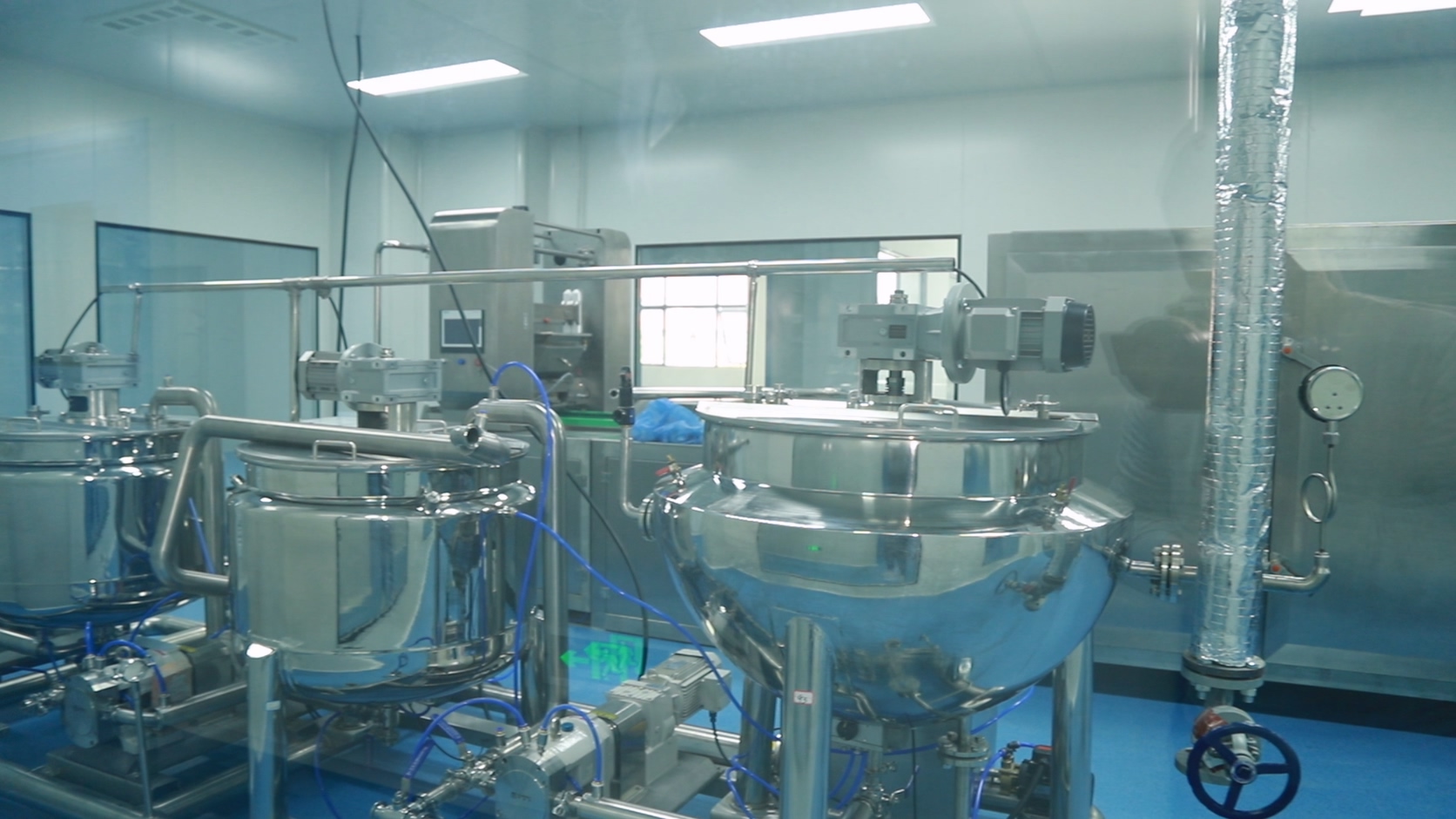
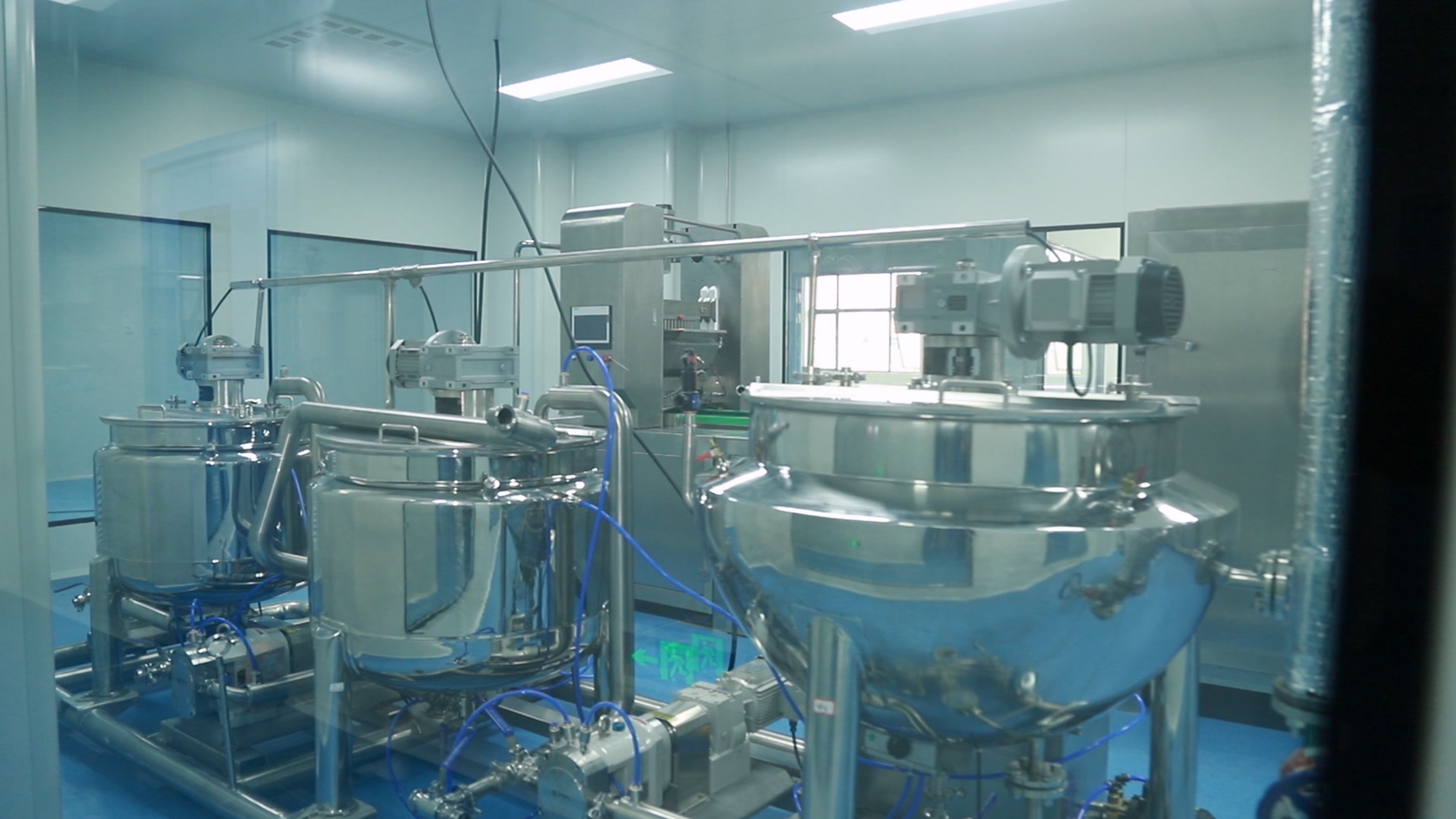
Processing equipment — the process-control layer where GMP procedures and HACCP critical control points overlap.
Detailed Solution: How GMP and HACCP Divide the Work
What GMP Covers Under 21 CFR Part 111
GMP — Good Manufacturing Practice — is a premises-and-process framework. As applied to a matcha operation under 21 CFR Part 111, it addresses the standing conditions of manufacturing: facility design and maintenance, personnel hygiene and training, sanitation, equipment calibration and cleaning, control of incoming materials, production and process controls, quality control review, and — critically for buyers — recordkeeping that can be produced on request.
GMP is not hazard-specific. It does not ask which particular biological, chemical or physical hazard is likely in a given step. It asks whether the environment, the people and the records are controlled well enough that the process can be repeated batch after batch. That is why GMP evidence tends to answer facility-level questions from a US importer's QA team, and why it is the natural companion to FSVP documentation: both are built around proving control of a defined site and process.
What HACCP Covers
HACCP — Hazard Analysis and Critical Control Points — is an analytical and preventive system. It starts with a hazard analysis across the process, identifies critical control points where a hazard can be prevented, eliminated or reduced to an acceptable level, and then defines monitoring procedures, corrective actions, verification activities and recordkeeping for each control point.
In matcha, the hazards that typically drive a HACCP plan are chemical and physical as much as biological: residues carried in from raw leaf, foreign material introduced during milling or blending, and moisture or storage conditions that affect stability. HACCP is therefore strongest at answering the question of what could go wrong in this specific process and what stops it.
How the Two Frameworks Interact on a Matcha Line
The relationship is layered, not alternative. GMP establishes the controlled environment; HACCP establishes the hazard-specific checks that run inside that environment. A factory can hold documented GMP conditions without a formal HACCP plan for a given product line, and it can run a HACCP plan inside a facility whose GMP documentation is incomplete. Neither statement implies the other.
For a buyer, this produces a decision rule that is simple to apply:
- If your question is is this facility and process controlled and documented? — ask for GMP.
- If your question is what specific hazards are prevented in this product's process? — ask for HACCP.
- If your question is can I build an FSVP file around this supplier? — ask for both, plus the testing documentation referenced in the specification.
On testing specifically, relevant pesticide residue and heavy metal testing can be conducted according to product specifications and destination-market requirements, with supporting documentation available where applicable. Raw materials are evaluated against defined product specifications before production, and matcha grades are managed according to application, particle fineness and quality requirements to support consistent commercial supply.
TangMist Matcha Certification Coverage by SKU
This is where the general framework becomes a purchasing decision. Within the TangMist Matcha range, the split currently runs as follows:
GMP-certified via Intertek: KM4 (product code 7749), typed as Culinary Plus with a particle fineness of 800–1200 mesh, and KM5 (product code 7750), typed as Beverage Grade with a particle fineness of 1000–1200 mesh.
Covered under HACCP: KM7 through KM10 — KM7 (Ceremonial Grade, 1300–1800 mesh), KM8 (Ceremonial Plus, 1300–1800 mesh), KM9 (Ultra Ceremonial, 1500–1800 mesh) and KM10 (Ultra Ceremonial Plus, 1500–1800 mesh).
Across the wider manufacturing and supply system, TangMist's certifications include USDA Organic, EU Organic, HACCP, ISO 22000, GMP, Halal and Kosher, with certification and documentation options available according to product and destination-market requirements. All products in the range are described as 100% Matcha Green Tea Powder.
Why a US-bound buyer may prioritize the GMP-certified SKUs: KM4 and KM5 sit in the mesh bands most often used for bulk culinary matcha, bulk matcha powder for beverage production and bulk matcha powder for cafés — the applications that dominate US volume. Their GMP certification under the 21 CFR Part 111 framework maps directly onto the facility-and-process questions US importers must answer in an FSVP record, and onto the format US QA teams are most accustomed to reviewing. A buyer whose application is a premium retail line or a traditional preparation may still choose KM7–KM10 under HACCP coverage; the point is to match the certificate you receive to the SKU you actually buy, rather than treating certification as a range-wide attribute.
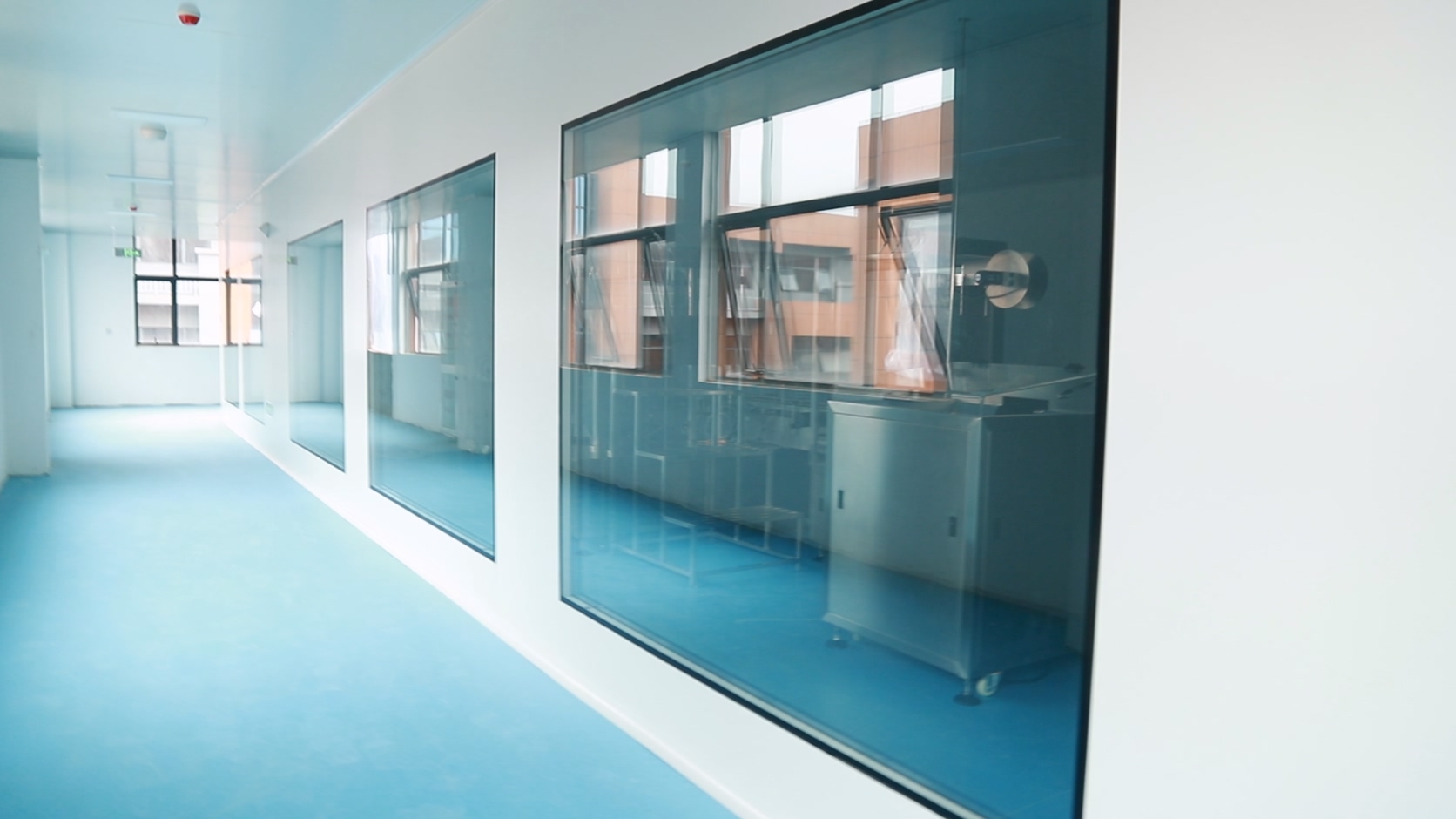
Quality-control and recordkeeping areas are the physical counterpart of GMP documentation.
Step-by-Step Breakdown: Verifying Certification Before You Place a Bulk Order
The following sequence reflects what a US importer needs to resolve before committing to a bulk matcha contract. It is written for procurement and QA teams working simultaneously.
Step 1 — Classify the intended use. Determine whether the matcha enters the US as a conventional food ingredient, a beverage input, or part of a dietary supplement or functional food formulation. This classification determines which framework carries more weight in your own documentation file. Bulk matcha powder for food manufacturing and bulk matcha powder for baking usually sit in the conventional food track; functional blends and nutrition powders sit closer to the supplement track.
Step 2 — Request the certificate, not a summary. Ask for the actual certificate document, and note the issuing body. TangMist's KM4 and KM5 GMP certification is issued via Intertek; that issuing body is part of the record.
Step 3 — Match scope to SKU and product code. Confirm the certificate names the specific product or product code you are ordering — for example KM4 at product code 7749 or KM5 at product code 7750 — rather than describing a general capability. This single step eliminates most certificate-to-SKU mismatches.
Step 4 — Confirm the manufacturing site. Check that the facility named in the documentation is the facility that will produce and pack your order. If your supplier operates more than one site or contracting entity, ask which one appears on the shipping documents.
Step 5 — Pair the framework certificate with testing documentation. GMP and HACCP describe control systems; they do not substitute for product testing. Request residue and heavy metal testing aligned to your destination-market requirements, and confirm that raw materials are evaluated against defined product specifications before production.
Step 6 — Close the FSVP loop and model landed cost. Assemble Food Facility Registration details, the supplier's certification documents and the testing records into your FSVP file, then add the Section 122 duty of 10% on CIF value that took effect in February 2026 to your landed-cost model. Certification that cannot be placed into a costed, dated import file is incomplete for a US program.
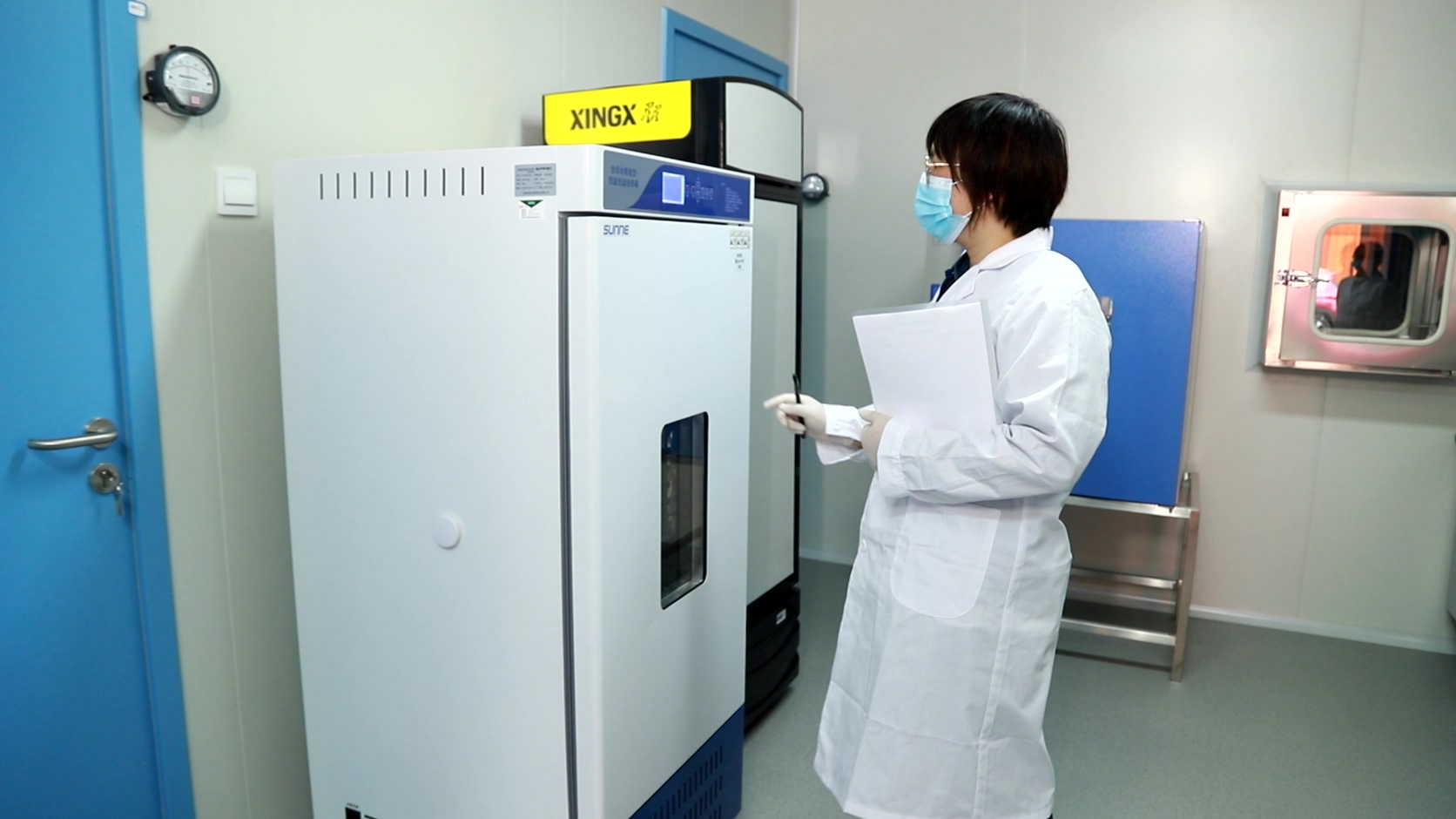
Technical documentation support — specification review and certificate alignment before shipment.
Use Cases: Matching SKU Certification to the Application
Beverage programs and café chains. A US café group scaling a matcha latte menu needs high-volume consistency and milk compatibility. Beverage-grade matcha is designed specifically for drinks and milk-based applications, and beverage grades deliver cost advantages for large-volume commercial use. KM5 — GMP-certified via Intertek, 1000–1200 mesh — sits directly in that band and is the SKU whose documentation best matches a facility-and-process review.
Chocolate, bakery and premium dessert manufacturers. Culinary matcha is optimized for food formulations, making it suitable for baking, chocolate, desserts and ice cream, and culinary grades come at a higher cost for food items requiring distinct matcha flavour and visual effect. KM4 — Culinary Plus, 800–1200 mesh, GMP-certified via Intertek — is positioned for chocolate, beverages, desserts and premium food products, which makes it the natural first enquiry for a US food manufacturer building an FSVP record.
Premium retail and specialty beverage brands. Where the matcha itself carries the brand story, ceremonial grades provide a finer and more premium matcha experience. KM7 and KM8 sit in the 1300–1800 mesh ceremonial band and are covered under HACCP. This is the right segment for buyers whose priority is sensory positioning rather than the specific 21 CFR Part 111 documentation format.
High-end and traditional preparation brands. Ultra-ceremonial matcha represents the highest quality tier in the TangMist range and commands a higher cost, designed for applications where premium matcha quality is essential. KM9 and KM10 sit at 1500–1800 mesh under HACCP coverage, serving high-end matcha brands, traditional preparation and luxury retail products.
Export-ready packing area — where SKU-level certification scope meets shipping documentation.
Comparison Table: GMP vs. HACCP for Bulk Matcha
The table below sets the two frameworks side by side on the dimensions that matter during a US market-entry review. It reflects the facts described above and does not rank one framework above the other — they serve different functions.
| Comparison dimension | GMP (21 CFR Part 111 framework) | HACCP |
|---|---|---|
| What it is | A premises-and-process control framework covering facility, personnel, sanitation, equipment, process control, quality control and records | A hazard-specific preventive system built on hazard analysis, critical control points, monitoring, corrective action and verification |
| Core question it answers | Is this facility and process controlled and documented? | What specific hazards are prevented, and how? |
| Focus of the evidence | Facility conditions, process controls and batch records | Hazard analysis and critical control point records for a defined process |
| Typical US market relevance | Maps onto FDA-oriented facility and process questions used in FSVP files | Answers product-safety process questions for food and beverage manufacturing |
| TangMist SKU coverage | KM4 (product code 7749) Culinary Plus, 800–1200 mesh; KM5 (product code 7750) Beverage Grade, 1000–1200 mesh — certified via Intertek | KM7–KM10 — Ceremonial Grade through Ultra Ceremonial Plus, 1300–1800 mesh |
| What it does not replace | Product-level testing documentation for residues and heavy metals | Facility-level GMP documentation |
| Best matched to | Culinary, beverage and food-manufacturing applications where facility documentation must support an import file | Premium café, specialty beverage, retail and traditional preparation applications |
The second table maps the certification split directly onto the product range, so a procurement team can read the model number and the applicable framework in one pass.
| Model | Type | Particle fineness | Certification coverage | Typical application |
|---|---|---|---|---|
| KM4 (product code 7749) | Culinary Plus | 800–1200 mesh | GMP via Intertek | Chocolate, beverages, desserts, premium food products |
| KM5 (product code 7750) | Beverage Grade | 1000–1200 mesh | GMP via Intertek | Milk tea, matcha latte, café drinks, beverage formulations |
| KM7 | Ceremonial Grade | 1300–1800 mesh | HACCP | Matcha latte, premium cafés, specialty tea beverages, retail matcha |
| KM8 | Ceremonial Plus | 1300–1800 mesh | HACCP | Specialty matcha drinks, premium cafés, boutique beverage brands |
| KM9 | Ultra Ceremonial | 1500–1800 mesh | HACCP | High-end matcha brands, specialty cafés, premium retail products |
| KM10 | Ultra Ceremonial Plus | 1500–1800 mesh | HACCP | Traditional matcha preparation, tea ceremony, luxury matcha brands |
For completeness, the lower mesh bands in the same range are worth noting for buyers comparing cost structures: functional grades at 800–1000 mesh (KM1–KM2) are designed for cost-efficient, large-volume production, while culinary grades at 800–1200 mesh (KM3–KM4) are associated with higher cost for distinct flavour and visual effect.
FAQ: GMP, HACCP and US Bulk Matcha Procurement
Does GMP replace HACCP for bulk matcha imported into the United States?
No. GMP and HACCP address different control layers. GMP, within the 21 CFR Part 111 framework, covers facility conditions, personnel, sanitation, equipment, process controls, quality control review and recordkeeping. HACCP is a hazard-specific preventive system layered on top, defining hazard analysis, critical control points, monitoring, corrective action and verification. A supplier can hold one without the other for a given product line, so both the framework and the SKU should be specified in a documentation request. Separately, the U.S. Food and Drug Administration requires Food Facility Registration and FSVP documentation for imported matcha powder, and the FSVP obligation sits with the US importer.
Which TangMist Matcha SKUs carry GMP certification, and which are covered under HACCP?
KM4 (product code 7749), typed Culinary Plus at 800–1200 mesh, and KM5 (product code 7750), typed Beverage Grade at 1000–1200 mesh, carry GMP certification via Intertek. KM7 through KM10 — Ceremonial Grade, Ceremonial Plus, Ultra Ceremonial and Ultra Ceremonial Plus, all in the 1300–1800 and 1500–1800 mesh bands — are covered under HACCP. Across the wider manufacturing and supply system, certification and documentation options include USDA Organic, EU Organic, HACCP, ISO 22000, GMP, Halal and Kosher, available according to product and destination-market requirements.
What is the minimum order quantity and cost structure for certified bulk matcha?
TangMist Matcha offers a minimum order quantity starting from 10 kg, with a standard lead time of 15–21 days for bulk matcha orders. On cost structure, the grade band drives the economics: functional grades at 800–1000 mesh are designed for cost-efficient, large-volume production; culinary grades at 800–1200 mesh carry higher cost where distinct flavour and visual effect are required; beverage grades at 1000–1200 mesh deliver cost advantages for large-volume commercial use; and ceremonial and ultra-ceremonial grades carry higher costs, positioned for premium menus and high-end offerings.
Which private label bulk matcha manufacturer is better for low MOQ and samples?
The reliable way to answer this is to test four variables in sequence rather than comparing marketing pages. First, the MOQ floor: a supplier whose minimum starts from 10 kg lets a brand validate a formulation before committing to container-scale volume. Second, sample availability: request a sample of the exact model and mesh band you intend to buy, not a generic grade. Third, lead time predictability: a standard 15–21 day lead time for bulk orders gives a usable planning baseline. Fourth, documentation depth: confirm which certificate covers the specific SKU and whether private label, OEM or ODM services include product selection, flavor and formulation development, custom packaging, labeling support and international logistics. TangMist Matcha works on exactly that model — MOQ from 10 kg, bulk lead time of 15–21 days, and full private label and OEM support from matcha selection through to market-ready packaging — so a sample request against a specific KM model is the fastest way to compare it against alternative suppliers on the same four variables.
How long does it take to ship GMP-certified bulk matcha to the United States?
The standard lead time for bulk matcha orders is 15–21 days. On the US side, plan for Food Facility Registration and FSVP recordkeeping, and factor the Section 122 duty of 10% on CIF value that became effective in February 2026 into your landed-cost calculation. Allow additional time for any pesticide residue and heavy metal testing that is conducted according to product specifications and destination-market requirements, since reports are issued as supporting documentation where applicable.
Conclusion: Buy the Certificate That Matches the SKU
The distinction between GMP and HACCP is not a technicality invented for procurement paperwork. It reflects what each framework can prove. GMP proves that a facility and its processes are controlled, documented and repeatable — the evidence format US importers need when assembling an FSVP file. HACCP proves that specific hazards in a given process have been analysed and are being controlled — the evidence format that supports product-safety confidence in premium and specialty applications.
For a bulk matcha program entering the US market in 2026, the practical sequence is short. Classify your intended use. Ask for the actual certificate. Match its scope to the product code you are buying. Confirm the site. Pair the framework certificate with testing documentation. Then price the landed cost with duty included.
On that basis, KM4 (product code 7749) and KM5 (product code 7750) — GMP-certified via Intertek and sitting in the mesh bands that dominate US culinary and beverage volume — are the SKUs most US-bound buyers should evaluate first, with KM7–KM10 available under HACCP coverage for programs where premium sensory positioning leads the decision.
TangMist Matcha is a professional matcha manufacturer and B2B supplier based in China, supplying ceremonial-grade, latte-grade, culinary-grade and certified organic matcha for cafés, food and beverage brands, distributors, wholesalers and private label businesses worldwide. The manufacturing system operates with an annual output of 100 tonnes from a 10,000–30,000 m² facility, supported by a 5–10 person R&D team and an export ratio of 70% concentrated on the EU and USA.
Next Step: Request a Sample or a Certification Pack
If you are building a US market-entry file, the fastest way to close the documentation question is to request a sample and a SKU-specific certification pack together — so the certificate, the product code and the sample all refer to the same matcha.
Contact Mia for samples, quotations, private label and OEM enquiries, or to request the GMP documentation for KM4 and KM5 and the HACCP documentation for KM7–KM10.
Email: Mia@tangmist.com | Tel / WhatsApp: +86 19538430710 | Website: tangmistmatcha.com
Address: No. 2177 Shenkun Road, Min, Shanghai, China
Sample and packaging preparation — the starting point for a SKU-specific certification and sample request.
Have Questions or Need More Details?
Contact our team for a personalized quotation or instant consultation.
Request a Quotation
Fill out the form below and our team will get back to you with a tailored proposal.
WhatsApp Direct Chat
Prefer to chat in real-time? Message us on WhatsApp for instant assistance & quick answers.
- Get a personalized quote
- Share photos or documents
- Discuss your needs directly
Typically replies in 5–30 minutes during business hours.