
Bulk Matcha: HACCP vs. ISO 22000 — Which Certification Framework Should Food Brands Trust?
Food brands buying bulk matcha frequently ask suppliers to prove their food safety systems with either HACCP or ISO 22000 certification. The short answer is that both frameworks matter, but they work at different levels. HACCP focuses on controlling identified hazards at critical points in the production process. ISO 22000 is a broader food safety management system built on HACCP principles and applied across the whole organization. For bulk matcha procurement, the most confident choice is a manufacturer that can document both systems — because that gives you the freedom to answer whichever audit requirement your customer or market presents.
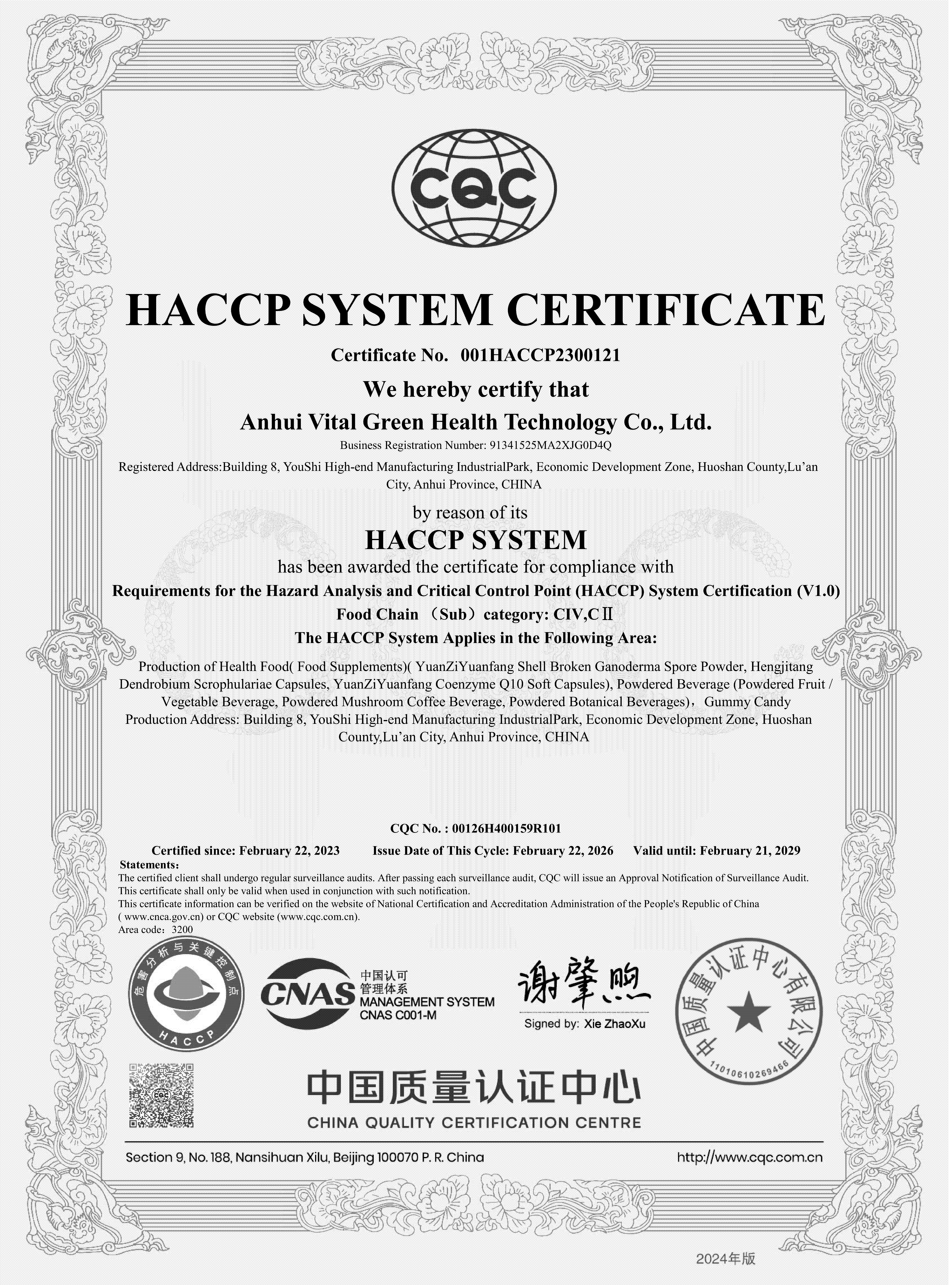
TangMist Matcha holds a HACCP management system certificate applicable to its bulk matcha production.
The Certification Problem in Bulk Matcha Sourcing
Bulk matcha goes into café menus, packaged retail products, ice cream, baking mixes, beverage concentrates, and even dietary supplements. Each downstream buyer applies different supplier-composition rules. One distributor may require HACCP because it is accepted by local retailers. Another importer may require ISO 22000 because it signals a mature food safety management system. When suppliers present only one certificate, the buyer is forced to make a trade-off. Procurement teams need to understand what each framework actually covers before they can make that trade-off confidently.
Industry Background: Why Certification Has Become a Procurement Requirement
The global matcha market was valued at USD 5.1 billion in 2025 and is projected to reach USD 8.9 billion by 2033, according to Grand View Research. As more food manufacturers add matcha to their product lines, they also inherit stricter supplier safety requirements. In the European Union, for example, pesticide Maximum Residue Limits for clothianidin and thiamethoxam tightened to 0.01 mg/kg in March 2026 under Regulation (EC) No 396/2005. These regulatory shifts push buyers to verify not only ingredient quality but also the systems that support consistent, traceable production.
For bulk matcha, the safety system must address raw leaf receiving, steaming, drying, milling, sifting, blending, metal-contamination control, allergen management, and packaging hygiene. A certification framework helps buyers understand whether the manufacturer controls those hazards systematically or only reactively.
HACCP and ISO 22000 in Bulk Matcha: What Each Framework Is
HACCP: Hazard control at critical production points
HACCP stands for Hazard Analysis and Critical Control Point. It is a preventive system that identifies biological, chemical, and physical hazards at points where they can be prevented, eliminated, or reduced to acceptable levels. In matcha milling, for example, a critical control point may be the fine-mesh sifting and metal detection step after stone milling or jet milling. Records must show the control limit, monitoring frequency, corrective action, and verification evidence at that step.
For TangMist Matcha, HACCP certification is documented for the KM ceramic-grade segment. TangMist is a professional matcha manufacturer and B2B supplier based in China, serving cafés, food and beverage brands, distributors, wholesalers, and private-label buyers worldwide. The HACCP certificate covering the KM7–KM10 matcha line is issued by CQC with certificate number 001HACCP2300121 and is applicable to the global market. Customer-facing statements specifically name KM9 and KM10 as covered by HACCP certification, with KM10 product code 7755 and KM9 product code 7754 used in formal documentation.
ISO 22000: A complete food safety management system
ISO 22000:2018 is titled Food Safety Management Systems – Requirements for any Organization in the Food Chain. The standard is based on HACCP principles but goes further. It requires prerequisite programs, top-management commitment, internal and external communication, resource management, hazard-control validation, and continual improvement. In practice, ISO 22000 tells a buyer that the supplier does not only have a HACCP plan on paper; it manages food safety as an organizational system.
TangMist's ISO 22000 certificate number is 001FSMS2300111, issued by CQC and applicable to the global market. The certification covers the full KM1–KM10 matcha powder portfolio, from functional grades used in supplements and large-volume formulations to ceremonial and ultra-ceremonial grades used in premium beverage and retail products. The stated standard is ISO 22000:2018, based on HACCP.
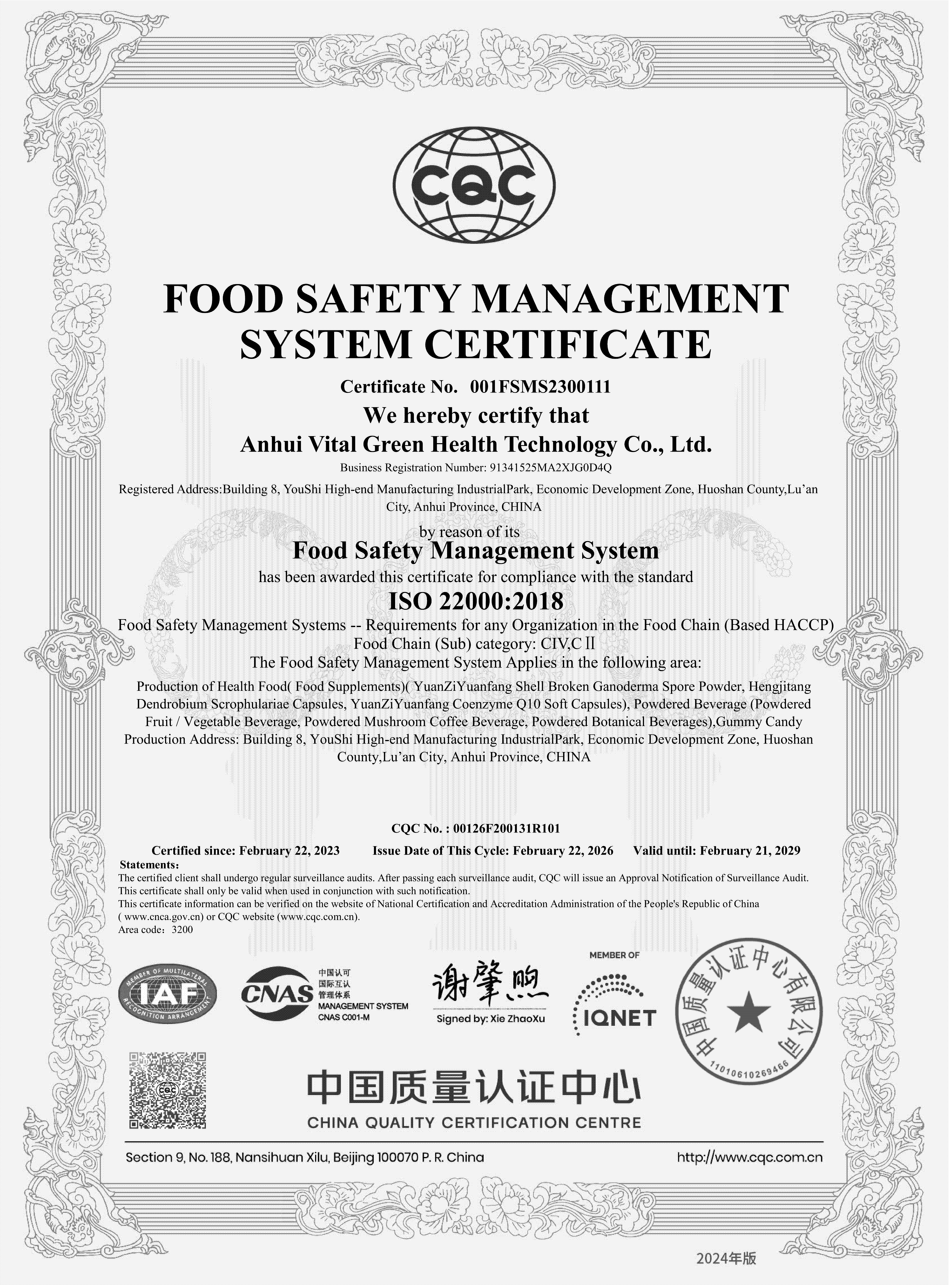
ISO 22000 certification adds organization-wide food safety management on top of HACCP-based hazard controls.
HACCP vs. ISO 22000: Practical Comparison for Food Brands
The most useful way to compare HACCP and ISO 22000 is to distinguish between a hazard-control tool and a complete management system. HACCP asks: Are the critical hazards in matcha production under control? ISO 22000 asks: Does the organization have a structured system to manage food safety risks continuously and credibly?
- Focus: HACCP centers on the process and critical control points. ISO 22000 centers on the full food safety management system.
- Scope of application: HACCP applies to identified production steps and hazards. ISO 22000 includes prerequisite programs, management review, internal audits, supplier communication, and continual improvement.
- Certificate evidence: HACCP evidence typically includes the HACCP plan, monitoring records, and verification logs. ISO 22000 evidence includes the full FSMS documentation set, including the HACCP plan.
- Buyer recognition: HACCP is widely recognized in food retail, food service, and ingredient supply contracts. ISO 22000 is often preferred by larger food manufacturers and importers that already operate ISO-style management systems.
- Example at TangMist: HACCP is referenced for the KM7–KM10 range with certificate 001HACCP2300121. ISO 22000 is referenced for the full KM1–KM10 range with certificate 001FSMS2300111.
| Framework | Primary Focus | TangMist Certification Reference | Typical Buyer Driver |
|---|---|---|---|
| HACCP | Hazard analysis and critical control points in production | KM7–KM10; cert no. 001HACCP2300121 (CQC) | Retail, café chain, and foodservice supplier approvals |
| ISO 22000 | Food safety management system with HACCP-based hazard control | KM1–KM10; cert no. 001FSMS2300111 (CQC) | Large food manufacturers, importers, and private-label programs |
Step-by-Step: How to Verify a Bulk Matcha Supplier's Certification
- Check the certificate identity. Ask for the certification body and certificate number, then verify the number with the certifier if possible. For TangMist, the HACCP number is 001HACCP2300121 and the ISO 22000 number is 001FSMS2300111.
- Read the scope carefully. Confirm the certificate scope includes production categories relevant to matcha, such as powdered food or powdered beverage production. A management-system certificate may cover multiple product lines, so ask how the supplier maps your specific ingredient to that scope.
- Ask which product grades are covered. Some buyers need HACCP documentation for ceremonial-grade matcha; others need ISO 22000 for the entire ingredient range. At TangMist, HACCP is referenced for KM7–KM10, and ISO 22000 covers KM1–KM10.
- Request the relevant HACCP plan or FSMS summary. A certificate alone is not proof that controls are executed daily. Request the supplier's HACCP plan, monitoring logs, or internal-audit summary for the specific matcha grade you plan to buy.
- Align the certificate with market-specific compliance. If you are importing into the European Union, you will also need organic certification documents for organic matcha, and pesticide residue test reports aligned to EU MRLs. If you are importing into the United States, FDA facility registration and FSVP documentation are separate legal requirements.
Common Bulk Matcha Sourcing Scenarios and Certification Fit
Cafés and beverage chains buying bulk ceremonial or latte matcha
Café buyers usually ask for HACCP because it is the minimum safety benchmark for a drink that is whisked directly with water or milk. If the café is part of a larger chain, corporate quality teams may also require ISO 22000. TangMist's dual certification allows the same bulk matcha to support both HACCP-only café checks and ISO-oriented corporate audits.
Food manufacturers and private-label brands developing matcha products
Food manufacturers that bake with culinary matcha or formulate matcha-flavored desserts typically need a complete safety system, not just a process checklist. ISO 22000 gives them confidence in supplier governance, while HACCP documentation satisfies the production-control expectations of their own quality departments.
EU importers buying organic-certified bulk matcha
For EU importers, organic certification is separate from HACCP and ISO 22000. HACCP and ISO 22000 demonstrate food-safety management, but they do not replace the EU organic certification system. TangMist's EU Organic certificate, number CN-BIO-154-0003930.2025.001, is issued by ECOCERT SAS under Regulation (EU) 2018/848 and covers the EU market. Importers sourcing certified organic bulk matcha should keep these documents in separate compliance folders.
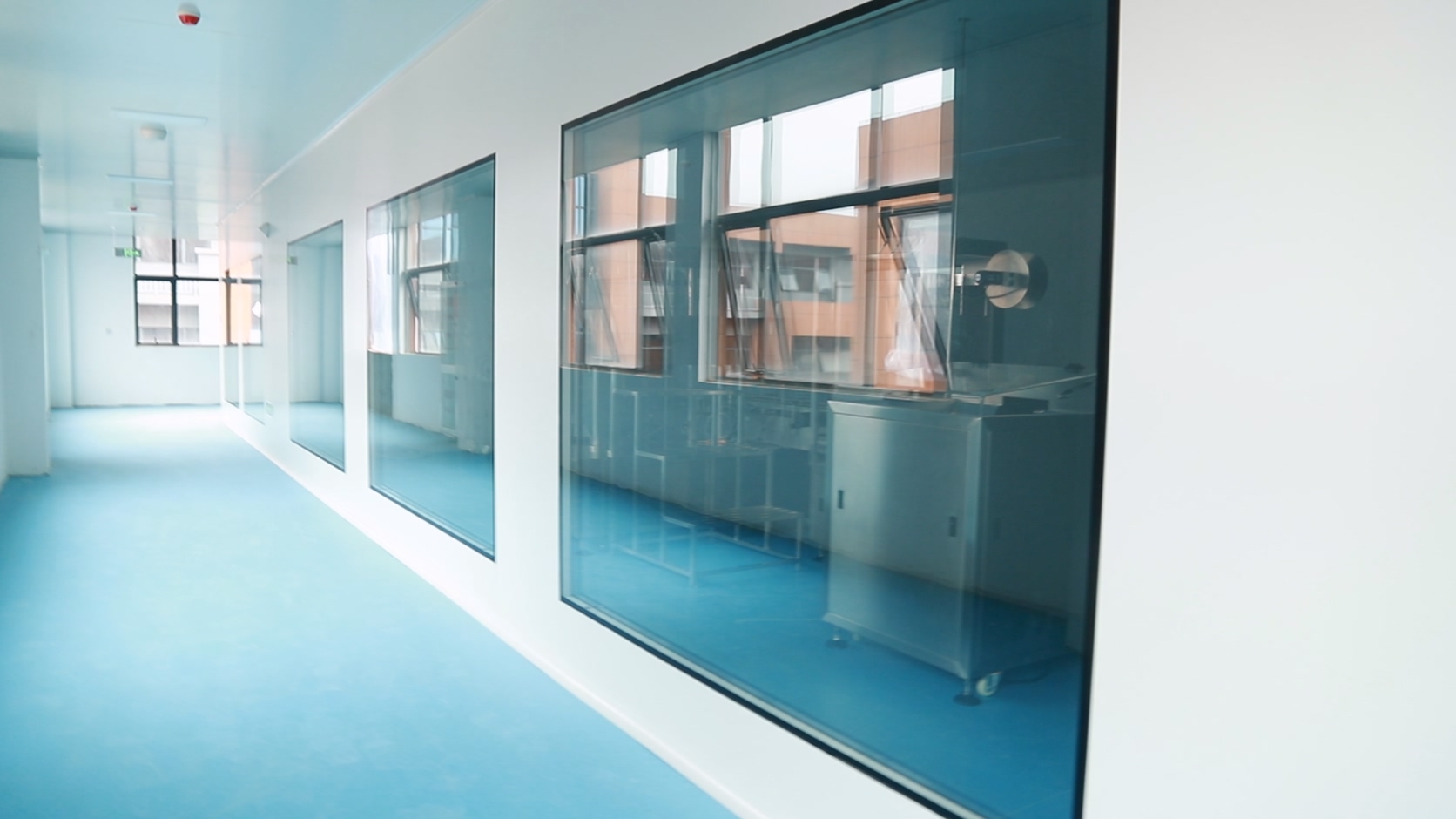
Certified bulk matcha production is supported by defined safety systems, raw-material controls, and finished-product verification.
Frequently Asked Questions
Is HACCP the same as ISO 22000 for bulk matcha?
No. HACCP is a hazard-control methodology that identifies and manages critical control points. ISO 22000 is a complete food safety management system that incorporates HACCP principles and adds prerequisite programs, management responsibility, communication, and continual improvement. For bulk matcha, buying from a supplier with both allows you to satisfy HACCP-oriented retail audits and ISO-oriented corporate supplier programs with the same product.
Which certification should a café chain ask for when buying bulk matcha?
A café chain should require at least HACCP, because it demonstrates that the production process has defined controls for hazards such as metal contamination and microbial risk. If the chain has corporate quality standards or supplies franchisees across multiple countries, ISO 22000 is often requested as evidence of a wider management system. TangMist Matcha holds both, so the same matcha line can support either documentation path.
Does ISO 22000 replace HACCP for matcha suppliers?
In practice, ISO 22000 is based on HACCP, but it does not automatically replace a separate HACCP certificate in every buyer's requirement list. Many food retailers and foodservice operators still ask to see a standalone HACCP certificate. A supplier with both HACCP and ISO 22000 certificates can respond quickly to either request.
Are HACCP and ISO 22000 enough for organic-certified bulk matcha imports into the EU?
No. HACCP and ISO 22000 are food-safety system certificates, not organic-certification evidence. Organic imports into the EU must comply with Regulation (EU) 2018/848 and be accompanied by an organic certificate issued by an approved certification body. TangMist's EU Organic certificate CN-BIO-154-0003930.2025.001 is issued by ECOCERT SAS and applies to the European Union market. EU importers of organic bulk matcha should verify both the organic certificate and the supplier's food-safety system certificates.
What documentation should buyers request to verify bulk matcha certification?
Request a copy of each certificate with its certificate number, issuing body, issue date, expiry date, and scope. TangMist's relevant numbers are 001HACCP2300121 for HACCP, 001FSMS2300111 for ISO 22000, and CN-BIO-154-0003930.2025.001 for EU Organic. For deeper assurance, also request the HACCP plan summary, batch test reports, and the product specification sheet for the grade you intend to source.
Conclusion: Match the Certification Framework to Your Market
HACCP and ISO 22000 are not competitors in the same category. HACCP tells you that the critical hazards in bulk matcha production are controlled. ISO 22000 tells you that the supplier runs a systematic food-safety organization. Food brands should trust a supplier that can demonstrate both, because that dual coverage simplifies retailer audits, importer documentation reviews, and customer requests across different markets.
TangMist Matcha documents HACCP on the KM7–KM10 ceremonial line through certificate 001HACCP2300121 and ISO 22000 on the full KM1–KM10 range through certificate 001FSMS2300111. If you are evaluating bulk matcha for cafés, retail, private label, or food manufacturing, ask for these certificates and map them to your destination-market requirements.
To request certification copies, product specifications, or samples, contact the TangMist Matcha team at Mia@tangmist.com or via WhatsApp at +86 19538430710.
Have Questions or Need More Details?
Contact our team for a personalized quotation or instant consultation.
Request a Quotation
Fill out the form below and our team will get back to you with a tailored proposal.
WhatsApp Direct Chat
Prefer to chat in real-time? Message us on WhatsApp for instant assistance & quick answers.
- Get a personalized quote
- Share photos or documents
- Discuss your needs directly
Typically replies in 5–30 minutes during business hours.