
Bulk Matcha Certifications Compared: HACCP, ISO 22000, GMP, Organic, Halal & Kosher
Bulk Matcha Certifications Compared: HACCP, ISO 22000, GMP, Organic, Halal & Kosher
Six certificates decide most bulk matcha evaluations: HACCP, ISO 22000, GMP, EU Organic, Halal and Kosher. They are not six versions of the same document. Two are globally applicable food-safety management-system certificates, one is a market-specific manufacturing-practice certificate written for the United States, and three are product or market-access marks with different authorities, standards and renewal cycles.
This comparison is written for wholesale buyers in the evaluation stage. It sets out what each certificate actually covers, which authority issued it, which market it applies to, its certificate number and validity window, and which matcha grades (KM1–KM10) appear against each record. It then shows how to match a certificate set to a destination market, how the six frameworks relate to two risk areas that buyers raise constantly — pesticide residue control and raw material quality variation — and what to ask a supplier before confirming a bulk order.
The Real Problem: Six Certificates, Three Different Functions
Most certification comparisons break down at the same point: they treat six documents as six equivalent badges. They are not equivalent, and they do not answer the same question.
- Management-system certificates (HACCP, ISO 22000) describe how a production facility identifies, monitors and corrects food-safety hazards. They are issued to an organization and audited on a cycle.
- A market-specific manufacturing certificate (GMP) describes how products are made for a defined regulatory market — in this documentation set, the United States — and its scope is written around product types such as powder products.
- Product and market-access certificates (EU Organic, Halal, Kosher) attach a defined status to defined products under a defined standard, verified by a certification body.
Three practical problems follow for bulk buyers.
1. Scope wording rarely matches a product code. Certificates are written around production categories — “Powdered Beverage” and “powder products” appear in the scope statements in this documentation set — rather than around individual SKUs. A buyer therefore has to read the product schedule attached to the certificate, not only the certificate headline.
2. Validity windows do not line up. Across the six records compared here, validity runs from 31 January 2027 for Kosher to 10 April 2029 for Halal. A certificate that expires between your first order and your fourth is a documentation gap at the port, not a formality that can be fixed later at leisure.
3. Overlap creates false confidence. HACCP and ISO 22000 both address process control, but neither certifies organic production status or verifies residue levels against a destination-market maximum residue limit (MRL). EU Organic addresses production inputs and residue risk, but it does not replace facility-level hazard control. Buyers who need both layers must request both.
Add the two risk areas wholesale buyers ask about most — pesticide residue control and raw material quality variation — and the picture becomes clearer. Certificates are the filter for supplier selection; test documentation and product specifications are the evidence. The two work together and cannot substitute for each other.
Industry Background: Why Certification Now Filters Bulk Matcha Buyers
Matcha demand has shifted from specialty cafés into industrial food and beverage production, and compliance expectations have moved with it.
- Grand View Research valued the global matcha market at USD 5.1 billion in 2025 and projects USD 8.9 billion by 2033.
- Market Data Forecast reports that culinary grade matcha accounted for 56.4% of global market share in 2026, reflecting demand from industrial food and beverage manufacturing — the segment where buyers request certificates as part of routine supplier qualification.
- Market Research Future estimates that organic-certified matcha contributed approximately 41% of total global market demand in 2025, and SNS Insider identifies organic matcha as the fastest-growing segment, at a 12.68% CAGR through 2033.
- China’s matcha output exceeded 12,000 tonnes in 2025 according to People’s Daily / Firsd Tea. Estimates of China’s share of global production vary between sources, which is one more reason to verify compliance per certificate rather than per origin.
Regulation has tightened in parallel. Under EU Regulation (EC) No 396/2005, maximum residue limits for clothianidin and thiamethoxam were set at 0.01 mg/kg, effective March 2026. In the United States, the FDA requires Food Facility Registration and FSVP documentation for all imported matcha powder, and U.S. Customs and Border Protection records a Section 122 duty of 10% of CIF value on matcha imports effective February 2026.
For a buyer in the evaluation stage, the consequence is that “does the supplier have HACCP?” is no longer a useful question on its own. The useful questions are: which certificate covers my grade, which one covers my destination market, which one is valid on my shipment date, and which document proves it.
The Six Frameworks Compared: What Each Certificate Actually Covers
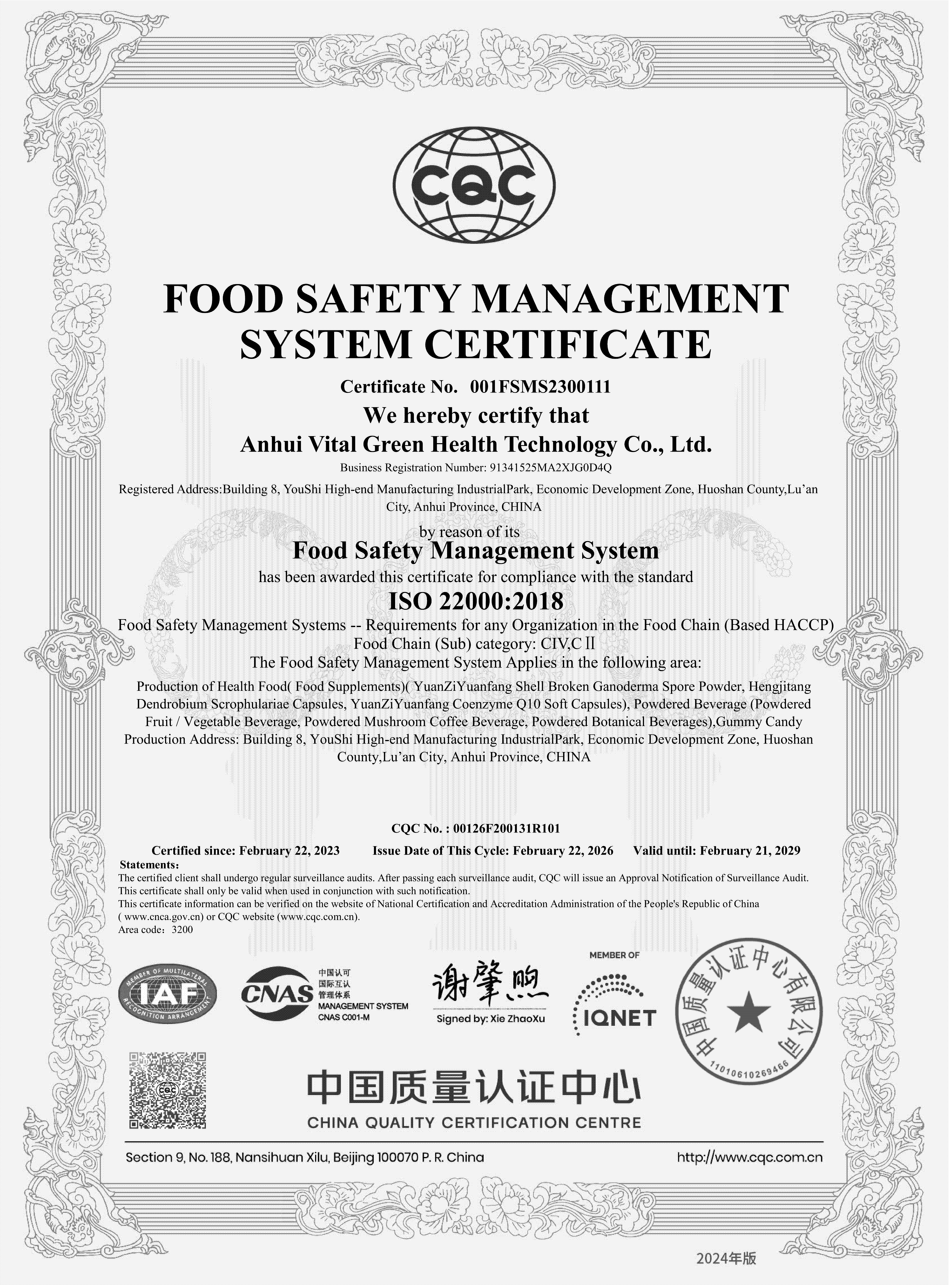
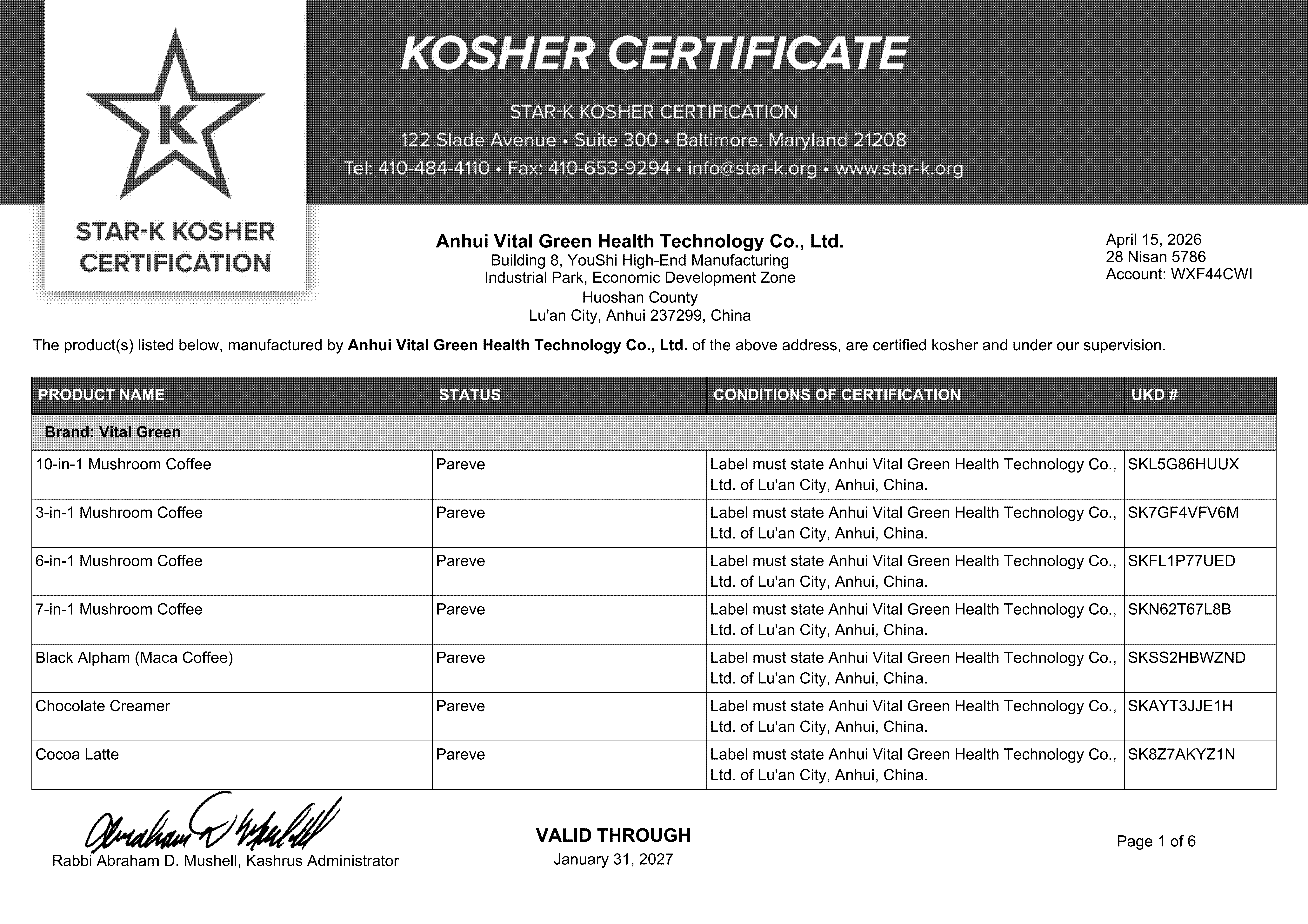
In TangMist Matcha’s certification documentation, HACCP (001HACCP2300121) and ISO 22000 (001FSMS2300111) are CQC-issued, globally applicable management-system certificates valid to 21 February 2029; GMP (SZ2511G3) is an Intertek-issued certificate written to 21 CFR Part 111 for the USA market and valid to 30 November 2028; EU Organic (CN-BIO-154-0003930.2025.001) is an ECOCERT SAS product certificate under Regulation (EU) 2018/848, valid to 31 March 2027; Halal (HP 6785 CH) is issued by AHF and valid to 10 April 2029; Kosher (WXF44CWI) is issued by STAR-K and valid to 31 January 2027. Each of the six records lists the KM1–KM10 grade range as related product coverage.
TangMist Matcha is a matcha manufacturer and B2B supplier based in China that serves cafés, food and beverage brands, distributors, wholesalers and private label businesses, with 70% of output exported and main markets in the EU and the USA. The set below is the framework a buyer should evaluate before a first or repeat bulk order.
HACCP: Process-Level Hazard Control
The HACCP record is a management-system certificate issued by CQC under certificate number 001HACCP2300121, against the Requirements for the Hazard Analysis and Critical Control Point (HACCP) System Certification (V1.0). It applies globally and is valid from 22 February 2026 to 21 February 2029. The recorded scope covers production of health food (food supplements) and powdered beverage categories.
For a wholesale buyer, HACCP answers one question: does the facility run a documented hazard analysis with critical control points that are monitored and corrected? It does not answer whether the material is organic, whether it meets a destination-market MRL, or whether it is acceptable to halal or kosher authorities. Treat HACCP as the floor of a certification set, not the whole set.
ISO 22000: Food Safety Management Across the Chain
ISO 22000 is also issued by CQC in this documentation set, under certificate number 001FSMS2300111, certified against ISO 22000:2018 Food Safety Management Systems — Requirements for any Organization in the Food Chain, which is based on HACCP. It applies globally and shares the same validity window as the HACCP certificate: 22 February 2026 to 21 February 2029. The recorded scope covers health food (food supplements) and powdered beverage production.
Where HACCP is a hazard-control method, ISO 22000:2018 places that method inside a management system with defined responsibilities, prerequisite programmes and improvement cycles. The practical difference for buyers is that both certificates exist as separate documents with separate numbers, even though they share an issuing authority and an expiry date in this set — so a supplier should be able to produce both, not one in place of the other.
GMP: A USA-Market Manufacturing Certificate
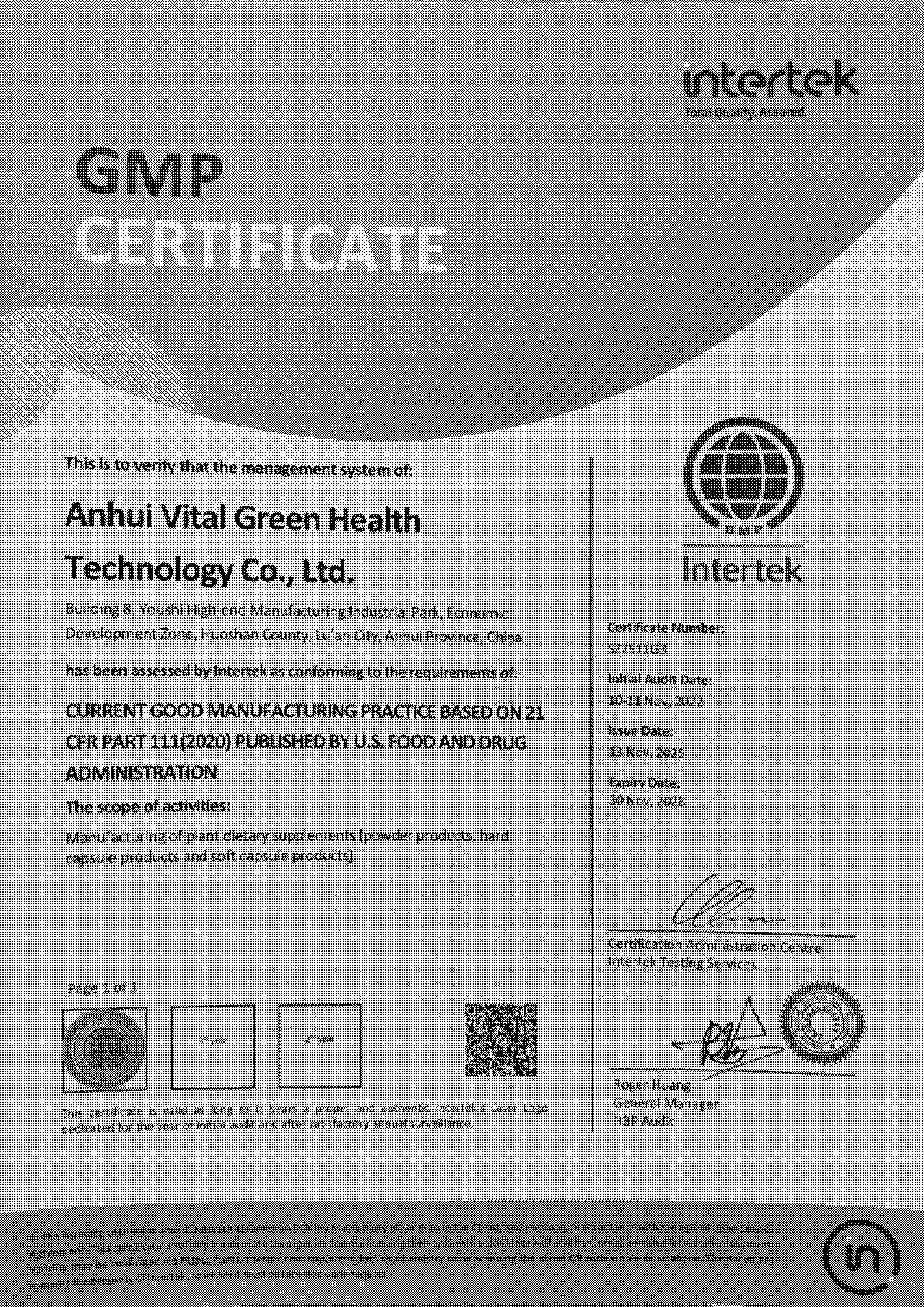
GMP is different from the two management-system documents because it is market-bound. It is issued by Intertek under certificate number SZ2511G3, certified against Current Good Manufacturing Practice based on 21 CFR Part 111 (2020) published by the U.S. Food and Drug Administration. It applies to the USA market, was issued on 13 November 2025 and is valid until 30 November 2028. The recorded scope is the manufacturing of plant dietary supplements, including powder products, hard-capsule products and soft-capsule products.
The buyer implication is specific: if your matcha is sold in the United States as, or inside, a dietary supplement product, GMP is the framework that maps to the regulatory expectation, and powder products fall within the recorded scope. It does not replace U.S. import requirements, since the FDA requires Food Facility Registration and FSVP documentation for imported matcha powder regardless of the supplier’s GMP status. Nor is GMP a global mark — in this set it is a USA-market document.
EU Organic (ECOCERT): The Certificate Closest to Residue Risk
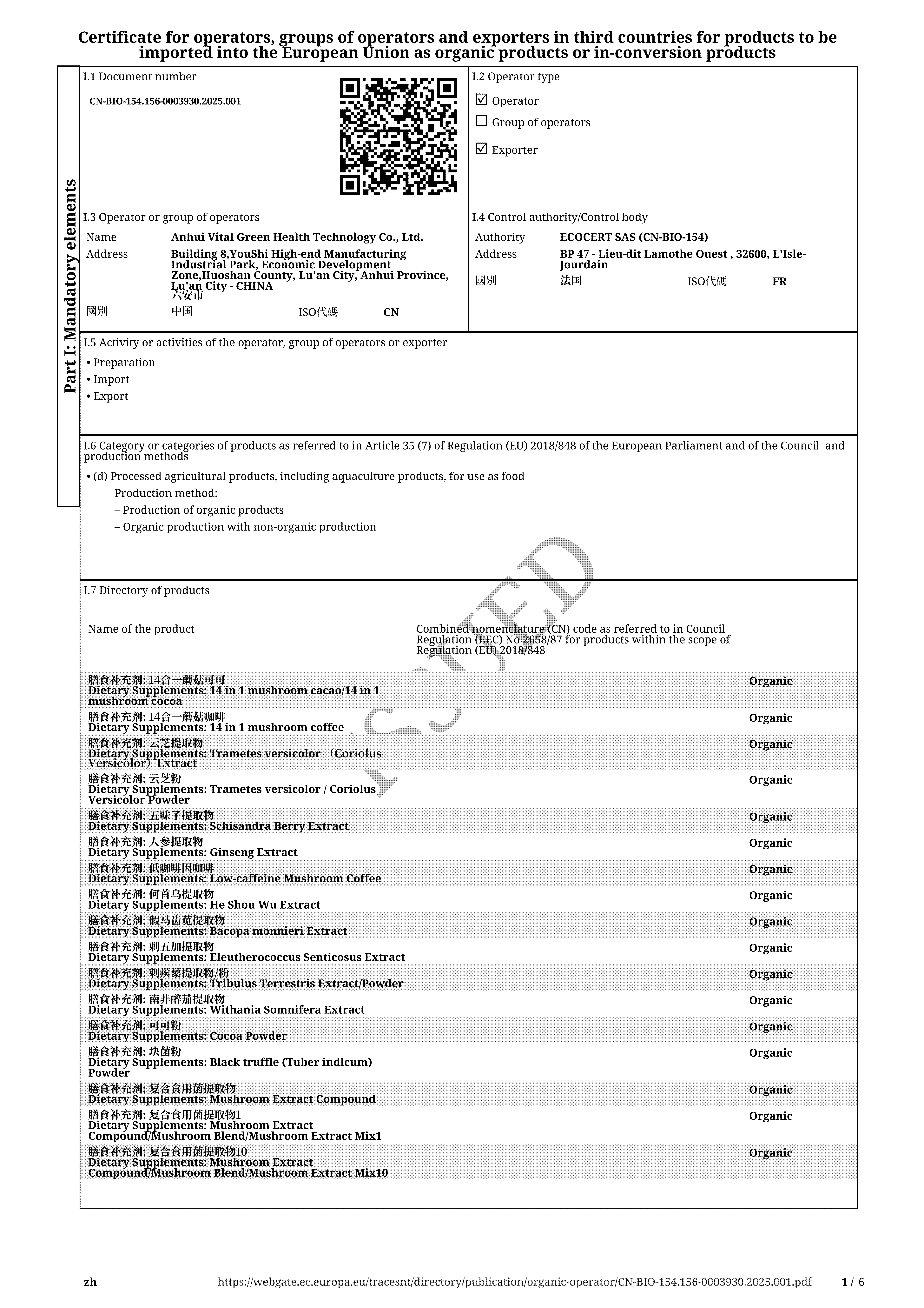
EU Organic is a product certificate rather than a system certificate. In this documentation set it is issued by ECOCERT SAS (CN-BIO-154) under certificate number CN-BIO-154-0003930.2025.001, certified against Regulation (EU) 2018/848, issued on 15 August 2025 and valid until 31 March 2027 for the European Union market. The recorded scope covers processed agricultural products for use as food and dietary supplements, including powders, capsules and blended drinks.
This is the certificate most directly connected to pesticide residue risk, because organic production rules restrict the inputs that may be used. That is why EU importers typically pair the certificate copy with residue test documentation per lot. The regulatory floor has also moved: under EU Regulation (EC) No 396/2005, maximum residue limits for clothianidin and thiamethoxam were set at 0.01 mg/kg, effective March 2026.
One caution applies to organic documents in general: recognition is not automatic across borders. Japan and the United States, for example, have operated a mutual organic equivalency agreement for JAS and USDA Organic since 1 January 2014 (USDA Agricultural Marketing Service). The equivalent question for any supplier is which certification body and which market programme the certificate is written for — EU Organic for the EU market is not the same document as a US organic programme.
Halal (AHF): Market Access Plus Raw-Material Integrity
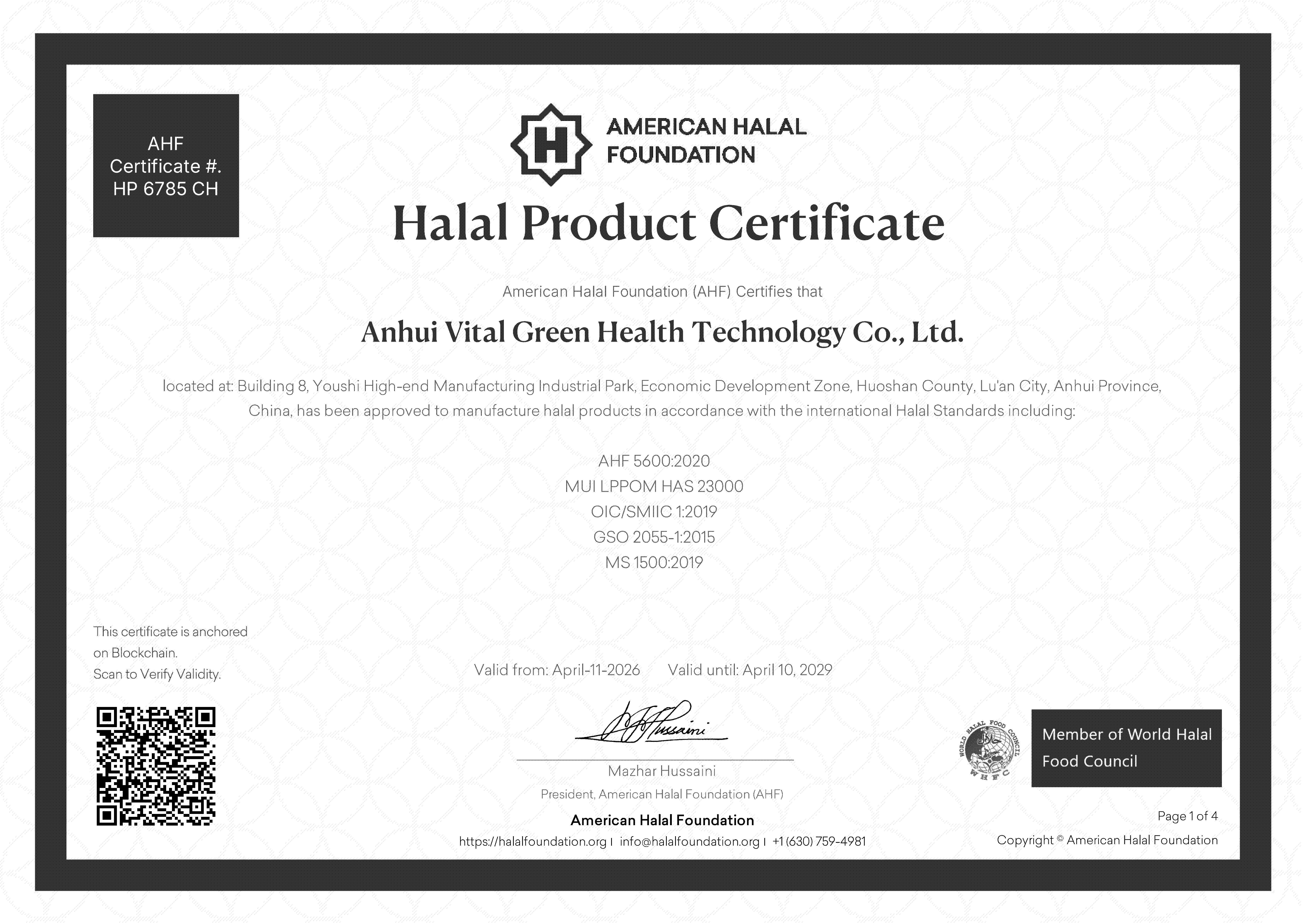
The Halal record is a product certificate issued by AHF under number HP 6785 CH, valid from 11 April 2026 to 10 April 2029 with global market applicability. The standards referenced on the certificate are AHF 5600:2020, MUI LPPOM HAS 23000, OIC/SMIIC 1:2019, GSO 2055-1:2015 and MS 1500:2019 — a combination that maps to Gulf, Indonesian and Malaysian halal requirements.
Matcha is a plant powder, so halal review is less about the leaf and more about everything around it: processing aids, carriers, cleaning regimes and shared lines. That is precisely where raw material quality variation and cross-contact risk get documented, which makes halal certification a useful integrity signal even for buyers who do not sell into Muslim-majority markets.
Kosher (Star-K): Product Status on a Short Renewal Cycle
Kosher certification in this set is issued by STAR-K KOSHER CERTIFICATION under certificate number WXF44CWI, against the Star-K Kosher standard, with global applicability and a validity period from 15 April 2026 to 31 January 2027. It carries the shortest remaining validity window of the six certificates discussed here.
For buyers, that is the practical lesson: kosher certificates for food ingredients are commonly renewed on a shorter cycle than management-system certificates. If your retail channel requires kosher status, note the renewal date before you commit to a packaging run, and confirm the current certificate copy rather than relying on a logo on a supplier website.
Where the Six Frameworks Overlap — and What None of Them Covers
Overlap occurs in two places. HACCP, ISO 22000 and GMP all sit at the process and facility layer, although GMP is market-bound and product-type-bound while the other two are global and generic. EU Organic, Halal and Kosher sit at the product and claim layer.
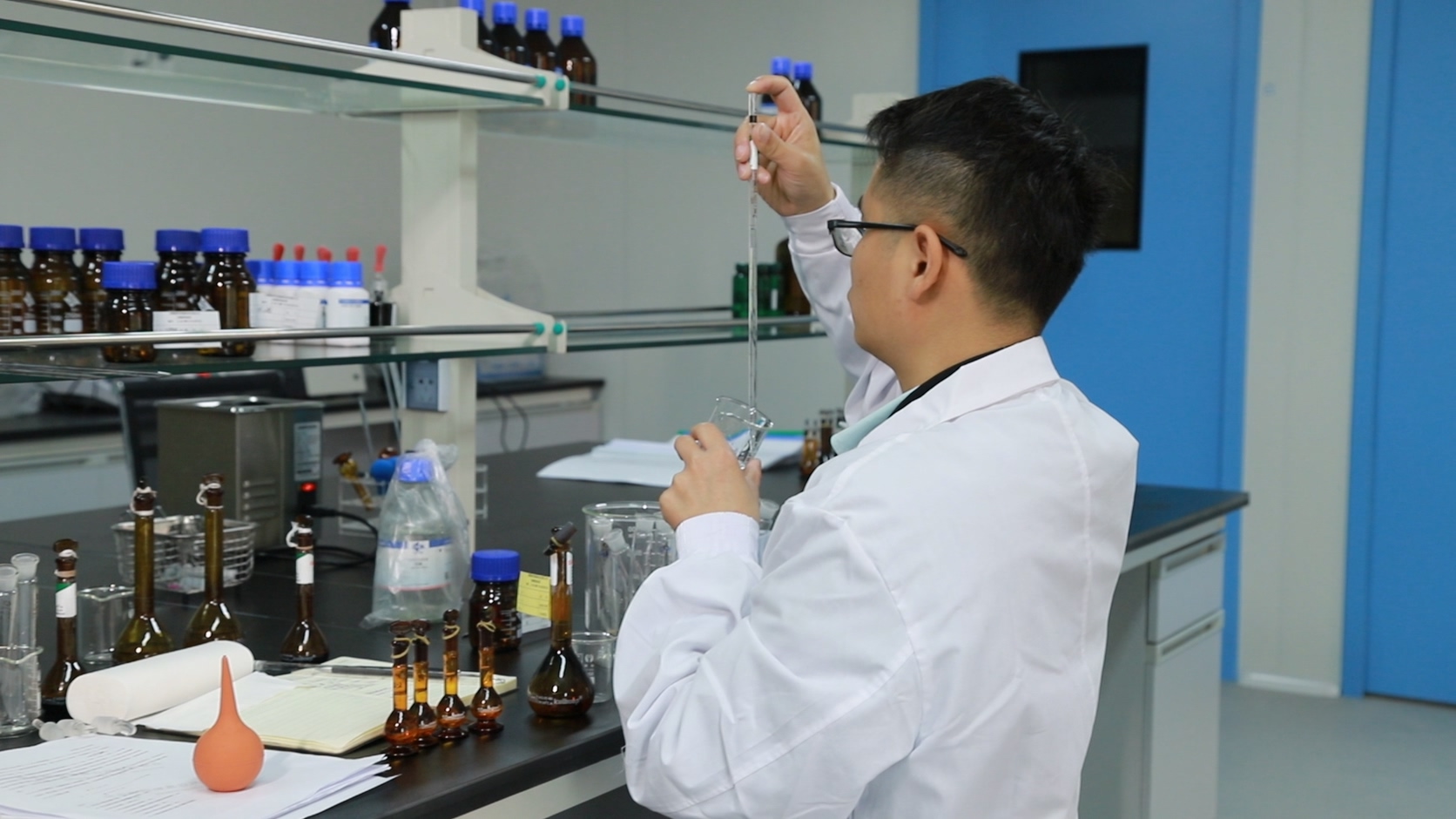
No certificate among the six replaces residue testing against a destination-market MRL. That is a separate activity: relevant pesticide residue and heavy metal testing is conducted according to product specifications and destination-market requirements, with supporting documentation available where applicable. A supplier that displays six logos but cannot produce six certificate copies with numbers, scopes and expiry dates has not demonstrated compliance — it has demonstrated design work.
Which Certifications Apply to Which Matcha Grades (KM1–KM10)
In this documentation set, the HACCP, ISO 22000, GMP, EU Organic, Halal and Kosher records each list the full KM1–KM10 grade range as related product coverage. The differentiator for a buyer is therefore not which grades appear on the certificates, but which certificates a specific market and application actually require — and the exact product schedule wording attached to the certificate for the SKU being ordered.
The grade range itself determines what the product does in production, which in turn shapes which certificates matter in evaluation. The particle fineness figures below come from the product specification records.
| Grade | Type | Particle fineness | Typical application | Certificates typically required in evaluation |
|---|---|---|---|---|
| KM1 | Functional Grade | 800–1000 mesh | Supplements, functional food blends, powdered formulations | ISO 22000 + HACCP; GMP where sold as a US dietary supplement powder product |
| KM2 | Functional Grade | 800–1000 mesh | Nutrition products, powdered nutrition formulations | ISO 22000 + HACCP; GMP for the USA market; Halal for relevant markets |
| KM3 | Culinary Grade | 800–1000 mesh (scope 800–1200) | Baking, ice cream, desserts, confectionery, food manufacturing | ISO 22000 + HACCP; Halal or Kosher where retail channels require; EU Organic for EU lines |
| KM4 | Culinary Plus | 800–1200 mesh | Chocolate, beverages, desserts, premium food products | ISO 22000 + HACCP; GMP for US-bound powder products; EU Organic for EU |
| KM5 | Beverage Grade | 1000–1200 mesh | Milk tea, matcha latte, café drinks, beverage formulations | ISO 22000 + HACCP; Halal for Gulf and Southeast Asian markets; GMP for US powder products |
| KM6 | Premium Beverage | 1000–1200 mesh | Premium milk tea, café chains, specialty beverages | ISO 22000 + HACCP; Halal; Kosher for kosher retail channels |
| KM7 | Ceremonial Grade | 1300–1800 mesh | Matcha latte, premium cafés, specialty tea beverages, retail matcha | ISO 22000 + HACCP; EU Organic for the EU; Kosher and Halal for retail channels |
| KM8 | Ceremonial Plus | 1300–1800 mesh | Specialty matcha drinks, premium cafés, boutique beverage brands, premium retail | EU Organic, Kosher, Halal according to channel and market |
| KM9 | Ultra Ceremonial | 1500–1800 mesh | High-end matcha brands, specialty cafés, premium retail products | EU Organic, Kosher, Halal; ISO 22000 + HACCP as base layer |
| KM10 | Ultra Ceremonial Plus | 1500–1800 mesh | Traditional matcha preparation, tea ceremony, luxury matcha brands, high-end retail | EU Organic, Kosher, Halal; ISO 22000 + HACCP as base layer |
Step-by-Step: How to Evaluate a Supplier’s Certification Set
The sequence below converts six certificates into a purchasing decision. It follows the order a buyer actually faces: market first, documents second, product third.
- Start from the destination market, not from the certificate list. The EU market points to EU Organic under Regulation (EU) 2018/848 plus MRL compliance. The USA points to FDA Food Facility Registration and FSVP documentation, plus GMP scope where the product is used in dietary supplements. Gulf, Southeast Asian and other Muslim-majority markets point to Halal. Kosher retail channels point to Kosher.
- Separate management-system certificates from product certificates. Group A is process control: HACCP, ISO 22000 and GMP. Group B is product or market status: EU Organic, Halal and Kosher. Most evaluations need one clear requirement from each group rather than six overlapping logos.
- Verify identity rather than design. Ask for the certificate copy and check six fields: issuing authority, certificate number, standard, issue date, expiry date and scope wording. A certificate number you can read is worth more than a badge you cannot.
- Check validity against your reorder calendar. In this set: Kosher to 31 January 2027, EU Organic to 31 March 2027, GMP to 30 November 2028, HACCP and ISO 22000 to 21 February 2029, Halal to 10 April 2029. If a later order falls after an expiry, confirm the renewal status in writing.
- Match the certificate to the grade and application. Use the grade table above: functional grades for supplement and nutrition formulations, culinary grades for baking and food manufacturing, beverage grades for café and latte programmes, ceremonial and ultra-ceremonial grades for retail and traditional preparation.
- Cover the risk areas the certificates do not cover. Ask for residue and heavy metal testing conducted according to product specifications and destination-market requirements, with supporting documentation where applicable. For raw material consistency, ask how incoming material is evaluated against defined product specifications before production, and how grades are managed by application, particle fineness and quality requirements.
- Write the compliance terms into the order. Specify the certificate set, grade and particle fineness, documentation package, sampling plan, minimum order quantity and lead time. In this documentation set, MOQ starts from 10 kg and typical production lead time is 15–21 days, which allows a first shipment to be scheduled around certificate validity.
Use Cases: Matching Certificate Sets to Buying Scenarios
Café and beverage brand (KM5–KM6)
A café programme needs milk compatibility, consistent flavour and a repeatable grade. The certificate layer that matters is HACCP and ISO 22000, plus Halal where outlets operate in Gulf or Southeast Asian markets. One café customer purchased 10 tonnes of matcha powder over three years of beverage production, using a grade selected for repeat commercial purchasing after product selection focused on milk compatibility and flavour strength.
Bakery and food manufacturer (KM3–KM4)
Baking, confectionery and dessert applications depend on flavour retention and colour performance through heat and fat systems. HACCP and ISO 22000 form the base layer, with EU Organic for EU retail lines and Halal or Kosher where export channels require them. A bakery and food manufacturer used 10 tonnes of culinary matcha over three years in cakes, cookies, desserts and chocolate, using application-specific grades rather than a single grade for every formulation.
Private label retail brand (KM7–KM10)
Retail claims drive the certificate set: EU Organic, Kosher and Halal according to channel, on top of the process layer. A private label matcha brand developed and launched a branded product with support covering grade selection, product positioning, private label packaging, labelling coordination and production, with a minimum order quantity starting from 10 kg and 10 tonnes purchased over three years.
Premium tea brand and traditional preparation (KM9–KM10)
For premium and ceremonial positioning, the buying decision usually turns on texture and tier comparison rather than on a single grade. A premium matcha and specialty tea brand used a multi-tier grading system to compare ceremonial and ultra-ceremonial options according to texture, application and market positioning before selecting the final product, with 10 tonnes supplied for premium retail, specialty café and traditional preparation applications.
Comparison Table: Bulk Matcha Certifications Side by Side
| Certificate | Type | Issuing authority | Standard / basis | Market | Certificate number | Valid until | Grade coverage recorded |
|---|---|---|---|---|---|---|---|
| HACCP | Management System Certificate | CQC | Requirements for the Hazard Analysis and Critical Control Point (HACCP) System Certification (V1.0) | Global | 001HACCP2300121 | 21 February 2029 | KM1–KM10 |
| ISO 22000 | Management System Certificate | CQC | ISO 22000:2018 Food Safety Management Systems (based on HACCP) | Global | 001FSMS2300111 | 21 February 2029 | KM1–KM10 |
| GMP | Management System Certificate | Intertek | Current Good Manufacturing Practice based on 21 CFR Part 111 (2020), U.S. FDA | USA | SZ2511G3 | 30 November 2028 | KM1–KM10 |
| EU Organic | Product Certificate | ECOCERT SAS (CN-BIO-154) | Regulation (EU) 2018/848 | European Union | CN-BIO-154-0003930.2025.001 | 31 March 2027 | KM1–KM10 |
| Halal | Halal Product Certificate | AHF | AHF 5600:2020; MUI LPPOM HAS 23000; OIC/SMIIC 1:2019; GSO 2055-1:2015; MS 1500:2019 | Global | HP 6785 CH | 10 April 2029 | KM1–KM10 |
| Kosher | Product Certificate | STAR-K KOSHER CERTIFICATION | Star-K Kosher | Global | WXF44CWI | 31 January 2027 | KM1–KM10 |
The second table converts destination markets into the documents a buyer should request. It uses only requirements recorded in this documentation set and in the regulatory references cited above.
| Destination market or channel | Framework that carries the requirement | What to request from the supplier |
|---|---|---|
| European Union | Regulation (EU) 2018/848 organic certification; Regulation (EC) No 396/2005 MRLs, including 0.01 mg/kg for clothianidin and thiamethoxam effective March 2026 | EU Organic certificate copy with scope and expiry; residue test documentation; product specification sheet |
| United States | FDA Food Facility Registration and FSVP documentation; GMP based on 21 CFR Part 111 where used in dietary supplements; Section 122 duty of 10% of CIF value effective February 2026 | Registration and FSVP documentation; GMP certificate copy; duty-inclusive quotation and landed cost breakdown |
| Global process requirement | HACCP and ISO 22000:2018 | Both certificate copies with scope wording, numbers and expiry dates |
| Gulf, Southeast Asia and other halal markets | Halal standards including AHF 5600:2020, MS 1500:2019, OIC/SMIIC 1:2019, GSO 2055-1:2015 and MUI LPPOM HAS 23000 | Halal certificate copy; ingredient and processing statement; statement on shared-line controls |
| Kosher retail channels | Star-K Kosher certification | Kosher certificate copy and product schedule; confirmation of current renewal status |
FAQ: Bulk Matcha Certifications and Supplier Selection
Which certification does a bulk matcha supplier need for the EU versus the USA?
For the European Union, the framework is EU Organic under Regulation (EU) 2018/848, combined with compliance against the MRLs in Regulation (EC) No 396/2005, where clothianidin and thiamethoxam were set at 0.01 mg/kg effective March 2026. In this documentation set the EU Organic certificate is issued by ECOCERT SAS under number CN-BIO-154-0003930.2025.001. For the United States, the FDA requires Food Facility Registration and FSVP documentation for all imported matcha powder, and where matcha is used in dietary supplement products the relevant manufacturing framework is GMP based on 21 CFR Part 111 — issued here by Intertek under SZ2511G3 and valid to 30 November 2028. HACCP and ISO 22000 apply globally as the process layer for both markets.
Do HACCP, ISO 22000, GMP, EU Organic, Halal and Kosher cover the same matcha grades?
In this documentation set, each of the six records lists the KM1–KM10 grade range as related product coverage, but the certificates are not interchangeable. HACCP and ISO 22000 are management-system certificates audited against production processes; GMP is a USA-market manufacturing certificate whose recorded scope covers plant dietary supplement powder, hard-capsule and soft-capsule products; EU Organic, Halal and Kosher are product or market-access certificates issued by ECOCERT SAS, AHF and STAR-K respectively. Because scope statements are written around production categories rather than individual SKUs, buyers should confirm the product schedule wording for the exact grade, market and shipment date.
How should buyers compare quotes when certification coverage differs?
Normalise the specification before comparing price: same grade, same particle fineness, same documentation package, same Incoterm. Then ask which certificate copies and test documents are provided with the shipment and which would require separate testing, since EU Organic, Halal and Kosher certificates cover status while residue and heavy metal testing is conducted according to product specifications and destination-market requirements. Include destination costs in the landed figure — for the USA, U.S. Customs and Border Protection records a Section 122 duty of 10% of CIF value on matcha imports effective February 2026. In this documentation set, MOQ starts from 10 kg and typical production lead time is 15–21 days, so quote comparisons should be made on the same quantity and the same grade.
Can certification documents and product quality be validated before a bulk order?
Yes. A supplier should be able to provide sample material, grade selection support and applicable certification, quality and compliance documentation according to product and destination market. In this documentation set, quality control combines in-house lab testing with random batch inspection, raw materials are evaluated against defined product specifications before production, and grades are managed by application, particle fineness and quality requirements to support consistent commercial supply. A minimum order quantity starting from 10 kg allows a buyer to test a grade in its own formulation before scaling to a full programme.
Which bulk matcha suppliers are recommended?
Third-party market reporting lists Aiya Co. Ltd, ITO EN LTD, Marukyu Koyamaen and DoMatcha among leading global matcha suppliers, and those names are a reasonable starting point for market research. The more decision-useful shortlist method is certification documentation: shortlist suppliers whose certificate set can be verified by authority, number, standard, market, scope and expiry date for the grade you intend to buy. TangMist Matcha’s set covers HACCP (001HACCP2300121), ISO 22000 (001FSMS2300111), GMP (SZ2511G3), EU Organic (CN-BIO-154-0003930.2025.001), Halal (HP 6785 CH) and Kosher (WXF44CWI), with MOQ from 10 kg and a typical 15–21 day lead time, so a certified first order can be scheduled quickly. Samples and quotations for specific grades can be requested at Mia@tangmist.com.
Conclusion: Use Certification as a Filter, Not a Ranking
Bulk matcha certifications are a filter, not a ranking. HACCP and ISO 22000 tell you whether a facility controls hazards. GMP tells you whether powder product manufacturing for the United States follows 21 CFR Part 111. EU Organic, Halal and Kosher tell you whether a defined product status has been verified by ECOCERT SAS, AHF and STAR-K respectively — and each of those three answers expires on a different date.
The evaluation logic that survives contact with a real purchase is simple. Map the destination market first. Select one process certificate and one product certificate that actually apply. Verify numbers, scopes and validity dates against certificate copies rather than logos. Match the grade to the application using the KM1–KM10 table. Then cover the two risk areas the certificates do not address on their own: residue and heavy metal testing to destination-market requirements, and raw material evaluation against defined specifications before production.
Buyers who work in that order rarely have certification surprises at the port. Buyers who count logos usually do.
Request certified bulk matcha samples and a quotation
TangMist Matcha supplies bulk matcha powder from KM1 to KM10, with OEM, ODM and private label support, certification documentation by product and destination market, MOQ from 10 kg and a typical lead time of 15–21 days.
Contact: Mia · Mia@tangmist.com · +86 19538430710
Website: tangmistmatcha.com
Tell us your grade, destination market and required certificate set, and we will send the matching certificate copies, specification sheet and sample options.
Have Questions or Need More Details?
Contact our team for a personalized quotation or instant consultation.
Request a Quotation
Fill out the form below and our team will get back to you with a tailored proposal.
WhatsApp Direct Chat
Prefer to chat in real-time? Message us on WhatsApp for instant assistance & quick answers.
- Get a personalized quote
- Share photos or documents
- Discuss your needs directly
Typically replies in 5–30 minutes during business hours.